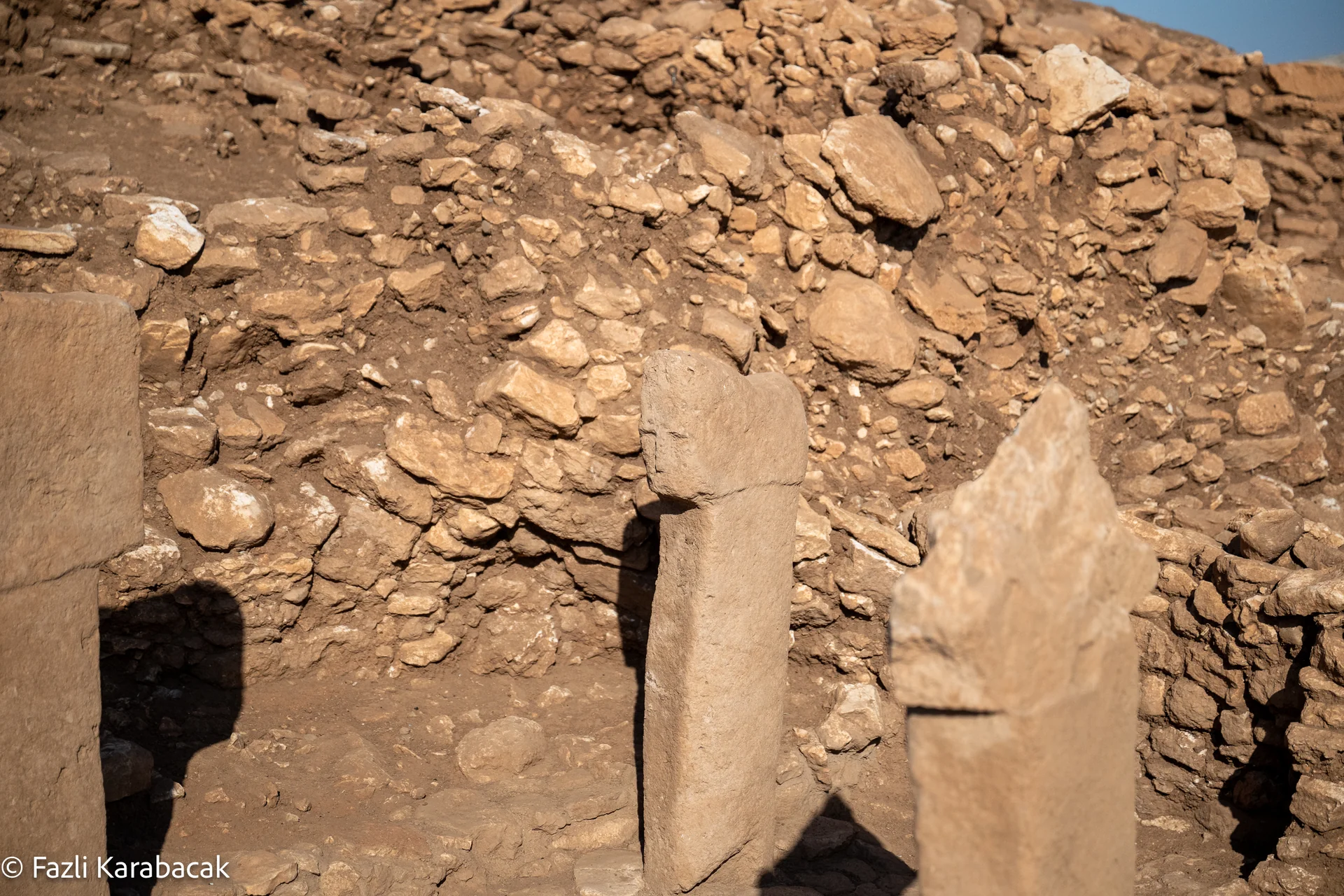
Human Figures at Karahantepe
Human Presence in Neolithic Stone
Among the most astonishing discoveries at Karahantepe are the human figures carved directly into pillars and chamber walls. Unlike the abstract or schematic human representations found at most other Neolithic sites, Karahantepe's sculptors created figures of remarkable realism — recognisable bodies with defined anatomical detail, expressive postures, and an unmistakable human presence.
The carvings belong to the Pre-Pottery Neolithic, but the site's broad date range is not an exact carving date for every object. Naturalistic detail also does not establish that an image is a portrait of a particular person. Comparable early sculpture, including Urfa Man, belongs in this story alongside Karahantepe.
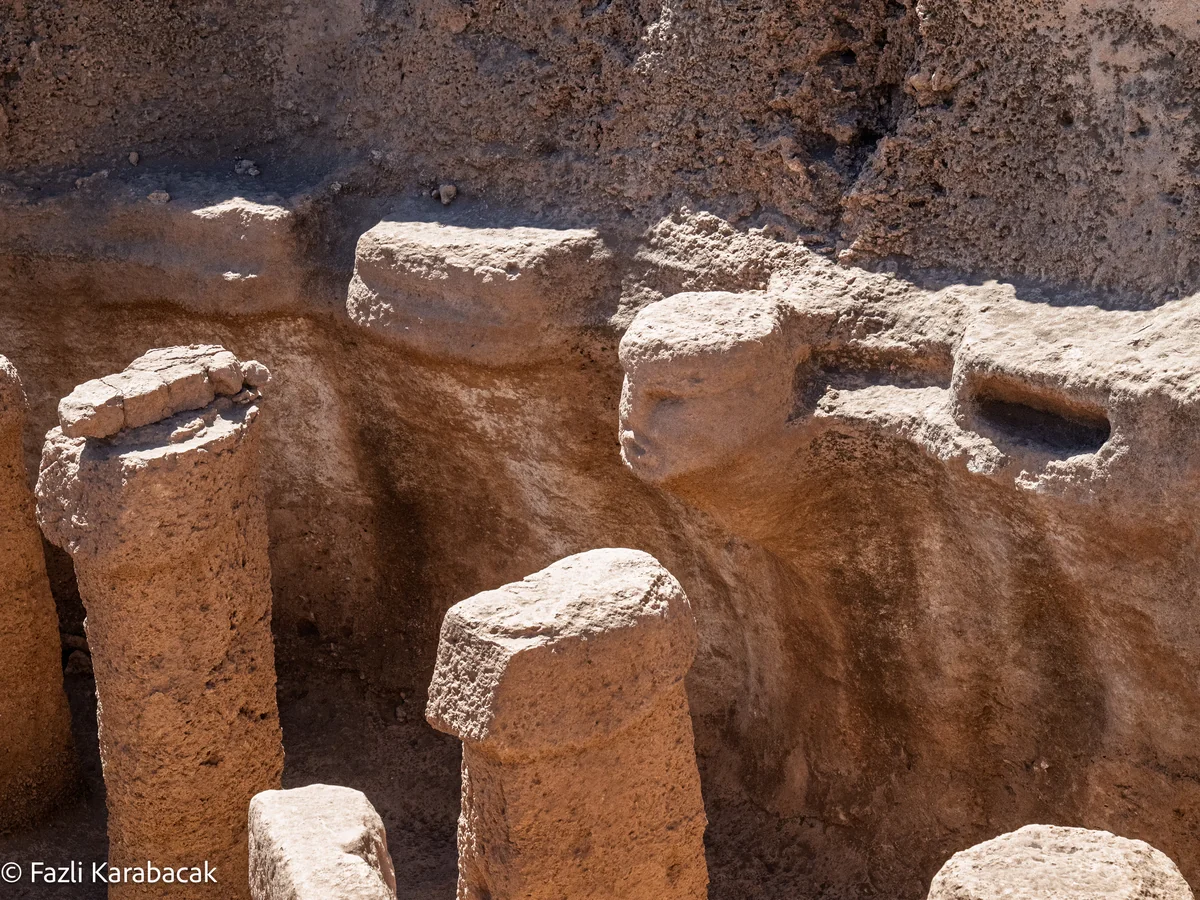
Structure AB's Wall Head
Structure AB contains a human head carved from the western-wall bedrock, projecting toward the room and turned slightly toward its entrance stairs. It is not a full-bodied figure rising from the floor. Two small niches sit on the nearby bench.
Ten phallus-shaped pillars remain attached to the bedrock, with one separately inserted stone element bringing the count to eleven. Karul's 2021 report (PDF) describes four front pillars 1.6–1.7 metres high and six rear pillars 1–1.4 metres high. They should not be described as a ring of T-shaped pillars.
The Separate Seated Statue Announced in 2023
The Ministry of Culture and Tourism's report of 30 September 2023 records a 2.3-metre seated human statue fixed into a bench. It highlights the ribs, spine and shoulder bones and notes a vulture sculpture and stone plates in the same area.
This is the Sitting Man, not Structure AB's wall head. The official announcement does not give an exact carving date or establish a “world's oldest realistic statue” ranking. Its skeletal appearance invites discussion of life and death, but the identity of the figure remains unknown.
What is clear is the intentionality behind these images. The figures were placed at specific locations within each structure, suggesting a planned iconographic programme rather than ad-hoc decoration. Human and animal are not randomly distributed — they are composed.
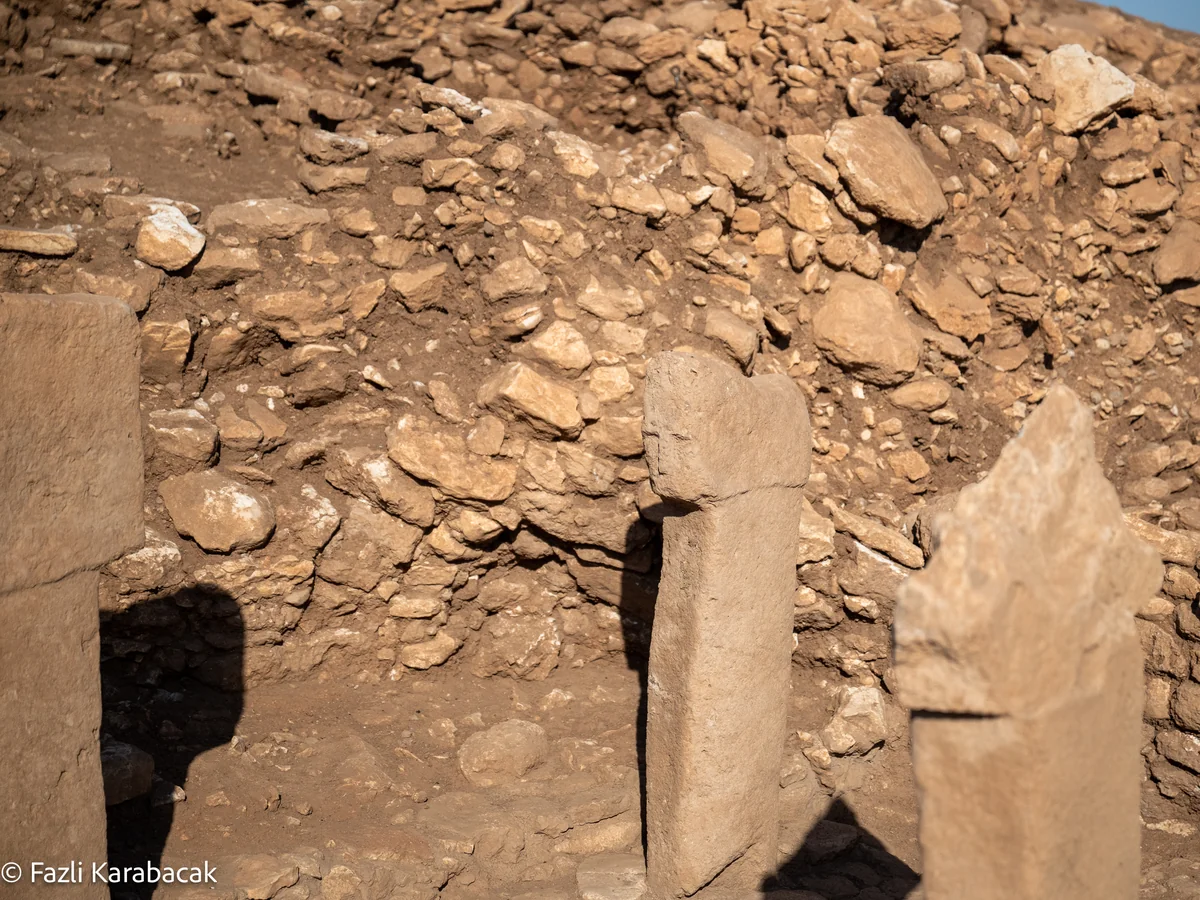
T-shaped pillars — often interpreted as stylised human forms
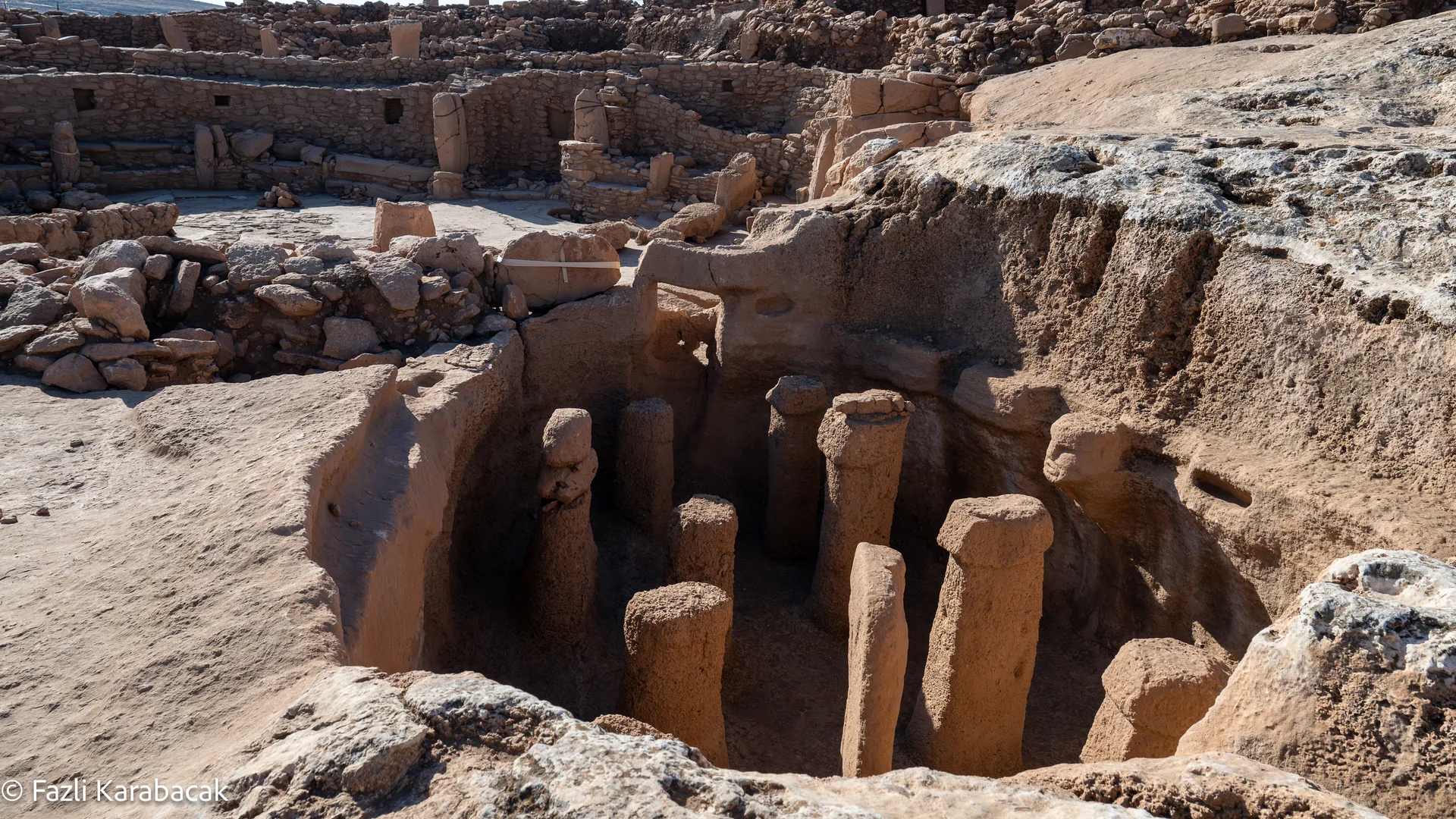
Structure AB — the chamber with a western-wall head
Architectural context — not a photograph of the seated statue
Why Human Figures Matter
Karahantepe adds to an already diverse Neolithic sculptural record. The official Şanlıurfa Museum guide describes the 1.8-metre Urfa Man and sculpture from Nevalı Çori. These comparisons prevent a single new discovery from being mistaken for the beginning of human representation.
The anatomical detail and compositional sophistication of the figures found here imply a level of artistic development that challenges the conventional picture of Pre-Pottery Neolithic societies as simple or culturally unsophisticated. These were people who thought carefully about how to represent themselves — and who possessed both the skill and the social context to do so in stone.
Whether the figures represent ancestors, deities, shamans, or community members memorialised after death remains an open question. What is not in doubt is that for the people who built and used these structures, the human form was worth carving — worth preserving — worth placing at the centre of their most sacred spaces.
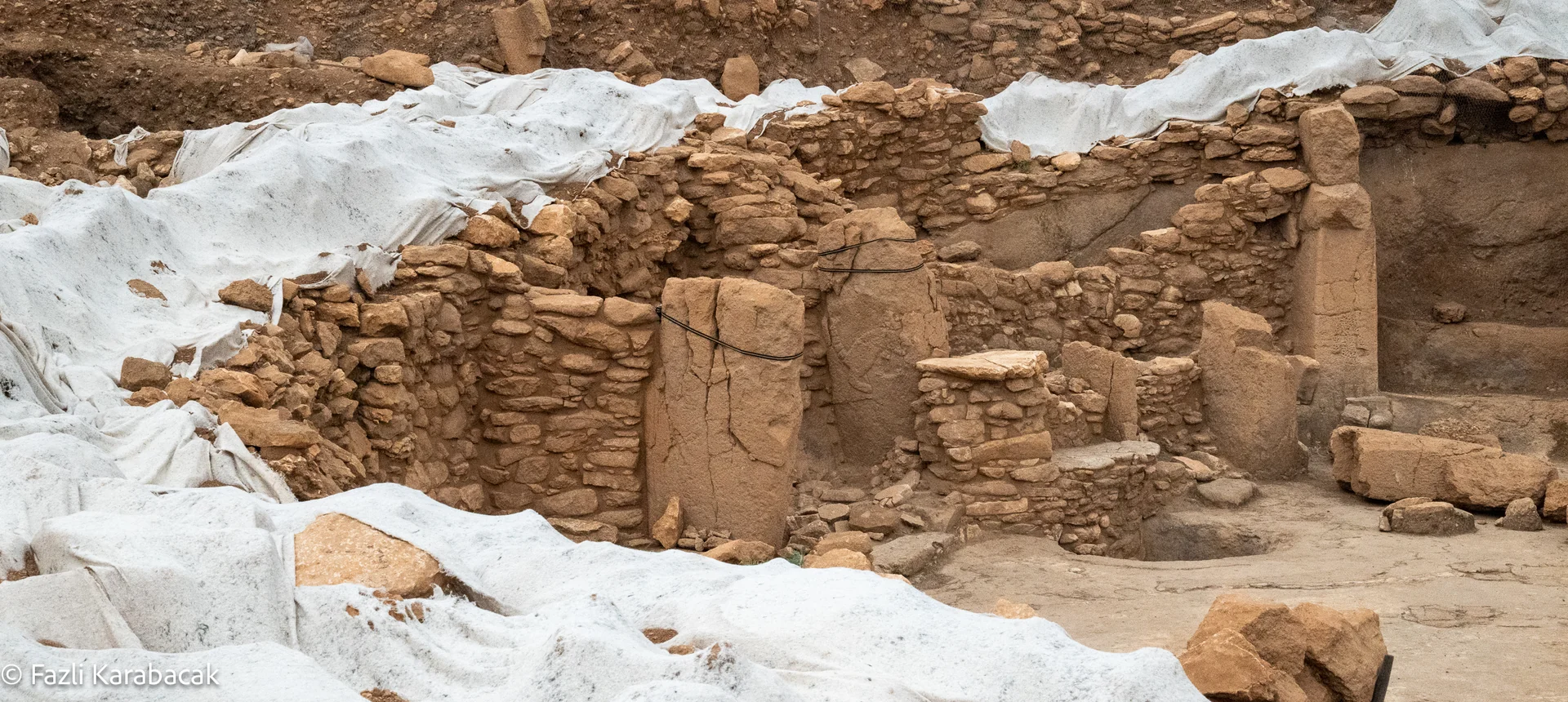
Panoramic view of Structure AB — distinct from the 2023 seated statue's reported context
Keep Exploring
See the Figures for Yourself
Check the visitor guide and current display information: access to excavated areas and the location of portable objects may change. A guided visit can help distinguish architectural context from museum displays.