Structure AB — The Pillar Shrine
Entering the Chamber
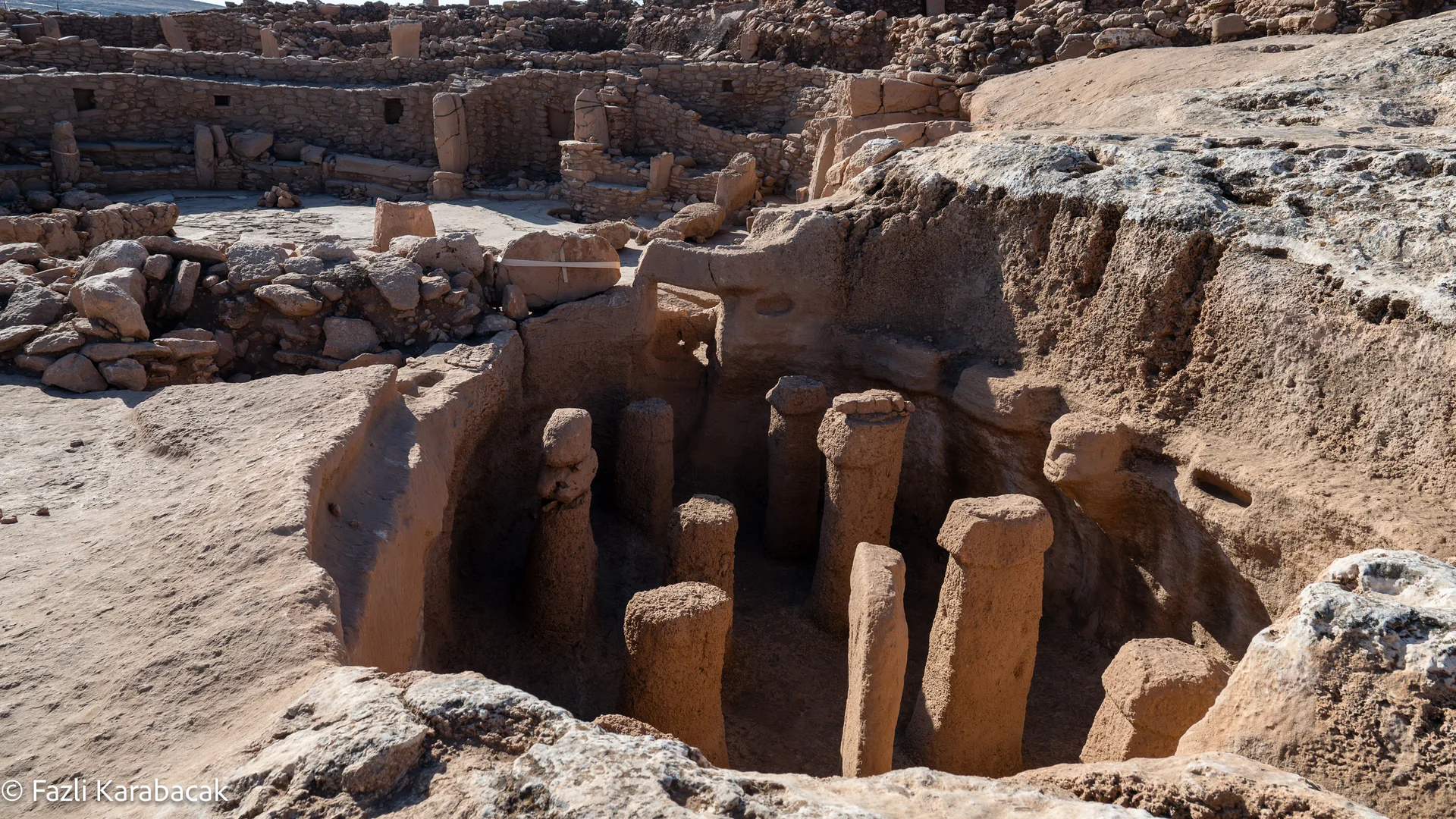
Published by excavation director Prof. Necmi Karul in 2021, Structure AB is a rock-cut chamber approximately 7 by 6 metres, with a roughly trapezoidal plan and rounded corners. “Pillar Shrine” is a descriptive nickname: a special or ceremonial purpose is an archaeological interpretation, not the building's known ancient name.
Ten phallus-shaped pillars were carved directly from the bedrock. A separately fashioned stone element inserted into a shallow socket brings the total to eleven. The four pillars in front of the western-wall head stand 1.6–1.7 metres high; the six rear pillars stand 1–1.4 metres high. These are not the T-shaped pillars familiar from other Karahantepe structures.
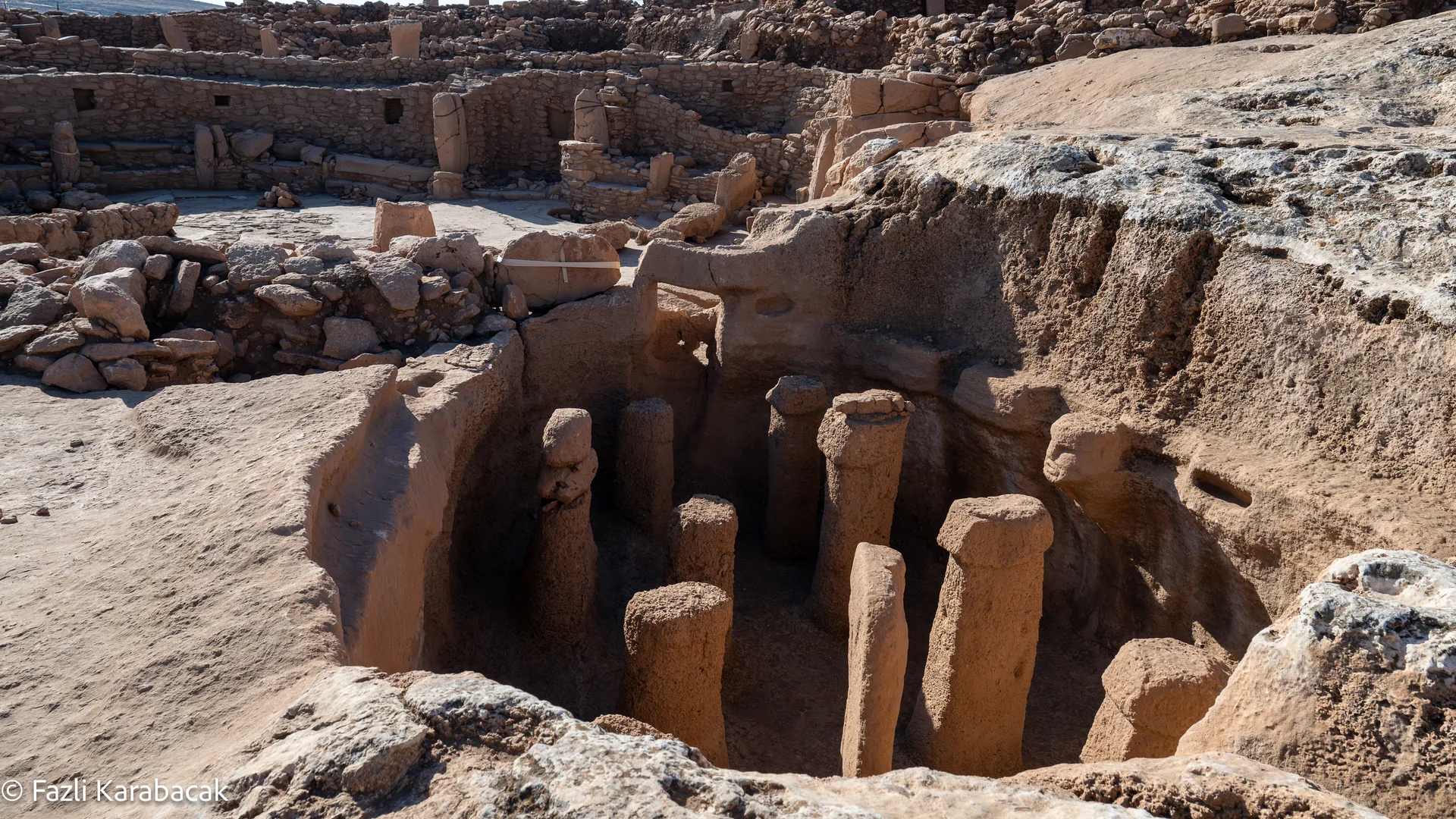
Structure AB: rock-cut pillars and the western-wall head, viewed from above
The Head on the Western Wall
Structure AB's human image is a head projecting from a ridge on the western wall, not a full-bodied statue standing in the centre. Karul describes a protruding forehead, thick lips and a beard beneath the chin. Two small niches lie on the bench near the head; they are not described as two additional carved faces.
The head turns slightly toward the entrance stairs. Structure AB is entered principally from Structure AD and also connects with Structure AA. Karul proposes movement through the chamber as part of a ceremonial sequence, while explicitly treating this as a preliminary interpretation.
Do not confuse this fixed wall carving with the 2.3-metre seated statue announced in 2023. The Ministry's report describes that separate sculpture as fixed into a bench, with prominent ribs, spine and shoulder bones. Its discovery does not turn AB's head into a full figure.
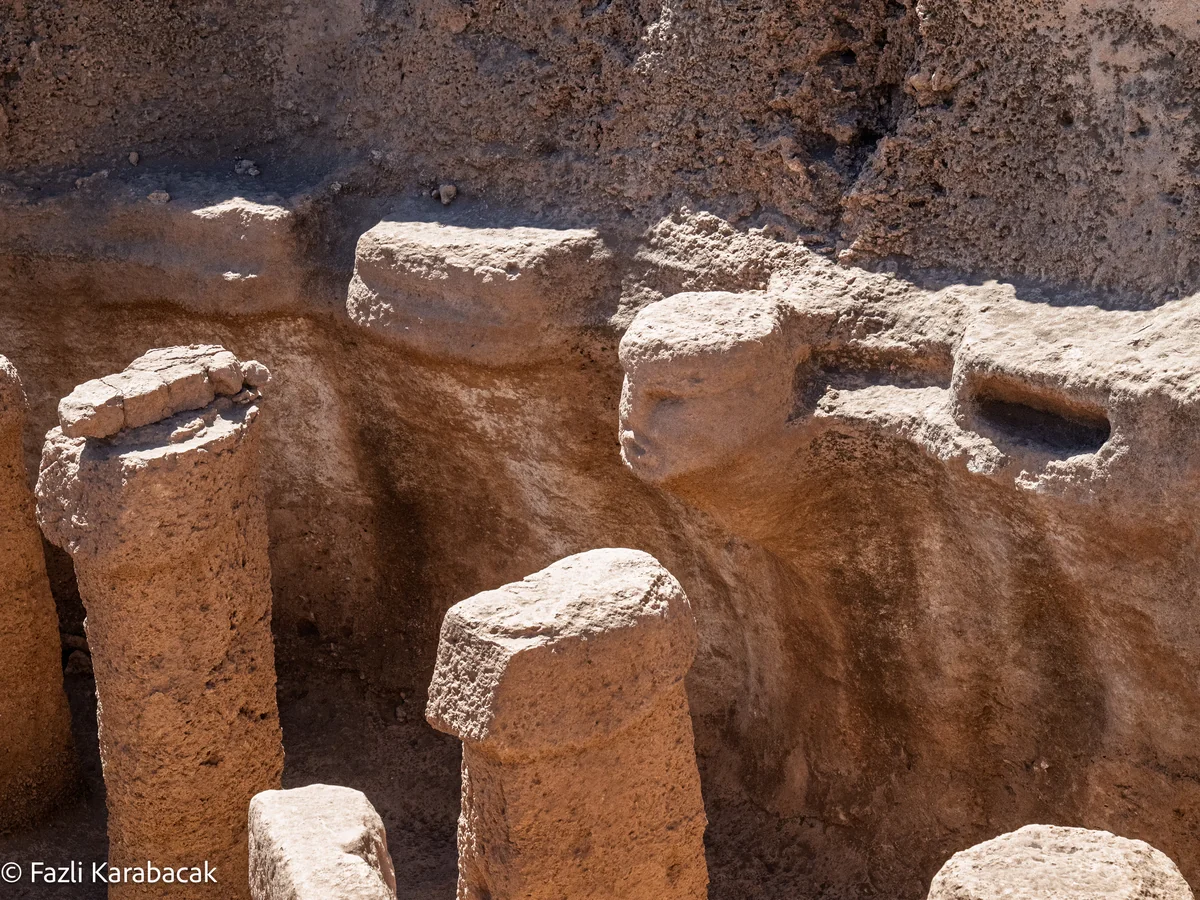
The western-wall head and nearby niches
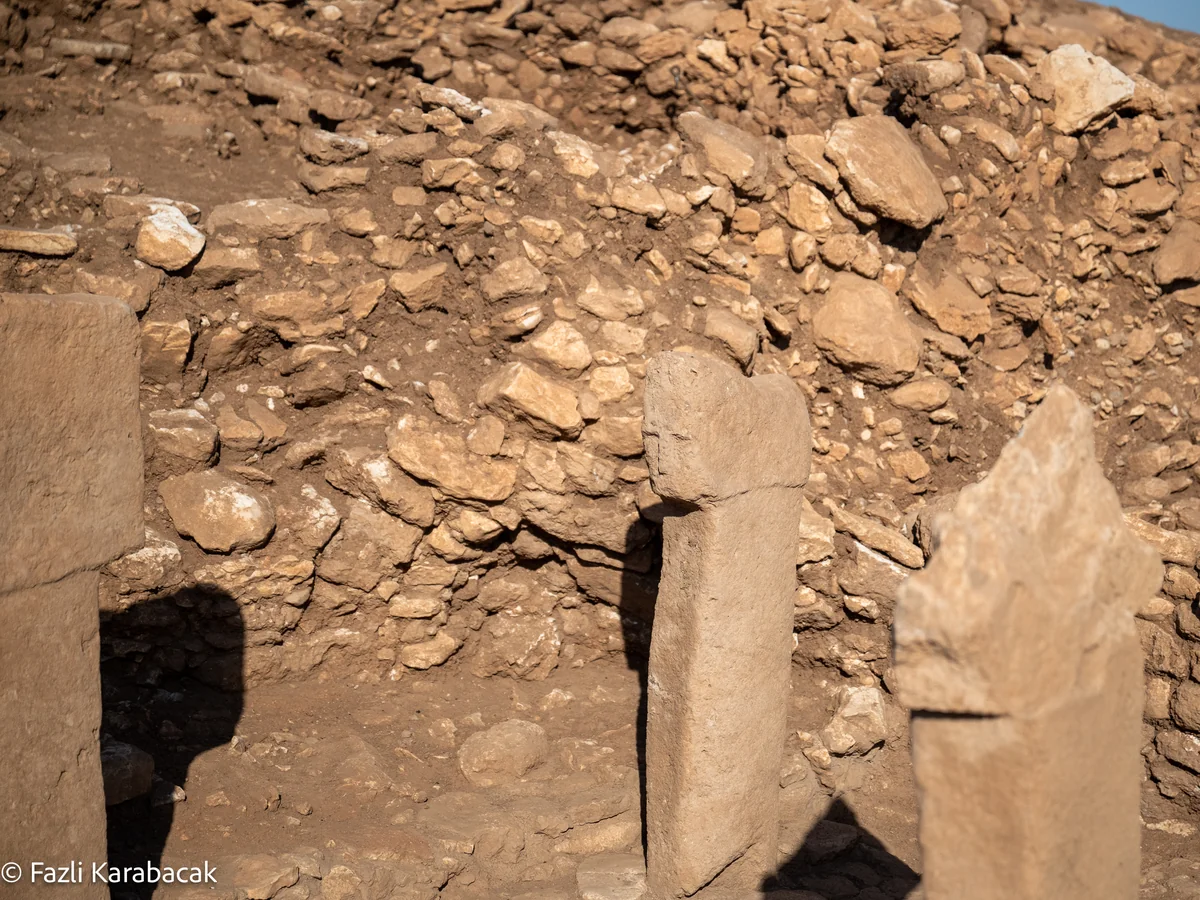
T-shaped pillars elsewhere at Karahantepe — distinct from AB's phallic pillars
What Makes Structure AB Unique
Göbekli Tepe's enclosures are rightly celebrated, but Structure AB at Karahantepe introduces several features not found there. The most significant differences illuminate how distinct communities within the Taş Tepeler network interpreted shared architectural traditions.
Bedrock Integration
At Göbekli Tepe, T-shaped pillars were quarried from limestone outcrops up to 100 metres away and transported into pre-dug enclosures. At Karahantepe, many pillars in Structure AB were carved directly from the bedrock floor, remaining physically connected to the earth. This technique eliminated the need for transport but required extraordinary precision — a single miscalculated blow could ruin a pillar that could not be replaced.
A Fixed Human Presence
Some large enclosures at Göbekli Tepe have two central T-shaped pillars. Structure AB instead combines phallic pillars with a human head on the wall. This contrast shows variation in architectural imagery, not a demonstrated progression from abstract pillars to realistic bodies.
Scale & Intimacy
While Göbekli Tepe's Layer III enclosures can reach 20 metres in diameter, Structure AB is a more intimate space at roughly 7 metres across. The closely spaced pillars create an enclosed, almost claustrophobic atmosphere. Scholars have speculated that this chamber was designed for smaller gatherings — perhaps initiation rites or ceremonies involving a select group rather than a large assembly.
Scholarly Interpretations
In his 2021 excavation report (PDF), Karul notes the absence of domestic elements within AB and argues for a special-purpose building. That observation concerns this chamber, not an absence of habitation throughout Karahantepe. Ancestor, fertility and initiation readings remain interpretations.
A serpentine channel opens into AB from the north. “Serpentine” describes its winding shape; it does not establish a snake relief, a guardian deity or a proven ritual-water system. The three-room guide separates these recorded features from proposals about how people moved between AD, AB and AA.
Karul interprets AB's successive fill layers and stones carefully positioned over the rear pillars as intentional filling. The motive remains open, and this evidence should not be generalised into a single burial event for every Taş Tepeler site. The 2023 Ministry report provides the separate discovery record for the seated statue.
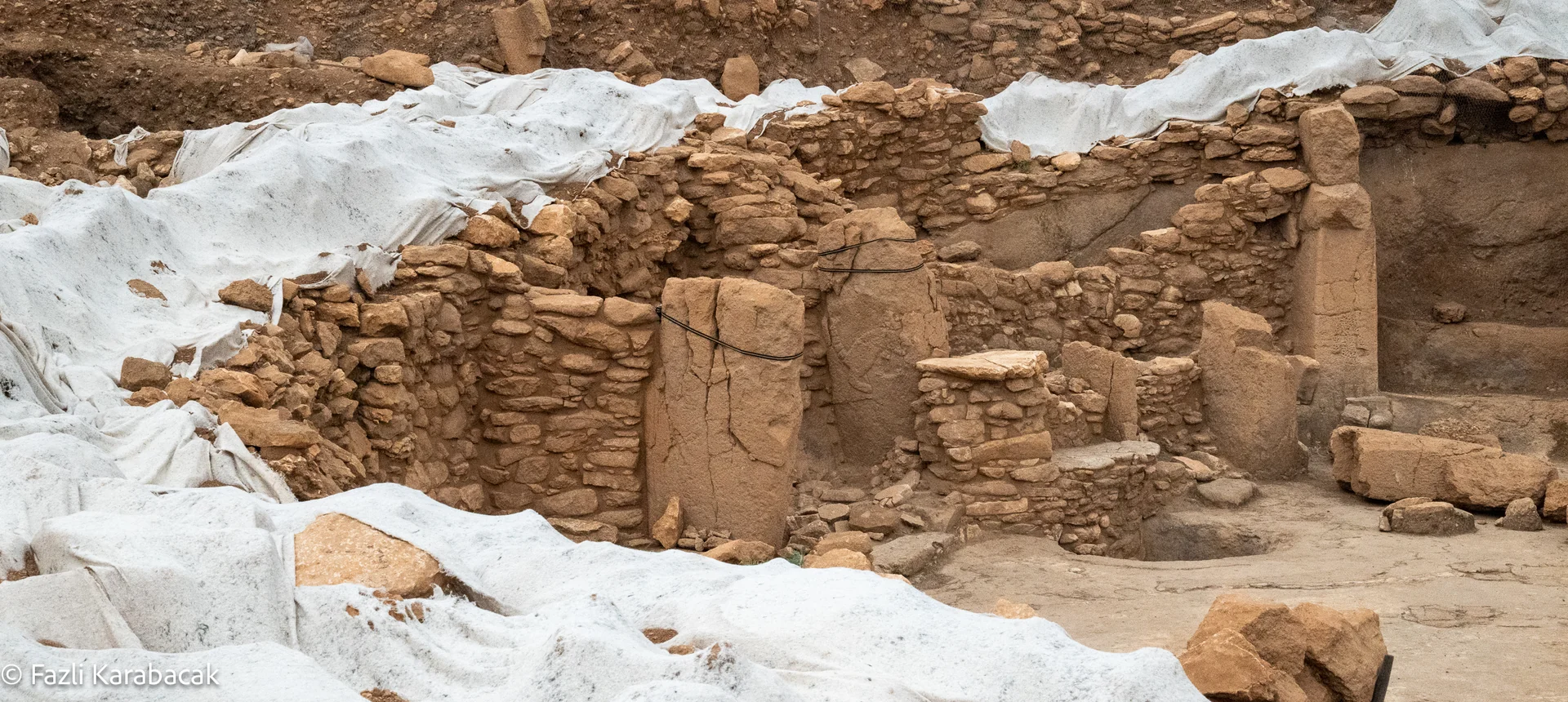
Panoramic view of Structure AB during excavation
Experience It
See the Pillar Shrine on a Guided Tour
Check the visitor guide and current site access before travelling. Our guides bring the chamber to life with the latest archaeological insights, placing every carved detail in its historical context.