Quick Answer
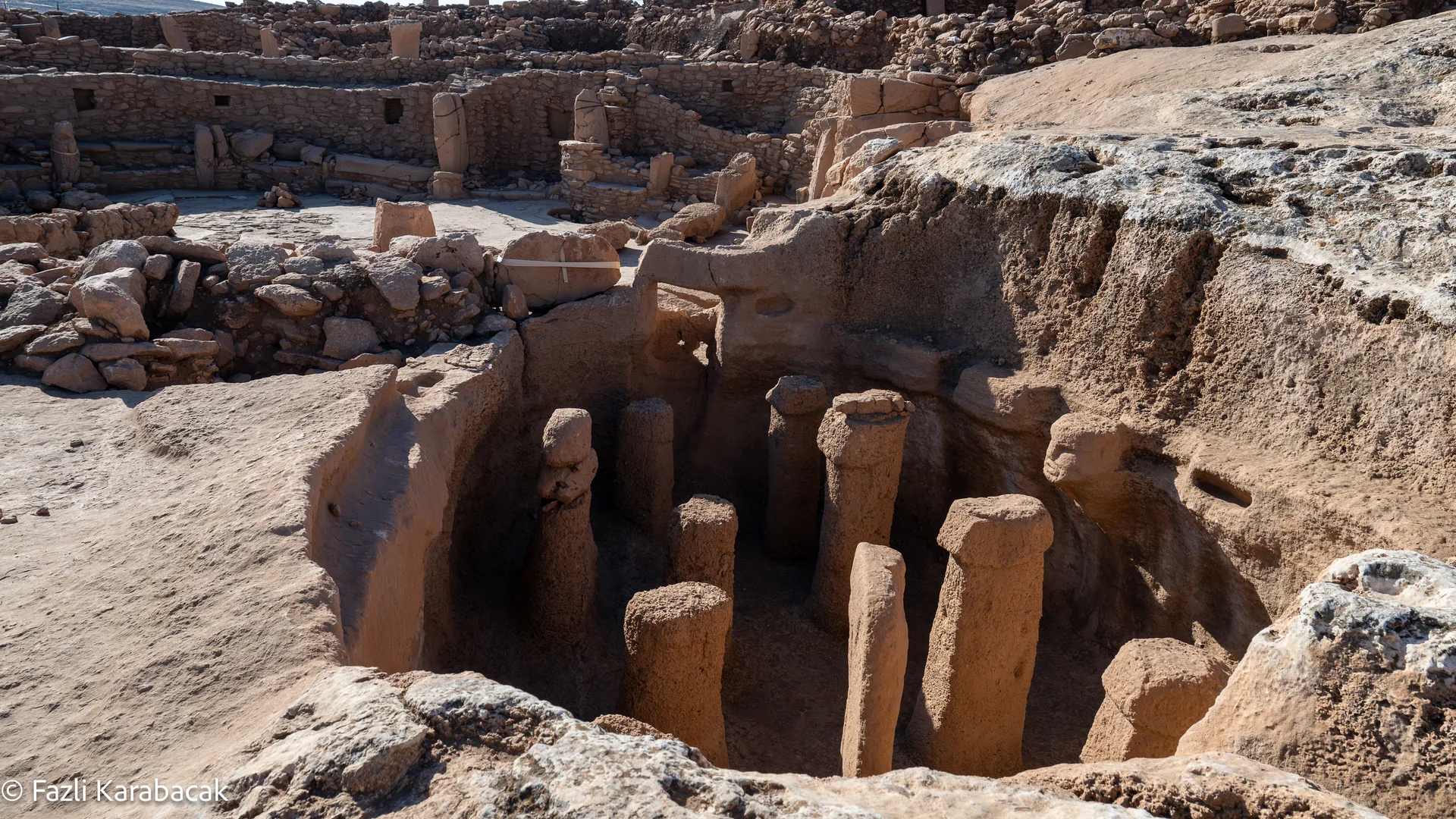
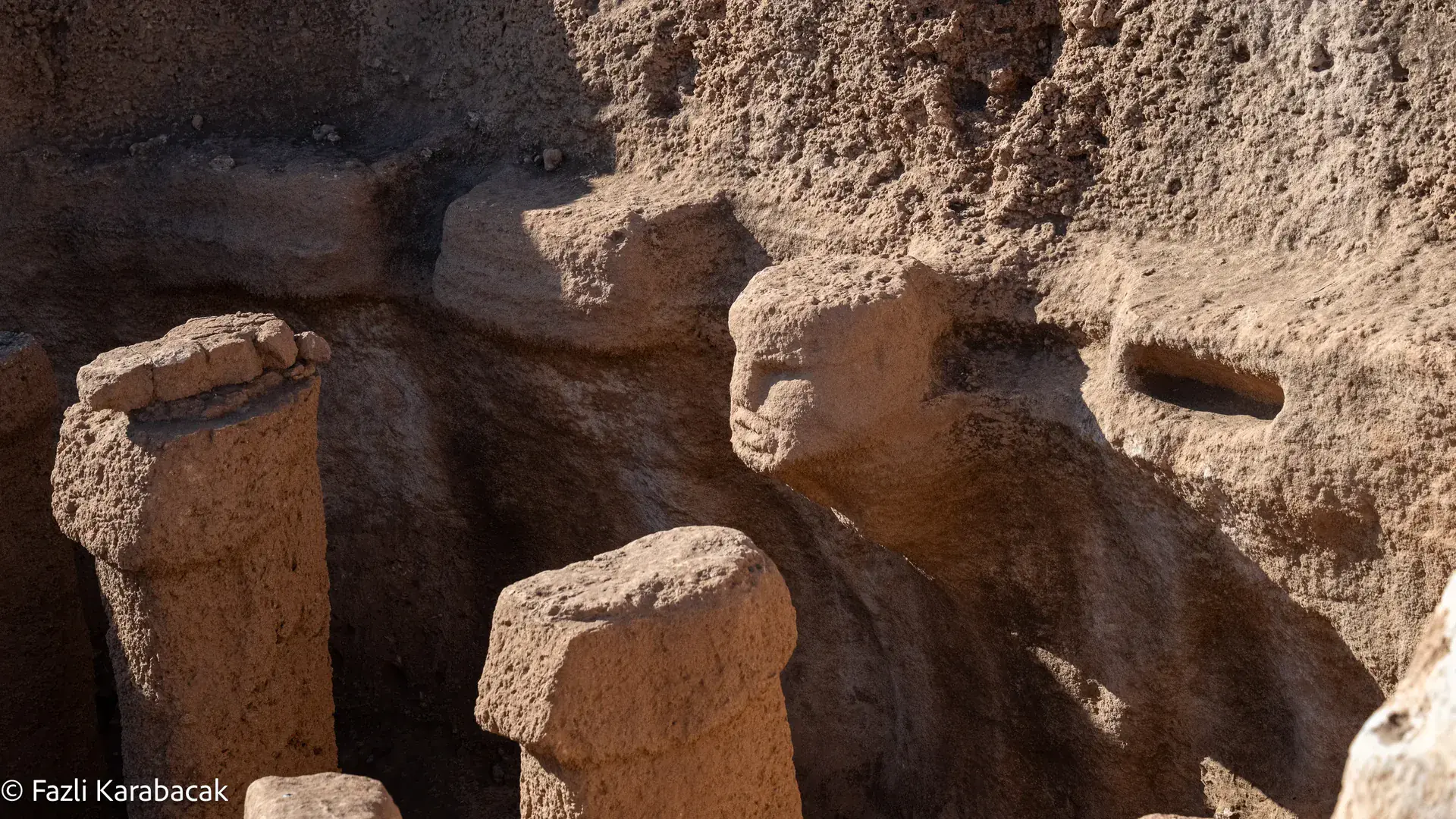
A significant 2025 announcement concerned a human face carved on a T-shaped pillar at Karahantepe. Reporting on the Ministry of Culture and Tourism’s announcement describes deep eye sockets, a prominent nose and facial contours. This is distinct from Structure AB’s western-wall head, published in 2021, and the 2.3-metre seated statue announced in 2023. A season’s discovery report should not be expanded into unverified counts of new rooms, leopard reliefs or promised laboratory results.
Each year, the excavation team at Karahantepe adds to our understanding of the Neolithic. This article focuses on a traceable public announcement from the 2025 season rather than claiming a complete excavation inventory. The archaeological work is led by Professor Necmi Karul of Istanbul University within the Taş Tepeler programme.
The Human-Faced T-Shaped Pillar
An October 2025 report by bianet, citing the Ministry’s announcement, describes a face carved into the upper part of a T-shaped pillar. It records the Minister’s description of the discovery as the first known example of a face on such a pillar.
That is a specific claim about T-shaped pillars, not a claim that this is the first human face or human sculpture. Neolithic sculpture was already known from Karahantepe, Urfa and other sites.
Why a Face on a Pillar Matters
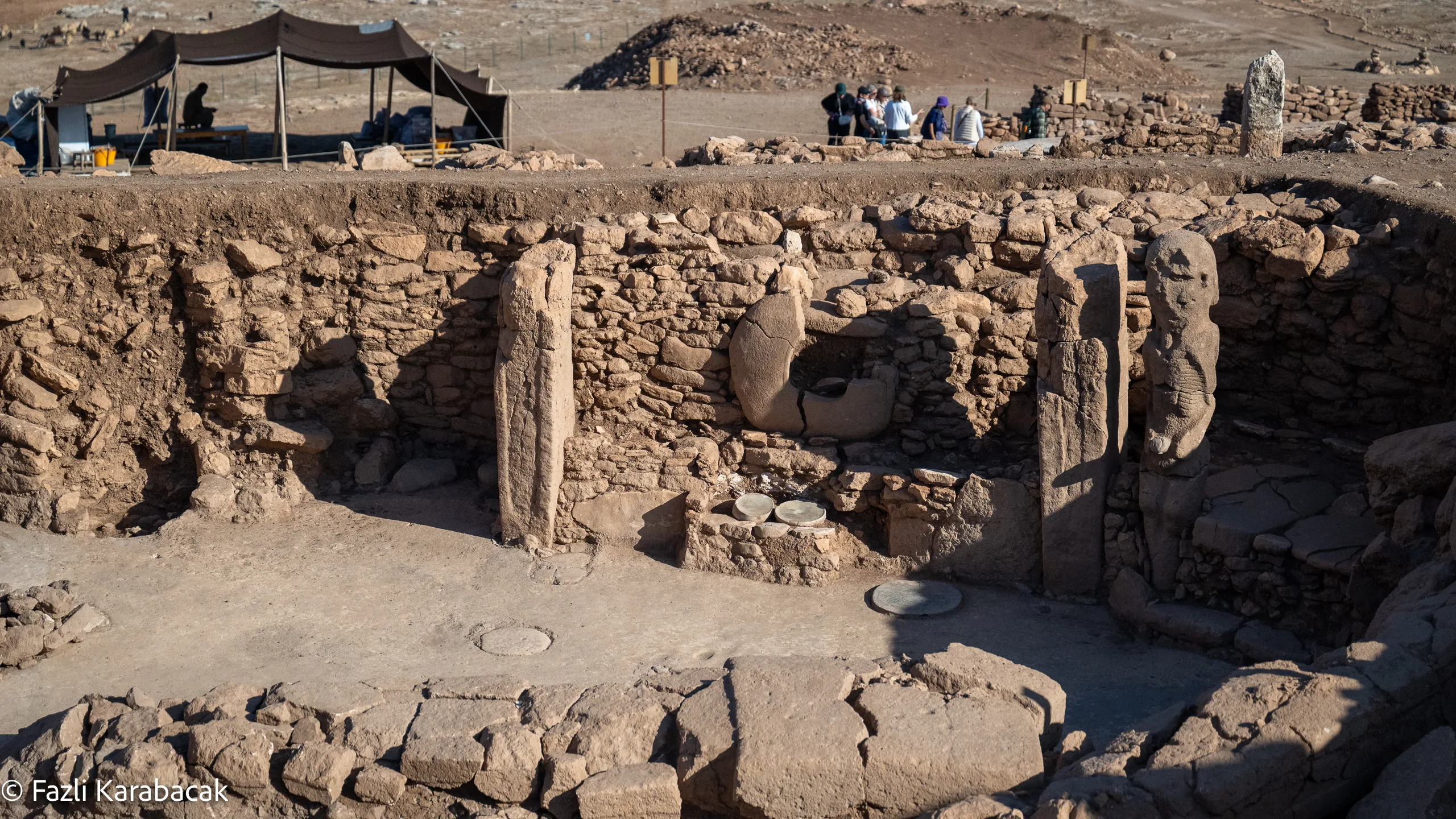
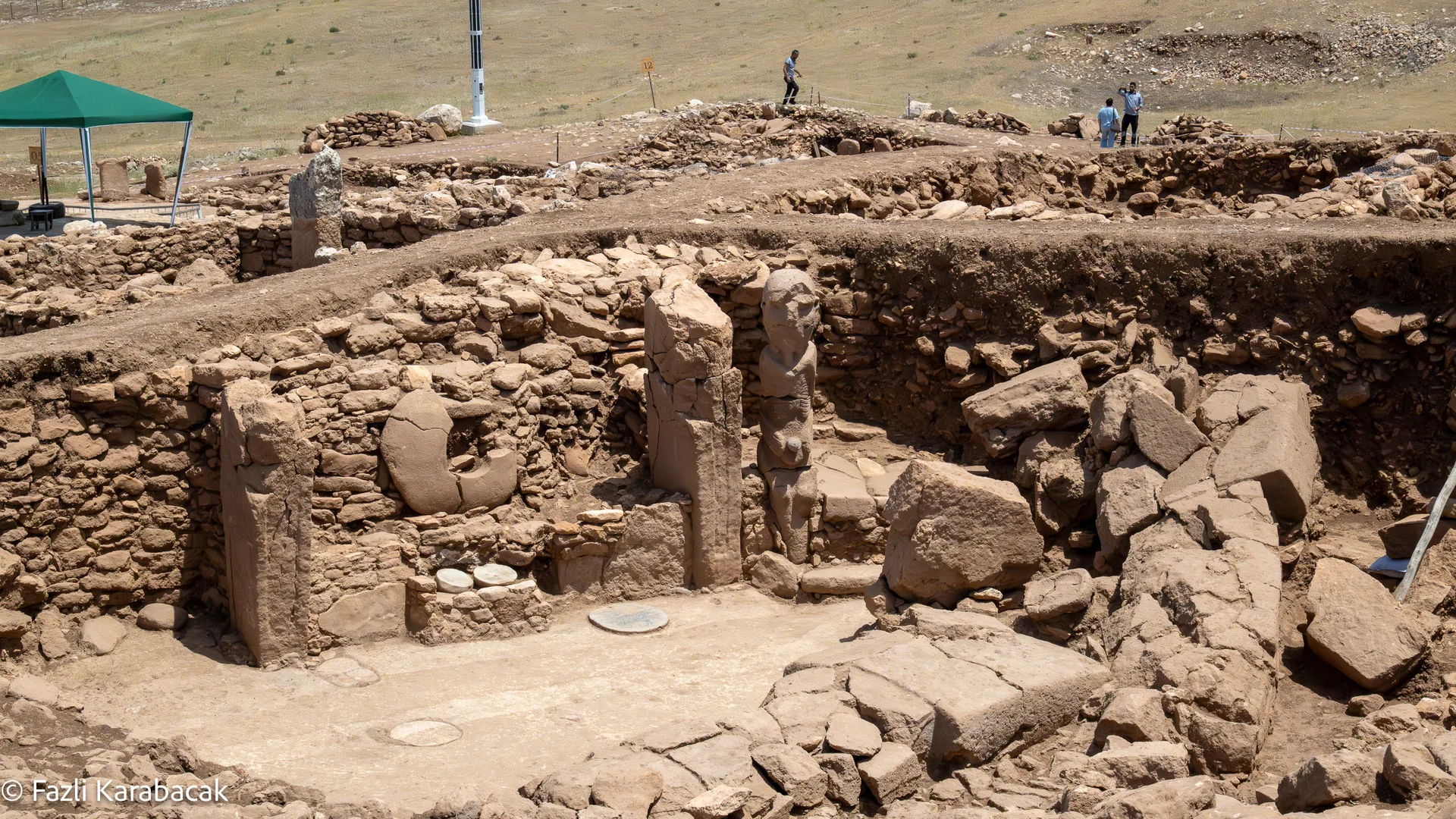
T-shaped pillars have long been interpreted as stylised human forms, supported by arms, hands and clothing details on some examples in the region. A carved face adds another kind of evidence to that interpretation.
It does not identify the represented person, prove a deity or ancestor cult, or date the emergence of human self-awareness. Those are much broader questions than one object can settle.
Three Discoveries That Should Not Be Confused
- Structure AB’s head: a human head projecting from its western wall, described in Karul’s 2021 report (PDF), beside ten phallic bedrock pillars and an inserted eleventh stone element.
- The seated statue: a separate 2.3-metre figure fixed into a bench, with prominent ribs, spine and shoulder bones, announced by the Ministry on 30 September 2023.
- The human-faced T-pillar: the subject of the 2025 announcement, a face carved into the upper section of a T-shaped pillar.
For more detail, see human figures at Karahantepe and the Sitting Man article. A broad site date should not be assigned as an exact carving date to all three.
What This Source Does Not Establish
The cited announcement does not provide evidence for three newly discovered eastern chambers, two leopard reliefs with claw marks, or a site-wide total of more than twenty serpent motifs. Those claims require a season report or a find catalogue.
It also does not establish a new visitor-centre opening date, a shelter extension or guaranteed access to new trenches. Consult the visitor guide and site management for current arrangements rather than treating archaeological news as visitor-access advice.
What to Expect Next
Detailed publication can clarify the pillar’s stratigraphic position, associated finds and relationship to the building around it. These questions matter more than assigning it a precise age from a headline.
The broader Taş Tepeler programme investigates related settlements including Sayburç and Harbetsuvan Tepesi. Comparing securely documented contexts can show both shared traditions and local differences. Unannounced research schedules or laboratory deadlines should not be presented as confirmed plans.
Frequently Asked Questions
What significant discovery was reported at Karahantepe in 2025? A human face carved into the upper part of a T-shaped pillar, according to reporting on a Ministry announcement.
Is that the same object as the Sitting Man? No. The 2.3-metre seated statue was announced in 2023. It is also distinct from Structure AB’s western-wall head.
Does a face on a T-pillar identify a particular person? No. It strengthens discussion of human representation, but it does not reveal the identity or status of the figure.
Does this article give a complete inventory of the 2025 season? No. It covers a traceable public announcement. Counts of rooms, reliefs or other finds need a published season inventory.
Can visitors see the new pillar? Confirm its current display and access arrangements with site management. A discovery announcement is not a guarantee of public visibility.
What should readers look for in future reports? Stratigraphic context, associated dating evidence and a documented reconstruction of the pillar’s relationship to its building.