Quick Answer
Karahan Tepe’s environment must be reconstructed from animal remains, plant remains and regional environmental studies, not from carvings alone. Wild mammals, birds, cereals, pulses and nuts are important to the wider Neolithic story of southeastern Anatolia. A species list pooled from Göbekli Tepe and neighbouring sites is not a find list for Karahan Tepe, and a bone percentage needs a defined sample. Climate and human land use changed the landscape, but neither a single drought cause for abandonment nor the ancestry of today’s trees is established here.
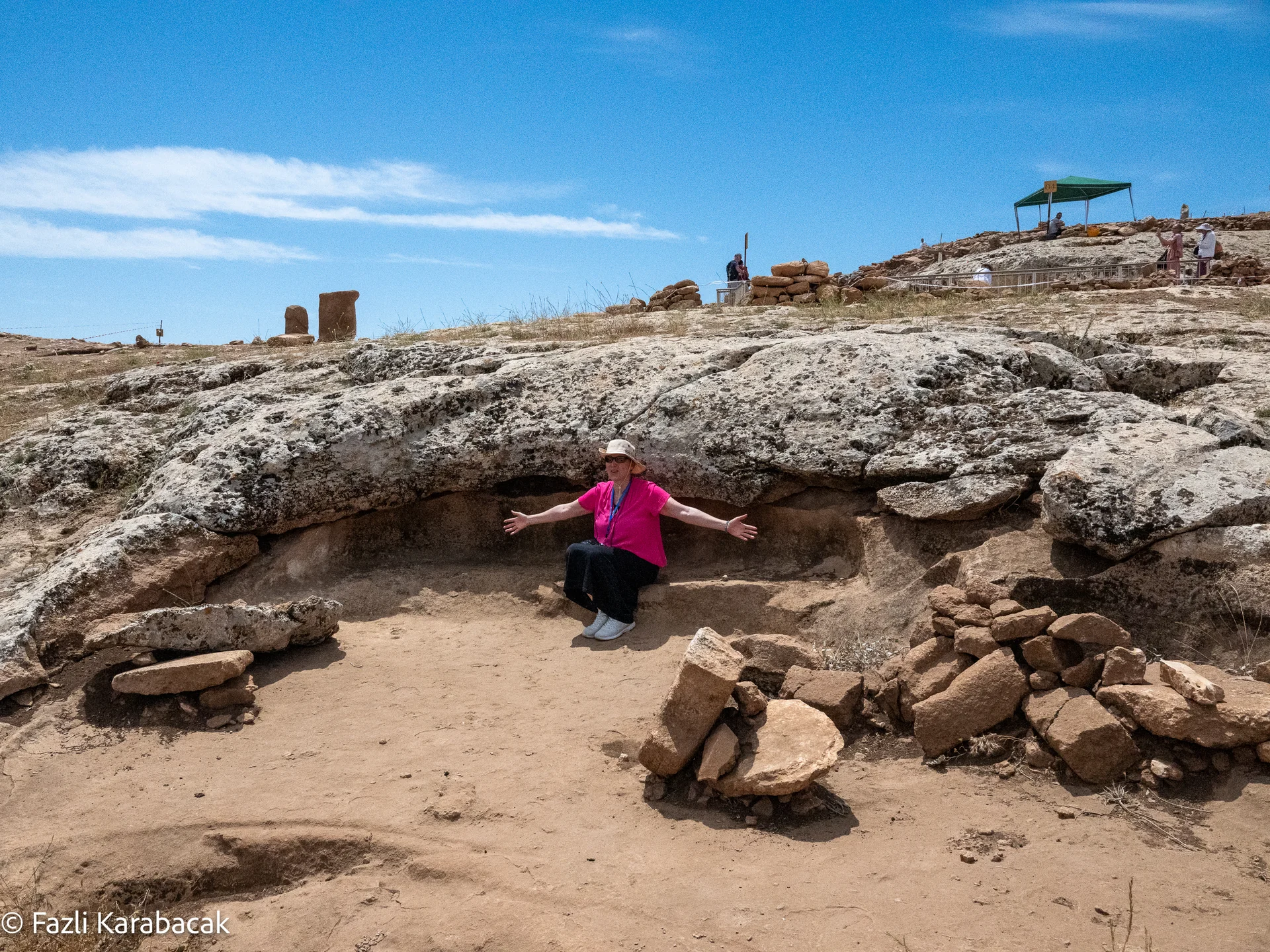
When visitors stand at Karahan Tepe today, they see dry steppe — sparse grass, bare rock, the occasional fox or partridge. It is a beautiful landscape in its starkness, but it can be difficult to imagine as a place where hundreds or thousands of people gathered to build monuments over centuries. The key is understanding that 11,000 years ago, this landscape was dramatically different.
I have been visiting the Tektek Mountains regularly since 2020, watching the seasons change across this terrain. Even today, the difference between spring (when the hills briefly turn green) and summer (when everything bakes to brown) is striking. Multiply that seasonal range by the effects of a fundamentally different climate, and you begin to see the world the builders of Karahan Tepe actually inhabited.
The Tektek Mountains Today
The Tektek Mountains lie approximately 42 kilometers east of Şanlıurfa’s city center, covering about 19,335 hectares. The geological structure is primarily limestone. Today, roughly 80 percent of the land is meadow and pasture, with about 13 percent under agricultural use. The region falls within the Iran-Turan phytogeographical zone — dry, continental steppe.
Modern botanical surveys describe diverse steppe plants in the wider protected area. Such surveys concern today’s flora; a modern species total cannot measure how many species were present at Karahan Tepe in the Neolithic.
The wider region supports steppe wildlife, but sightings during a site visit are never guaranteed. A modern wildlife observation is also not evidence that a species appears in the site’s excavated Neolithic assemblage.
Neolithic Fauna: A Richer World
Archaeological evidence from Karahan Tepe, Göbekli Tepe, and nearby sites like Harbetsuvan Tepesi paints a picture of a far more populated ecosystem.
Mammals documented in Neolithic deposits include gazelle (the most commonly found remains), wild boar, wild cattle (aurochs), sheep, goats, red fox, rabbit, red deer, and wolf. Wild cat bones have also been recovered. These regional finds illuminate hunting and subsistence. Domestication status must be assessed by species, context and phase, rather than assumed for every bone or every community.
The bird population was equally diverse. Eagle, vulture, duck, goose, quail, partridge, crane, owl, magpie, and raven remains have all been identified at Göbekli Tepe. Many of these species appear as carved reliefs on the T-shaped pillars at both sites, suggesting they held symbolic significance beyond their value as food.
Wild equids are part of the regional Neolithic faunal discussion. Identifications at individual sites should be checked against their own published assemblages.
Neolithic Flora: The Ancestors of Agriculture
Wild cereals and pulses are central to the wider Near Eastern Neolithic story, including einkorn, barley and lentils. This regional context should not be presented as a securely identified Karahan Tepe plant assemblage without a site-specific archaeobotanical report.
Beyond the grains, the area supported almond trees, plum trees, and wild pistachio (specifically Pistacia terebinthus, the menengiç tree that still grows in southeastern Turkey and produces the aromatic resin used in traditional cooking). Oak, willow, poplar, and hawthorn or wild pear (Maloideae family) provided wood, shelter, and additional food resources.
This was not a barren wilderness. It was a landscape of abundance — a natural pantry that could support the large gatherings of people required to build sites like Karahan Tepe.
From Abundance to Scarcity
The contrast between the Neolithic ecosystem and today’s depleted landscape is one of the most important stories the region tells. Climate change — the natural drying trend that has affected southwestern Asia over the past 10,000 years — bears much of the responsibility. But millennia of pastoralism, agriculture, and deforestation have also taken their toll.
Many of the large mammals present during the Neolithic — aurochs, wild horses, red deer — vanished from the region long ago. The vegetation thinned as the climate dried and human pressure increased. What remains today is a shadow of what existed when the T-shaped pillars were being carved.
Karahan Tepe belongs to a period of changing relationships between gathering, hunting, cultivation and settled life. Describing it simply as “before agriculture” can obscure that complex transition. The landscape article separates regional environmental context from specific claims about the site.
What Visitors Can Still See
While the megafauna are gone, the Tektek Mountains remain a rewarding destination for nature-minded visitors. Gazelle sightings are possible, especially in the early morning. Birds of prey — particularly eagles — are a common sight. The spring wildflower bloom, typically in March and April, briefly transforms the steppe into a colorful carpet.
Wild pistachio, or menengiç, offers an evocative connection to regional plant use. It is not possible to identify today’s individual trees as direct descendants of particular Neolithic trees from appearance alone. That connection is a guide’s analogy, not a demonstrated genealogy.
Frequently Asked Questions
What animals lived near Karahan Tepe in the Neolithic? Regional Neolithic evidence includes gazelle, wild cattle, other mammals and varied birds. This article’s regional examples should not be read as a complete Karahan Tepe excavation inventory.
What plants grew in the Tektek Mountains during the Neolithic? Wild cereals, pulses, nuts and woody plants are part of the regional environmental picture. A precise list for Karahan Tepe requires a site-specific botanical study.
Is the Tektek Mountains landscape the same as in the Neolithic? No. The region was significantly wetter, more vegetated, and supported far more diverse wildlife 11,000 years ago. Climate change and human activity have dramatically altered the landscape.
Can you see wildlife at Karahan Tepe today? Wildlife may be visible in the wider steppe, but sightings are not guaranteed. Stay on authorised paths and plan around current access in the visitor guide.
Evidence and Context
Animal sculpture and animal bone answer different questions. The Ministry’s 2023 report, for example, records a vulture sculpture beside the seated statue; it does not by itself demonstrate vulture bones, diet or a bird census. The official museum guide provides comparative regional imagery, not a Karahan Tepe faunal inventory.