Quick Answer
Karahan Tepe’s animal imagery forms part of the wider Taş Tepeler sculptural tradition. Serpent, feline and other animal identifications raise questions about symbolism, but renewal, guardianship, clan identity and seasonal calendars are interpretations, not decoded meanings. Structure AB’s western-wall head is described as human in the excavation report; it should not be counted as an established serpent hybrid. Its northern serpentine channel is likewise not proof of a snake relief.
A carved animal can be easy to overlook in weathered limestone. Once noticed, its outline raises a harder question: can we identify what the image meant, as well as what it depicts?
After visiting the site regularly since 2020, I have come to think of Karahan Tepe’s animal carvings as a language we can see but not yet fully read. Each figure was placed deliberately, carved with effort and intention by people using nothing but stone tools. Understanding what these animals meant to their creators is one of the great challenges of Neolithic archaeology.
Serpent Imagery and Its Interpretation
Serpents are a recurring theme in accounts of Karahan Tepe, while Göbekli Tepe also has abundant snake imagery alongside many other animals. A precise comparison of which motif “dominates” needs a dated catalogue and consistent counting, not impressions from a few exposed pillars.
The snakes at Karahan Tepe are typically carved in relief on the sides of pillars, often depicted as if moving upward. Some show naturalistic proportions; others are more stylized. A stone bowl fragment recovered from the site features a zigzagging snake motif that demonstrates the consistency of this iconographic theme across different object types.
The serpent imagery raises questions. Was it a totemic animal? Did it represent renewal, a boundary or something else? Later myths show many meanings for snakes, but they are not direct evidence of what a Neolithic image meant.
Structure AB’s Human Head: Not a Confirmed Serpent
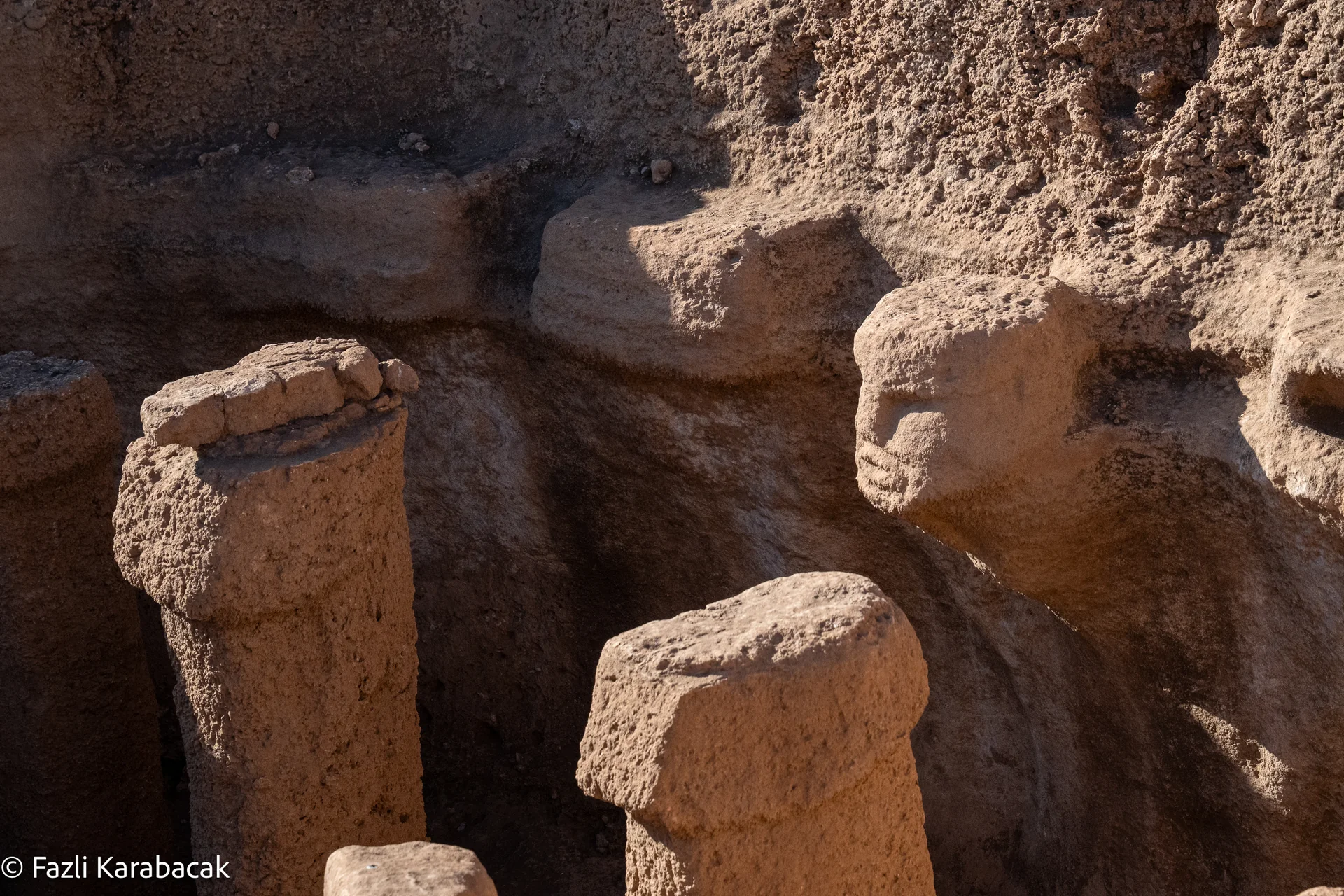
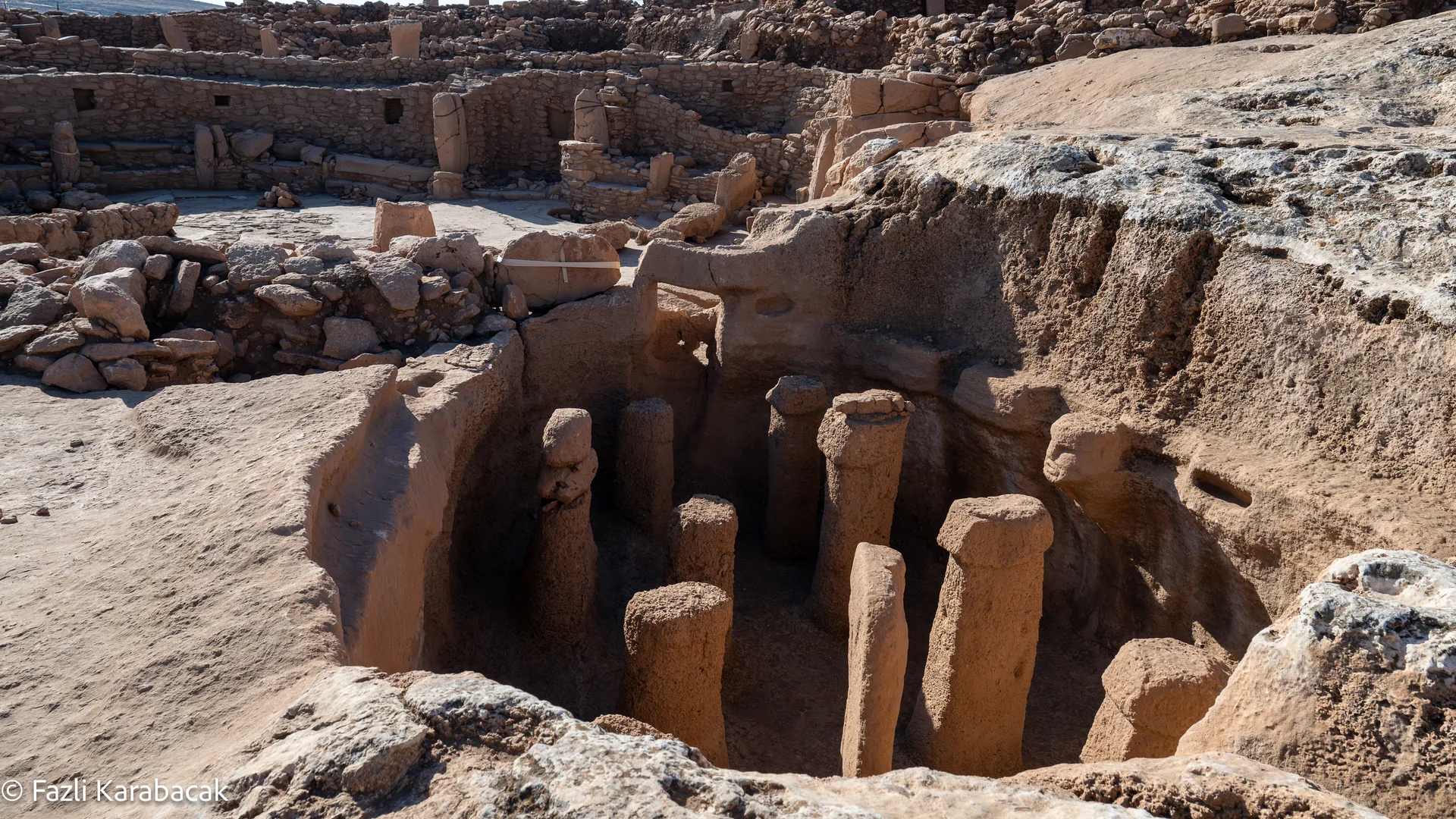
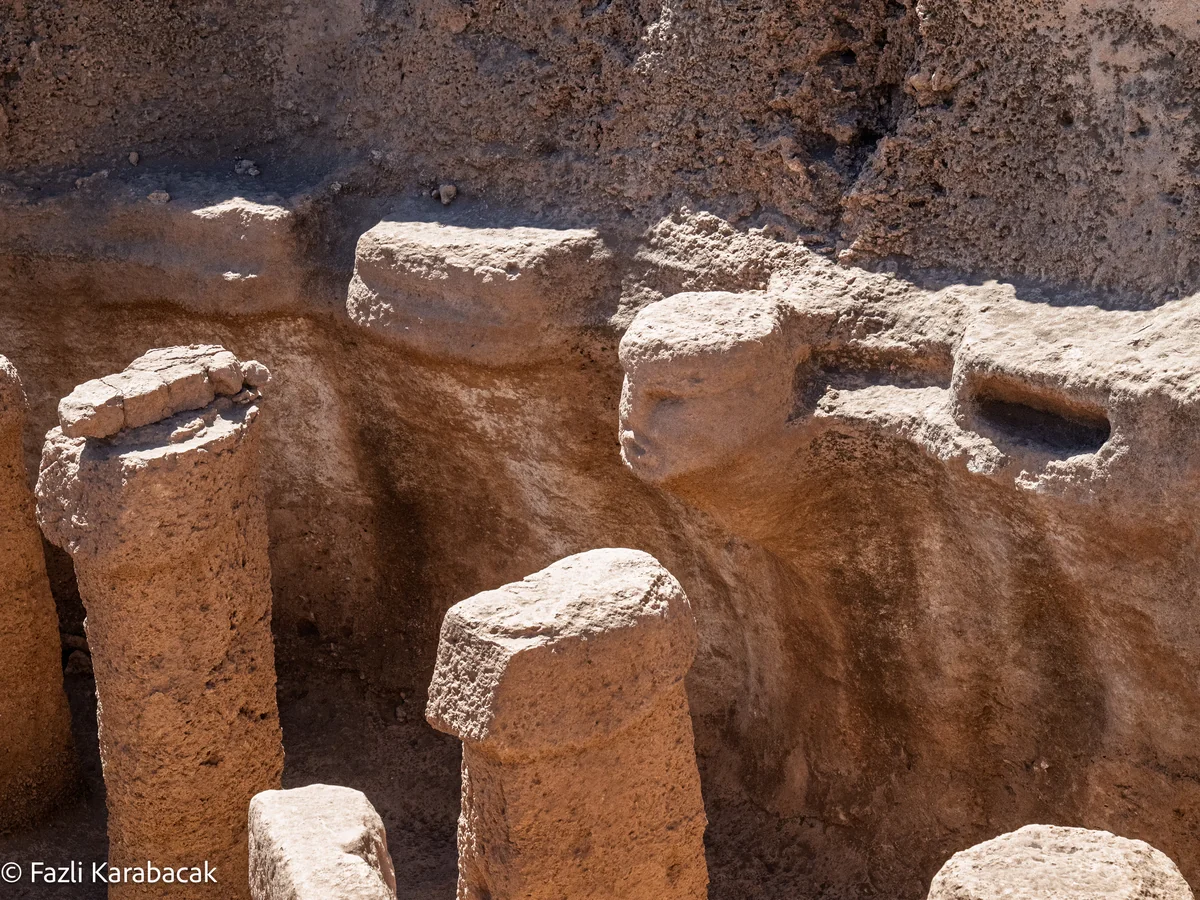
Karul’s 2021 report (PDF) describes a human head projecting from Structure AB’s western wall, with a forehead, thick lips and a beard. Describing its support as serpent-like is a later interpretive choice, not the excavated identification.
The Tree of Life comparison associates the head with Samael; the solstice hypothesis interprets its illumination. Neither establishes a serpent identity or known divine status. These hypotheses cannot confirm each other simply by sharing the same feature.
Lions and Leopards
A high-relief lion or leopard figure has been found on one of the pillars at Karahan Tepe. Similar feline imagery appears on the buttresses of Structure AD, where leopard or fox-like creatures are carved into the stone surfaces.
At Göbekli Tepe, big cats appear in monumental imagery. The much later seated woman flanked by felines from Çatalhöyük offers a comparison, but its “Mother Goddess” identification is also interpretive. Power, protection and spiritual authority are possible readings of feline imagery, not meanings demonstrated uniformly across Neolithic societies.
Foxes and Their Significance
Fox imagery appears at both Göbekli Tepe and Karahan Tepe. At Göbekli Tepe, the fox is one of the most frequently depicted animals, appearing in prominent positions on major pillars. Some researchers have suggested that the fox held particular totemic importance for the communities that built these sites — possibly representing cunning, liminality (the fox moves between day and night, settlement and wilderness), or specific clan identities.
Gazelles and Rabbits
Smaller prey animals also feature in Karahan Tepe’s carved repertoire. Gazelles and rabbits have been identified among the relief carvings, and their bones are prominent in the faunal assemblage from excavations. These animals would have been primary food sources for the hunter-gatherer communities and their depiction may reflect both practical importance and symbolic meaning.
The gazelle in particular is the most commonly found animal in Neolithic bone deposits across the Şanlıurfa region. Its representation in stone may simply honor a creature that sustained human life — or it may carry deeper significance related to speed, grace, or the cycle of hunting and renewal.
The Seasonal Calendar Interpretation
One of the more ambitious interpretive frameworks suggests that the animal carvings at both Göbekli Tepe and Karahan Tepe function as seasonal markers tied to astronomical cycles. Under this model, different animals correspond to different times of the year, with the vulture marking summer (associated with Cygnus), the bull marking spring (Taurus), the scorpion marking autumn (Scorpio), and the snake marking a spring renewal cycle.
If correct, this would suggest a calendar function. The theory remains speculative: the proposed solstice alignment is not independently established as ancient intentional design, so it cannot be used as proof of such a calendar.
What I Point Out to Visitors
When I guide groups through Karahan Tepe, I spend considerable time at the carved pillars. Many of the reliefs are subtle — you need to know where to look and how to read the surface of the stone. Raking light (early morning or late afternoon) is essential for seeing the carvings clearly.
I tell people to look for the snakes first — they are the most common and the easiest to identify. Then look for the smoother, larger surfaces where bigger animals were depicted. And pay attention to the placement: which side of the pillar faces inward (toward the center of the enclosure) and which faces outward. The positioning was intentional, and it may tell us something about the symbolic hierarchy of the animals represented.
Frequently Asked Questions
What is the most common animal carving at Karahan Tepe? Snakes recur in descriptions of the site, but a precise ranking requires a dated inventory. AB’s human head and winding channel should not be counted as confirmed snake images.
Are the carvings at Karahan Tepe the same as at Göbekli Tepe? Both sites share animal imagery, including serpents and other creatures. Differences should be assessed using comparable catalogues rather than assuming one site represents only a single animal.
What does the snake symbolize at Karahan Tepe? Renewal, an underworld connection, clan identity and a cosmological boundary are hypotheses. Structure AB’s human head does not independently establish any of these snake interpretations.
Can visitors see the carvings clearly? Visibility varies with weathering, light and permitted viewing routes. Check current access in the visitor guide, and do not enter excavated rooms to approach a carving.