Quick Answer
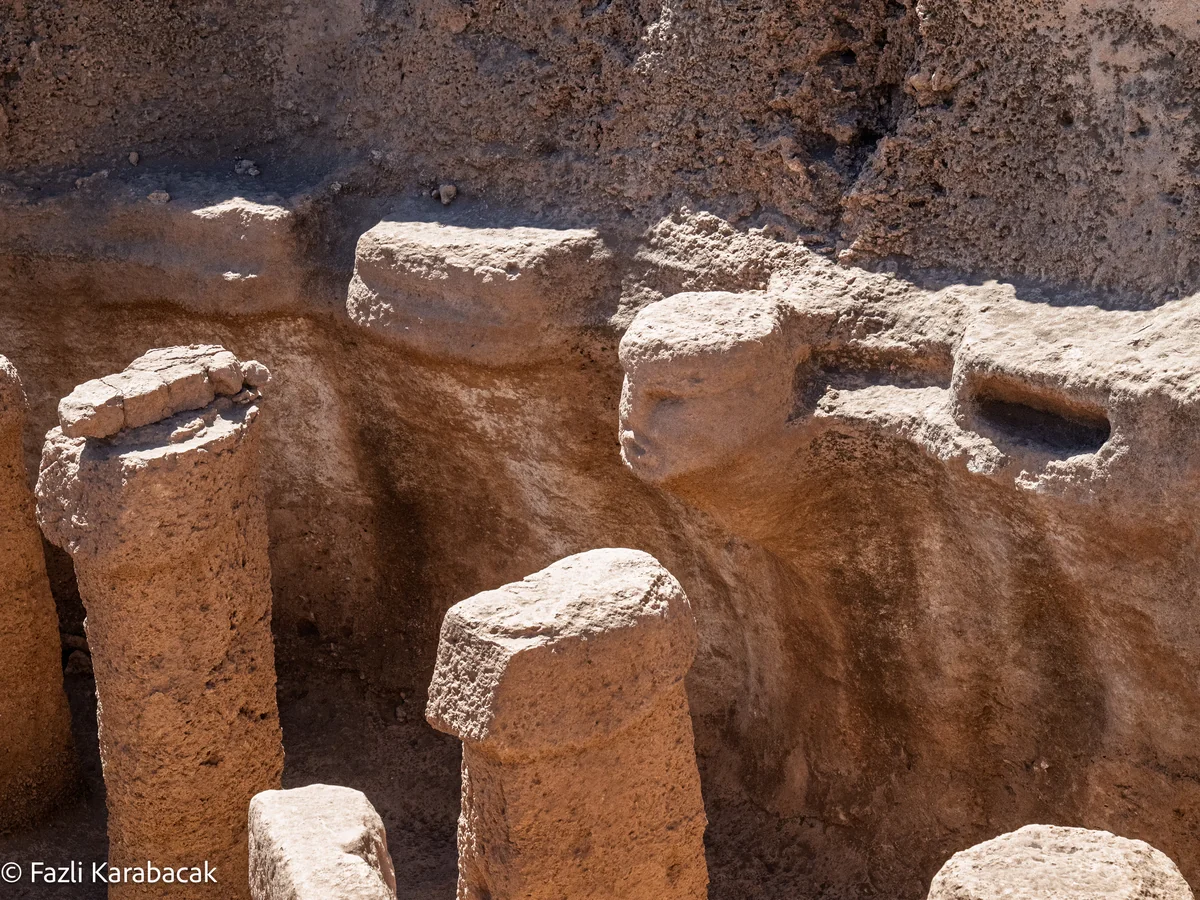
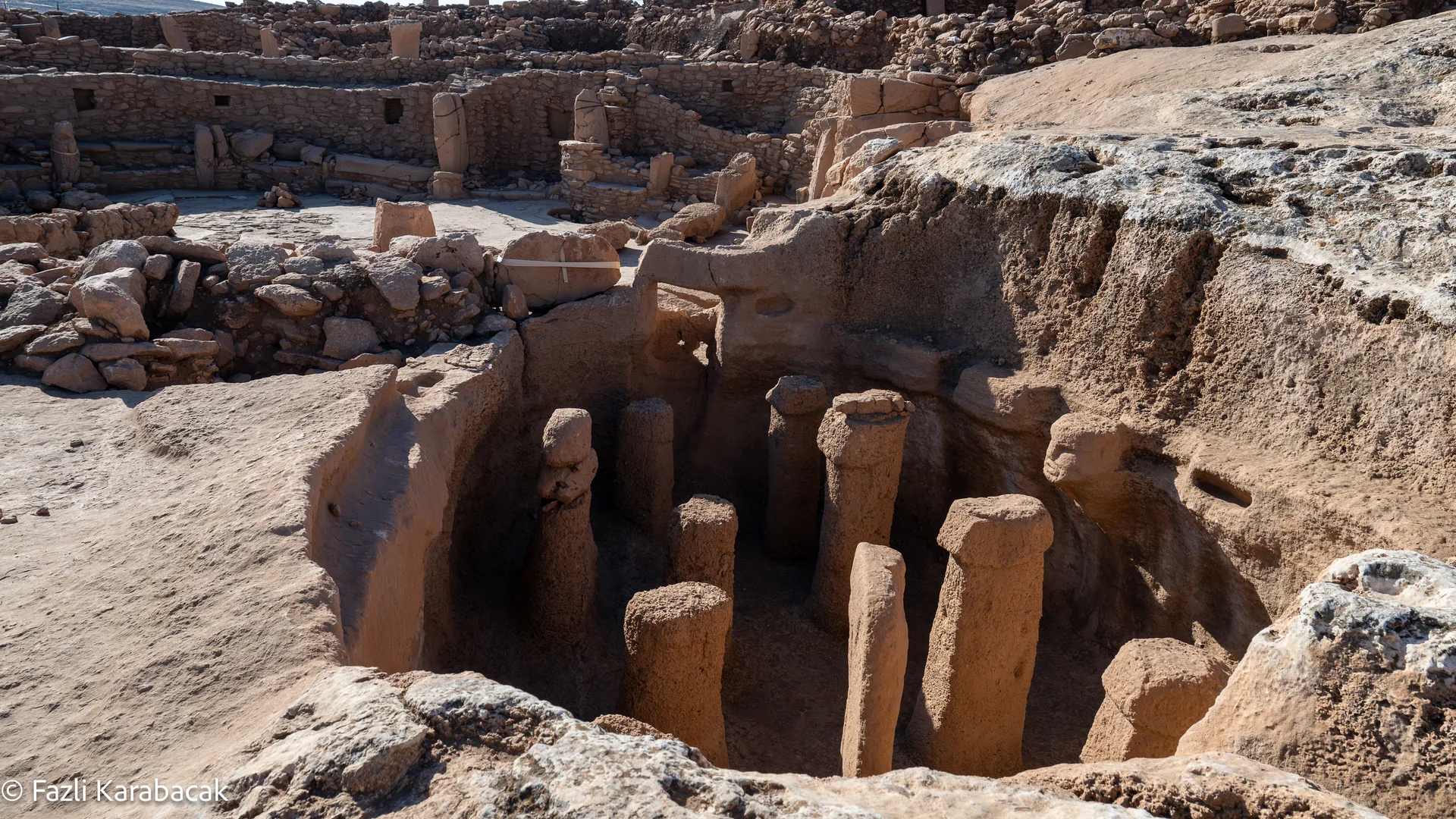
Structure AB contains ten phallus-shaped bedrock pillars, a separately inserted eleventh stone element and a human head projecting from the western wall. A modern hypothesis compares their arrangement with the much later Kabbalistic Tree of Life. This is a speculative visual analogy, not evidence that the builders knew the sefirot or that Kabbalah began in the Neolithic. Neither the identification of the head as a serpent nor the proposed solstice alignment can be used as an independently proven foundation for that interpretation.
I want to be upfront about something before we go any further. What I am about to describe is a hypothesis, not a decoded plan. As a licensed professional tour guide specialising in archaeology and mythology, with 23 years of professional guiding, I believe interpretation is most useful when its evidential limits are clear.
The comparison has circulated in an essay titled A note on the symbolism of structure AB in the Karahan Tepe site. It places a modern reading of a much later mystical diagram over a Neolithic plan. This is not an excavation report or an established identification of the building’s meaning.
The Layout of Structure AB
Structure AB is a trapezoidal enclosure with rounded corners, approximately 7 by 6 metres. Karul’s 2021 excavation report (PDF) describes ten pillars formed from bedrock and an eleventh stone element placed in a shallow socket. The four front pillars stand 1.6–1.7 metres high; the six rear pillars stand 1–1.4 metres high.
A human head protrudes from the western wall, turned slightly toward the entrance stairs. Two small niches lie nearby. Karul also records a serpentine channel to the north: its winding shape does not establish a snake relief or turn the human head into a serpent. See the Structure AB guide for the archaeological description before considering the diagram comparison.
The Kabbalistic Tree of Life
The Tree of Life in Kabbalistic tradition consists of 10 sefirot (emanations or attributes of the divine), plus a quasi-sefira called Da’at (knowledge), connected by 22 paths. The tree is typically depicted as three vertical columns with the sefirot arranged in a specific pattern descending from Keter (crown) at the top to Malkhut (kingdom) at the bottom.
Additionally, the Kabbalistic tradition includes the figure of the great serpent — Samael — associated with the outer boundary of the tree and the material world.
The Proposed Parallels
The proposed analysis maps the ten bedrock pillars to ten sefirot. The following correspondences belong to that interpretation, not to excavation labels with known ancient meanings.
Pillar a maps to Keter (Crown), the highest emanation. Pillars b and c map to Binah (Understanding) and Hokhmah (Wisdom). The separately inserted element, labelled d in the comparison, maps to Da’at, representing knowledge. Its treatment as “hidden” or transitional comes from the later diagram, not from evidence about how Karahan Tepe’s builders understood it.
Continuing down, Pillars e and f correspond to Hesed (Mercy) and Gevurah (Severity). Pillar g maps to Tiferet (Beauty), the central balancing point. Pillars h and i correspond to Netzah (Eternity) and Hod (Glory). Pillar j maps to Yesod (Foundation), and Pillar k to Malkhut (Kingdom).
The comparison associates AB’s wall head with Samael. That association requires an additional symbolic assumption: the excavator describes a human head, not an identified Kabbalistic serpent. A proposed match should not be allowed to rewrite the feature being compared.
Why This Matters — and Why It Is Controversial
If a historical connection were proposed, it would require evidence across the intervening millennia, not just a similar arrangement. The Kabbalistic Tree of Life as a formalized concept does not appear in written form until medieval Jewish mystical texts, with foundational works like the Sefer Yetzirah (Book of Formation) traditionally dated to the early centuries CE and major commentaries like Rabbi Joseph Gikatilla’s Sha’arei Orah appearing in the 14th century.
Karahan Tepe dates to approximately 9,600–8,000 BCE — roughly 10,000 years earlier. The long chronological gap makes visual resemblance insufficient to establish cultural transmission. Independent pattern-making and selective matching are alternatives that must be considered.
A resemblance is not a reason to redate the archaeological site. To test the comparison, one would need to explain the choice of plan orientation, which elements count, how mismatches are treated, and whether similar matches can be generated from other unrelated arrangements.
My Perspective as a Guide
What interests me is that AB combines pillars carved in place with a separately installed element. That difference is recorded and worth asking about. The further claim that it encodes Da’at is a modern interpretation.
I frame this as one interpretive lens, not as equally supported evidence alongside the excavated architecture. The astronomical interpretation is also a hypothesis; it cannot independently validate a Tree of Life reading. The truth is that we do not fully understand what Structure AB meant to its builders, and honesty about uncertainty is more valuable than false certainty.
For visitors, the room’s atmosphere can be remarkable without a decoded mystical system. Consider the analogy after learning the archaeological plan, and view the structure only from areas currently authorised for visitors.
Frequently Asked Questions
How many pillars are in Structure AB? There are ten phallus-shaped pillars carved from bedrock and an eleventh stone element made separately and inserted into a shallow socket.
What is the Tree of Life connection? A modern speculative comparison maps the pillar arrangement onto the Kabbalistic Tree of Life. This is an analogy, not a demonstrated historical connection.
Is this theory widely accepted? It is not an established archaeological interpretation. Neither visual similarity nor another speculative astronomical theory demonstrates the proposed connection.
Is Structure AB’s head a serpent? Karul’s report describes a human head on the western wall. Calling it a serpent or linking it to Samael belongs to later interpretation, not the excavated identification.