Quick Answer
The idea that Karahan Tepe was a “temple of the stars” is a hypothesis. Pillar arrangements, cup marks and rock-cut openings have inspired proposed links to Deneb, star maps and seasonal calendars, but these identifications are not established archaeological findings. A reported modern winter-sunrise illumination of Structure AB’s head also does not by itself prove intentional ancient solar design. Survey data, reliable dating and reconstruction of the original architecture are needed to test these interpretations.
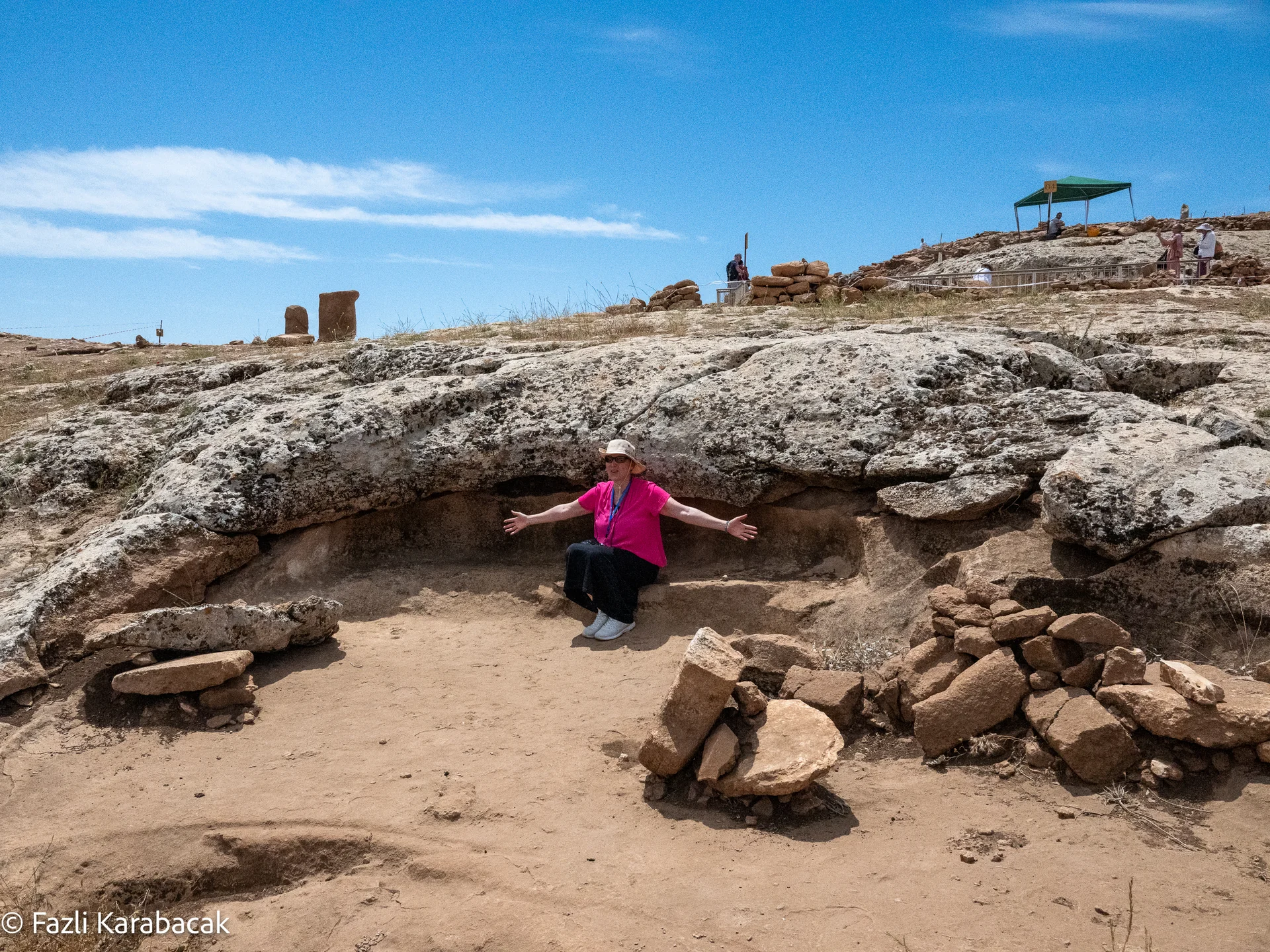
Imagine looking from hollows in limestone to a sky full of stars. The resemblance can suggest a question: could the marks have represented the sky? That is an imaginative starting point, not a first-person field observation or evidence of their function.
I am a licensed professional tour guide specialising in archaeology and mythology, not an archaeologist. My 23 years of professional guiding inform how I explain these ideas, but they do not substitute for an archaeological survey.
The Stone Avenues
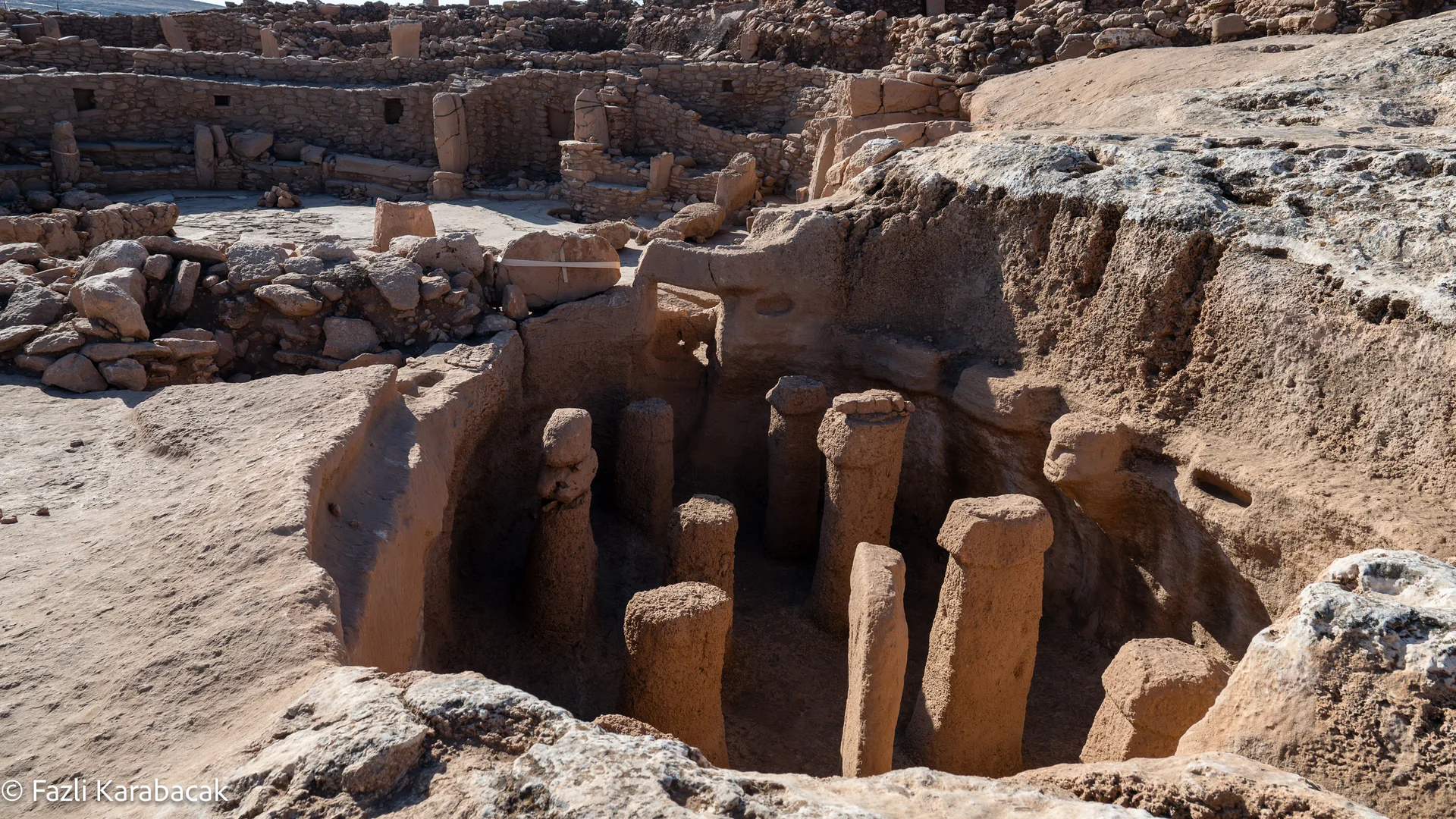
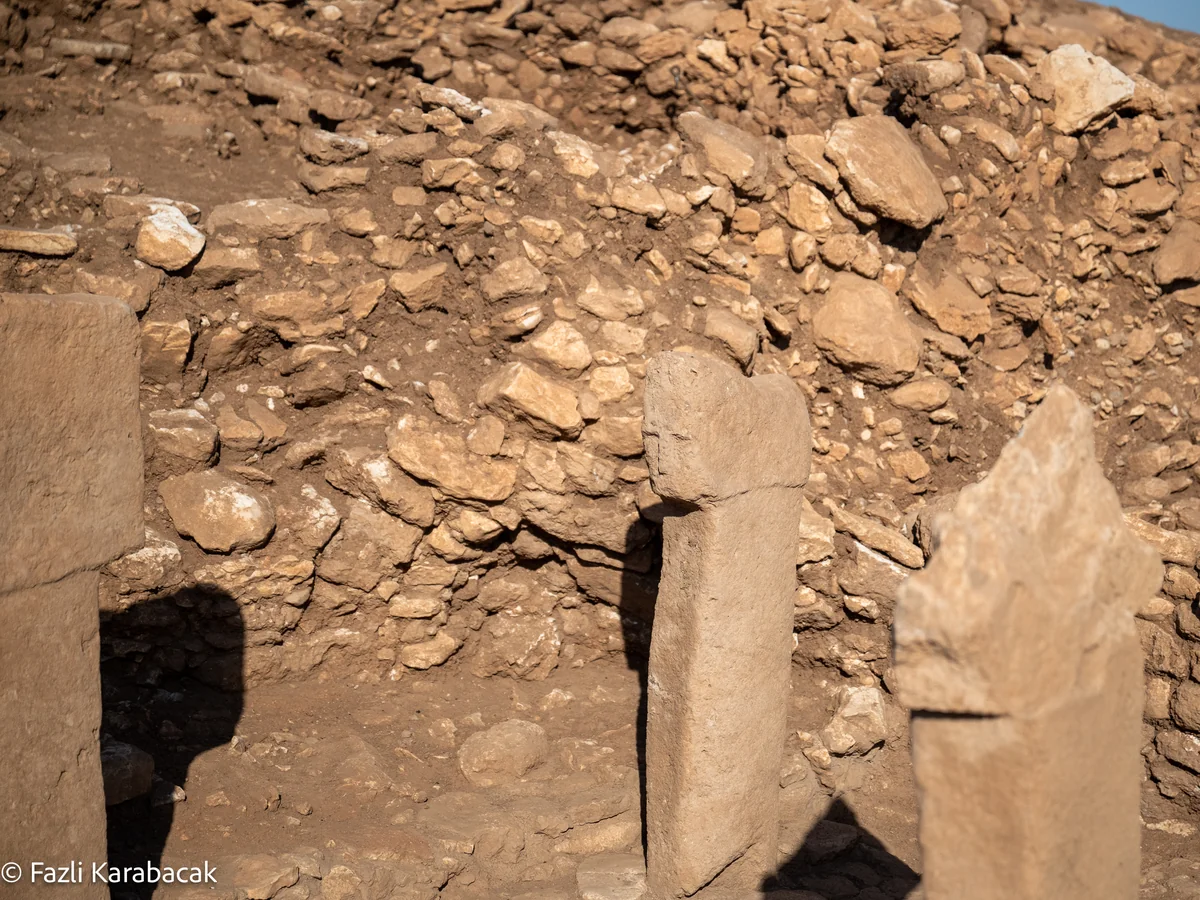
Karahan Tepe is not a single structure but a complex landscape of features spread across roughly 13 hectares. Among these features are several “avenues” of standing stones — rows of partially exposed T-shaped pillar heads emerging from the soil on the eastern and southeastern slopes of the hill.
Researcher Andrew Collins documented three of these avenues during early surveys and noted something intriguing: all three appear to align toward the same general area — an extended rock ledge north of the northern knoll. These proposed “avenues” require archaeological assessment: surface pillar positions alone do not establish contemporary, deliberately aligned passageways.
Collins has proposed that these alignments may relate to stellar events in the Neolithic. Specifically, he suggested that the bright star Deneb — the tail of the constellation Cygnus, the Swan — would have set over the nearby hill of Keçili Tepe during this period. The Cygnus connection has been a persistent thread in Collins’ broader research on both Göbekli Tepe and Karahan Tepe.
The Northern Knoll and Its Cup Marks
The northern knoll of Karahan Tepe is an extensive area of exposed bedrock covered with deeply carved cupules — circular depressions bored into the stone. Most measure 15 to 20 centimeters in diameter and 6 to 8 inches deep. Their quantity and density are remarkable.
Among the standard cup marks, there are also twin sets of larger holes, approximately 40 to 50 centimeters in diameter, placed in pairs. Collins described these larger pairs as resembling “dark eyes gazing up” from the surface of the rock.
A large basin-shaped water cistern, roughly 3 meters wide, also occupies the northern knoll. Water collection is one possible function; a reflection pool for observing stars is a more speculative proposal, not an equally demonstrated alternative.
Cup marks appear at numerous Neolithic and Bronze Age sites worldwide, from Scotland to India. Their function is one of archaeology’s most persistent puzzles. Proposals range from the mundane (grinding bowls, game boards) to the cosmic (star maps, astronomical recording devices). At Karahan Tepe, their density and association with other astronomically suggestive features makes the stellar interpretation worth serious consideration.
The Cosmic Synchronization Theory
A more ambitious speculative framework, sometimes described as “Cosmic Synchronization,” interprets both Göbekli Tepe and Karahan Tepe as calendars. This analysis positions the animal carvings at both sites as seasonal markers tied to astronomical cycles: the vulture representing Cygnus and the summer sky, the bull representing Taurus and spring planting, the scorpion representing Scorpio and autumn harvest, and the snake representing spring protection cycles.
Under this model, the T-shaped pillars themselves function as components of an “algorithmic agricultural calendar” — a system for tracking seasons, predicting celestial events, and organizing the rhythms of human life around astronomical constants. The winter solstice alignment in Structure AB would be a key calibration point in such a system.
This interpretation is speculative. Assigning familiar constellations or farming seasons to carvings can project later traditions backwards. The reported solstice illumination does not independently validate the calendar: its own ancient intentionality remains to be demonstrated.
The Porthole Stones
Among the artifacts recovered from Karahan Tepe are fragments of porthole stones — large slabs with rectangular or circular openings cut through them. These stones appear at several Pre-Pottery Neolithic sites and have been interpreted variously as doorways, viewing frames, or observation ports.
If some of these portholes were oriented toward specific points on the horizon, they could have served as sighting devices for tracking the rising or setting positions of stars, the sun, or the moon. This is speculative; openings can also provide access or serve other practical functions. A reconstructed sight line must account for dating, roofing and changes to the structure.
What I Share With Visitors
When discussing astronomical theories, I draw a clear line between a feature, an observation and an interpretation. A hollow in rock is a feature; a reported illumination is an observation; identifying a star map or intentional solar calendar is an interpretation needing further evidence.
The interpretations built on these observations — star maps, cosmic calendars, Cygnus connections — are hypotheses in various stages of development. Some may prove correct. Others may not. We cannot yet say that the surviving marks encode celestial knowledge.
Low light can help reveal surface features, but stay on authorised routes and check the visitor guide rather than assuming access to the northern knoll or after-hours entry.
Sources and Evidence
- Karul’s 2021 excavation report (PDF): the archaeological account of AB’s pillars, wall head and filling, not a confirmation of a star map.
- Newman and Ainsworth’s observation report: the authors’ account of the proposed solstice effect, distinct from independent verification of Neolithic intent.
Frequently Asked Questions
What are the cup marks at Karahan Tepe? Circular depressions carved into exposed bedrock on the northern knoll, most measuring 15–20 cm in diameter. Their purpose is debated — theories include star maps, grinding tools, and ritual markers.
Is Karahan Tepe aligned with any stars? Andrew Collins has proposed links to Deneb and Cygnus. These remain hypotheses; neither these proposals nor the reported solar illumination establishes an intentional stellar alignment.
What is the Cosmic Synchronization theory? A speculative framework assigning seasonal and astronomical meanings to animal carvings. It is not a decoded Neolithic calendar.
Are the astronomical theories about Karahan Tepe proven? No. Cup marks and openings are physical features, but star-map readings, calendar systems and the proposed ancient solstice alignment remain interpretations requiring further tests.