Quick Answer
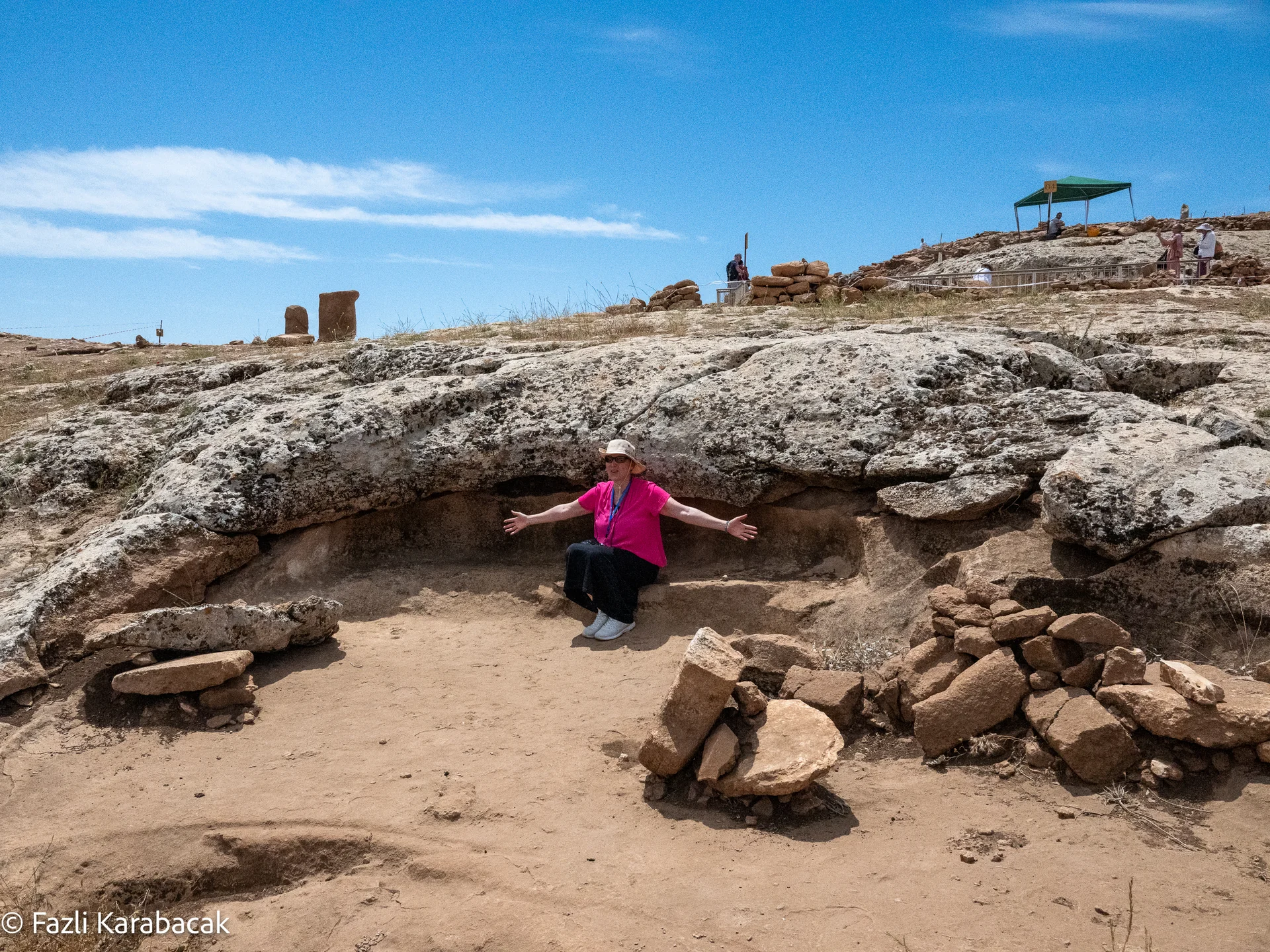
Karahan Tepe occupies limestone terrain in the Tektek Mountains. Local bedrock made rock-cut architecture possible, alongside masonry and separately installed pillars. Reconstructing the Neolithic environment requires geological, botanical and faunal evidence: today’s dry steppe is not a direct picture of the ancient landscape. Rock-cut basins and channels raise questions about water management, but their date and function need individual assessment. A winding channel or a basin is not automatically a proven ritual installation.
You cannot understand Karahan Tepe without considering the land it sits on. In 23 years of professional guiding, I have found landscape one of the most useful ways to introduce an ancient place. “The landscape speaks” is a guide’s metaphor, not proof of why the builders chose a particular ridge.
Every time I drive out to Karahan Tepe from Şanlıurfa — a journey I have made regularly since 2020 — I watch the terrain change. The flat agricultural plain gives way to rolling limestone hills. The vegetation thins. The air becomes drier. By the time you reach the Tektek Mountains, you are in a different world. Understanding that world is essential to understanding why Karahan Tepe exists where it does.
Two Plateaus, Two Sites
Göbekli Tepe and Karahan Tepe occupy different geological platforms. Göbekli Tepe sits at 780 meters elevation on the Germuş Plateau, while Karahan Tepe stands at roughly 690 meters on the Tektek Plateau. Both are built on limestone bedrock — Eocene and Miocene formations — but the topographic character of each site differs.
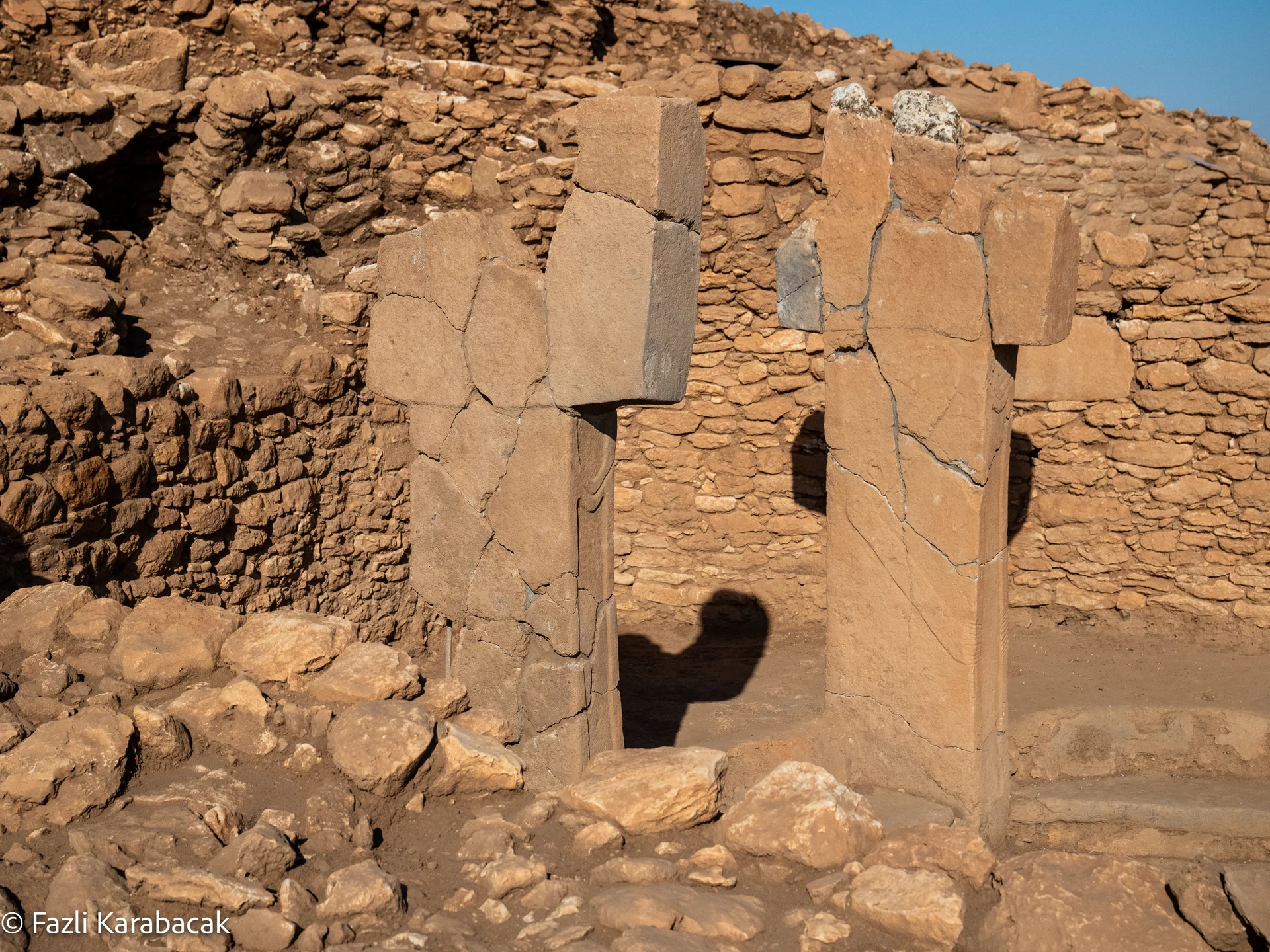
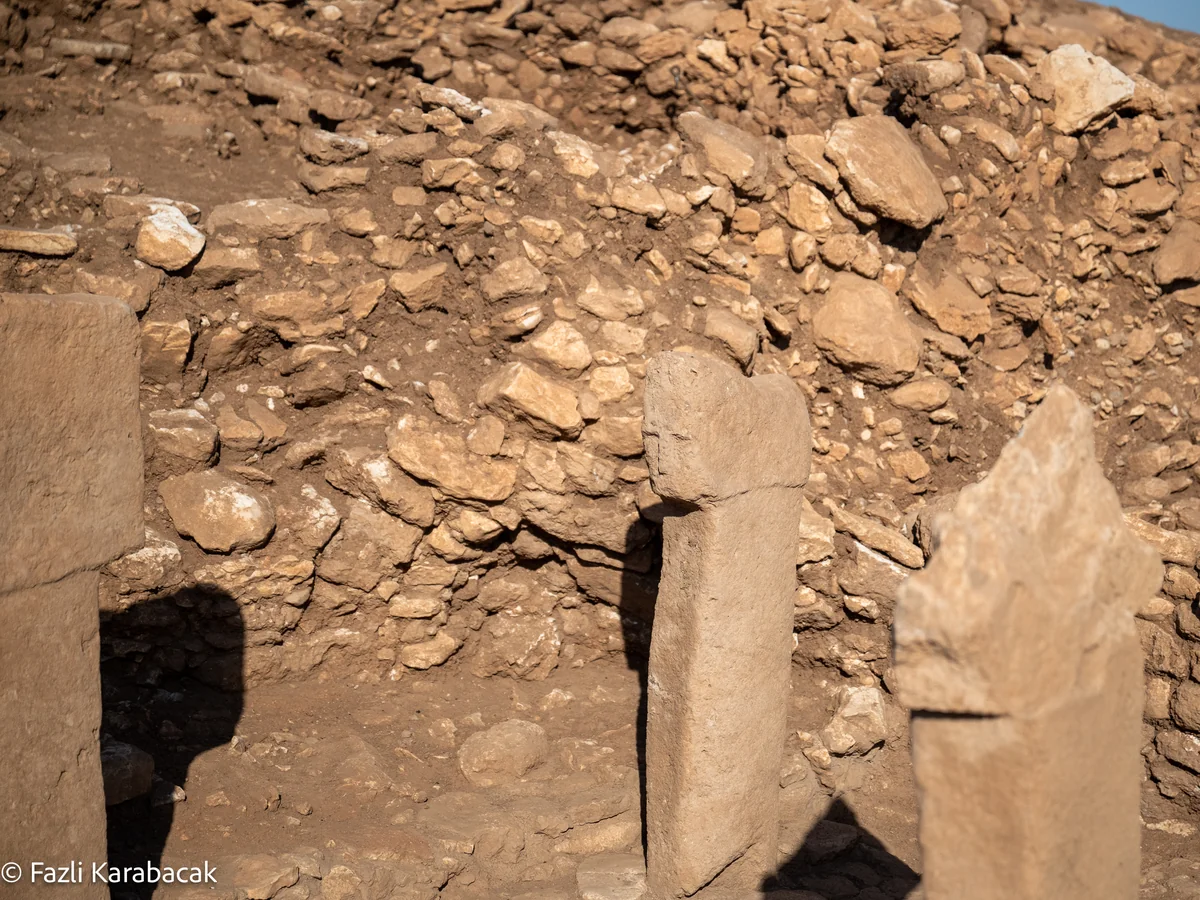
Göbekli Tepe’s hill is broad and gently rounded, visible from a distance. Karahan Tepe’s ridge is more elongated, oriented roughly north-northeast to south-southwest, and feels more enclosed. The surrounding terrain at Karahan Tepe is more rugged, with deeper valleys and more pronounced ridge lines. Local terrain likely influenced architectural choices, but both sites combine built elements with bedrock features; the contrast is not simply “built upward” versus “carved downward.”
Climate Then and Now
One of the most important findings from geomorphological research is that the climate during Karahan Tepe’s occupation was significantly different from what you experience today. The Tektek Mountains during the Pre-Pottery Neolithic — roughly 10,000 to 8,000 BCE — were more humid than the present, with richer vegetation and more diverse wildlife.
The commonly cited occupation range of approximately 9600–8000 BCE falls in the early Holocene, after the Younger Dryas ended around 9700 BCE. The Bølling–Allerød and most of the Younger Dryas are earlier, not climatic phases spanning that occupation. Local moisture and vegetation histories still require regional environmental evidence.
Environmental change may have affected occupation, but a drought explanation for abandonment is a hypothesis. It should not replace the building-specific evidence for closure or assume that Karahan Tepe and Göbekli Tepe ended for the same reason.
The Water Problem
Water scarcity is identified in the research as a major environmental challenge for both sites. Göbekli Tepe lacks nearby permanent water sources, and Karahan Tepe is no better served. Today, the landscape is dry steppe with seasonal rainfall. In the Neolithic, while conditions were wetter, reliable water access would still have required knowledge and planning.
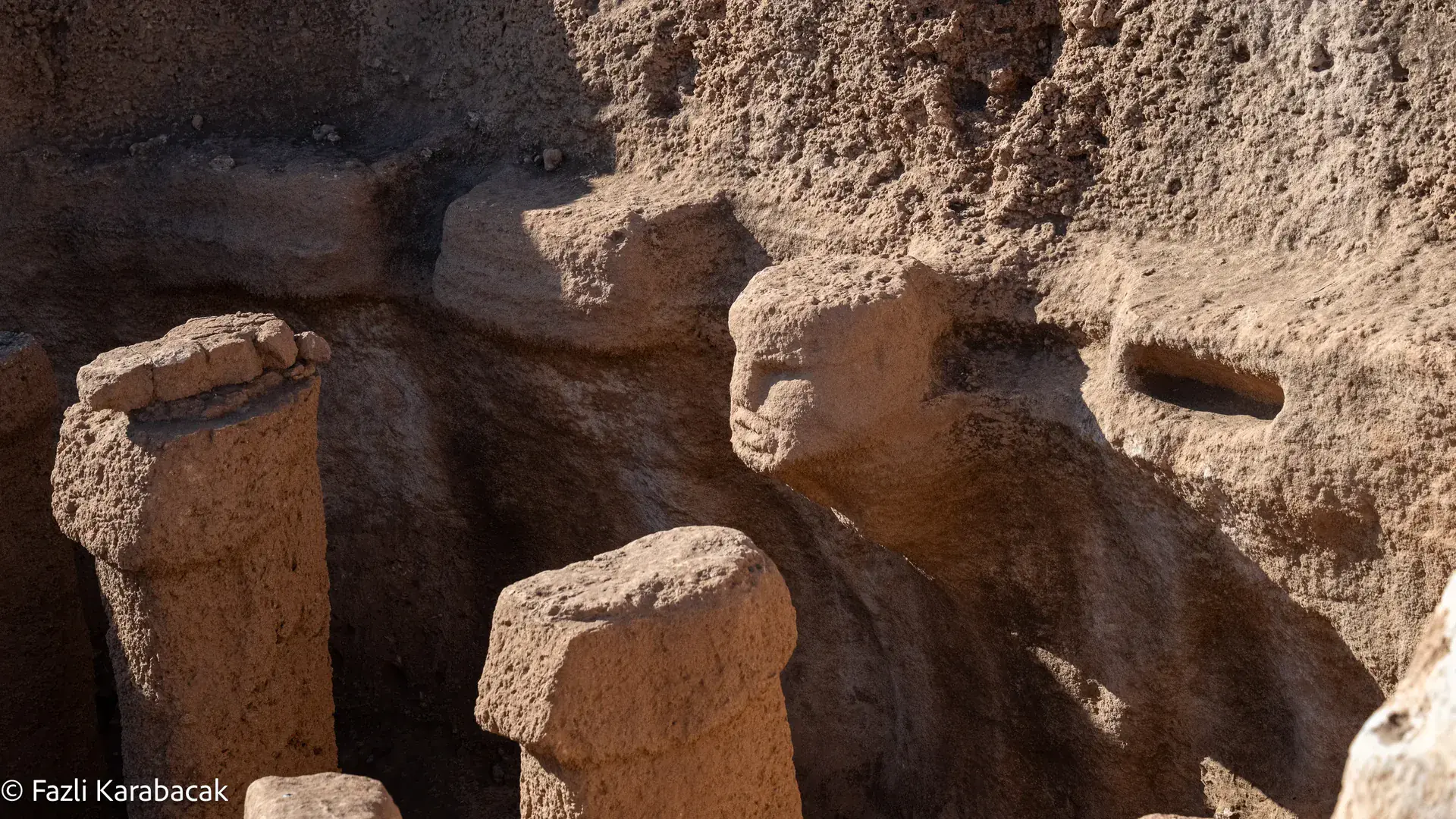
A large rock-cut basin on the northern knoll has been interpreted as a cistern. Establishing its date and relationship to the Neolithic structures matters before using it to reconstruct the builders’ water supply. A reflection pool or purification basin is a more speculative reading.
Karul’s 2021 report (PDF) records a serpentine channel opening into Structure AB from the north. Its winding shape is documented; a complete hydraulic system or ritual meaning is not demonstrated by that description alone.
Limestone: The Material and the Medium
The limestone bedrock of the Tektek Mountains is not just the foundation of Karahan Tepe — it is the medium from which the site was created. The builders chose locations where the stone quality was suitable for large-scale carving. The Eocene and Miocene limestone in this region is relatively soft when freshly exposed and hardens over time — a characteristic that would have made it workable with stone tools.
The quality of the limestone varies across the site, and the builders appear to have understood these variations. Structure AD, with its massive buttresses and pillar arrays, is positioned where the bedrock is thick and consistent enough to support such ambitious carving. An unfinished monolith at the site preserves a stage in quarrying; its abandonment does not by itself establish a defect in the stone.
What the Landscape Tells Visitors
When I bring tour groups to Karahan Tepe, I always make a point of pausing before entering the archaeological area. I ask people to look around at the landscape and imagine it with more trees, more grass, more animals. The site does not exist in isolation — it was part of a living ecosystem.
I also draw attention to the sight lines. From Karahan Tepe’s hilltop, you can see for kilometers in every direction. In the Neolithic, when the regional population was sparse and communities were small, a place with commanding views would have held strategic and perhaps spiritual significance. You could watch the seasons change across the landscape, track animal movements, and observe the sky without obstruction.
The wind is constant here, and it carries a quality of emptiness that feels ancient. It is one of the things about Karahan Tepe that photographs never capture but that every visitor remembers.
Frequently Asked Questions
What type of rock is Karahan Tepe built on? Eocene and Miocene limestone, which is relatively soft when freshly exposed and hardens over time — making it workable with stone tools.
Was the climate different when Karahan Tepe was built? Yes. The region was significantly wetter and more vegetated during the Pre-Pottery Neolithic period (10,000–8,000 BCE) than it is today.
Why was Karahan Tepe built in such a remote location? Views, local limestone and access to resources are plausible considerations. A defensive or sacred motive cannot be inferred solely from elevation or modern remoteness.
Is there water at the site? A rock-cut basin may have served as a cistern, but this is not advice about drinking water today. Bring water and check the visitor guide for practical planning.