Quick Answer
Karahan Tepe’s human sculptures and animal imagery invite comparison with art from distant periods and places. The Sitting Man’s skeletal detail, for example, can be compared with much later Peruvian Carcancha imagery. These are modern analogies and speculative interpretations, not evidence of a shared identity or ancient transcontinental contact. A historical connection requires independently dated intermediary evidence; visual resemblance alone does not provide it.
Comparative art can produce a startling sense of recognition: visible ribs in one sculpture recall a skeletal figure from a distant culture. That response is worth exploring, without inventing a meeting between the people who made the objects.
After 23 years of professional guiding, I find comparisons useful when they sharpen observation rather than replace evidence. As a licensed professional tour guide specialising in archaeology and mythology, I present these as interpretive exercises, not established connections.
The Carcancha Connection: Peru and Karahan Tepe
A comparison associated with rock-art researcher Maarten van Hoek places the Sitting Man statue alongside Carcancha imagery from Peru. The Carcancha is a concept from Pre-Columbian cultures that represents “Living Death” — a figure that combines skeletal elements (visible ribs, emaciated form) with fertility symbols (erect phallus, vital posture).
The Peruvian examples are much later than Karahan Tepe’s Neolithic context. Applying the word “Carcancha” to the Sitting Man is a comparative choice, not its archaeological classification or an established “oldest Carcancha” record. The statue’s exact carving date is not supplied by the 2023 official announcement.
The parallels are specific: visible ribcage, fertility symbolism, a seated or anchored posture, and placement in what appears to be a ritual context. Such a comparison can illuminate shared visual themes without assigning the same cultural meaning to both.
The cited archaeological reports do not establish cultural transmission between Neolithic Anatolia and Peru. Independent artistic responses and selective resemblance are alternatives; unsupported contact should not be presented as equally evidenced.
Soul Holes: A Global Phenomenon
“Soul hole” (Seelenloch) is an interpretive term applied to openings in some ancient stone architecture. The official 2023 announcement does not document such an opening behind the Sitting Man, so that arrangement should not be used as a premise for global comparison.
Portal stones with circular or oval openings appear in Neolithic and Bronze Age contexts from the British Isles to India. Dolmens in the Caucasus region feature circular holes in their entrance slabs. Similar features appear in megalithic structures across Western Europe. Interpreting these openings as passages for spirits is a further claim; an entrance or aperture does not by itself reveal a cosmology.
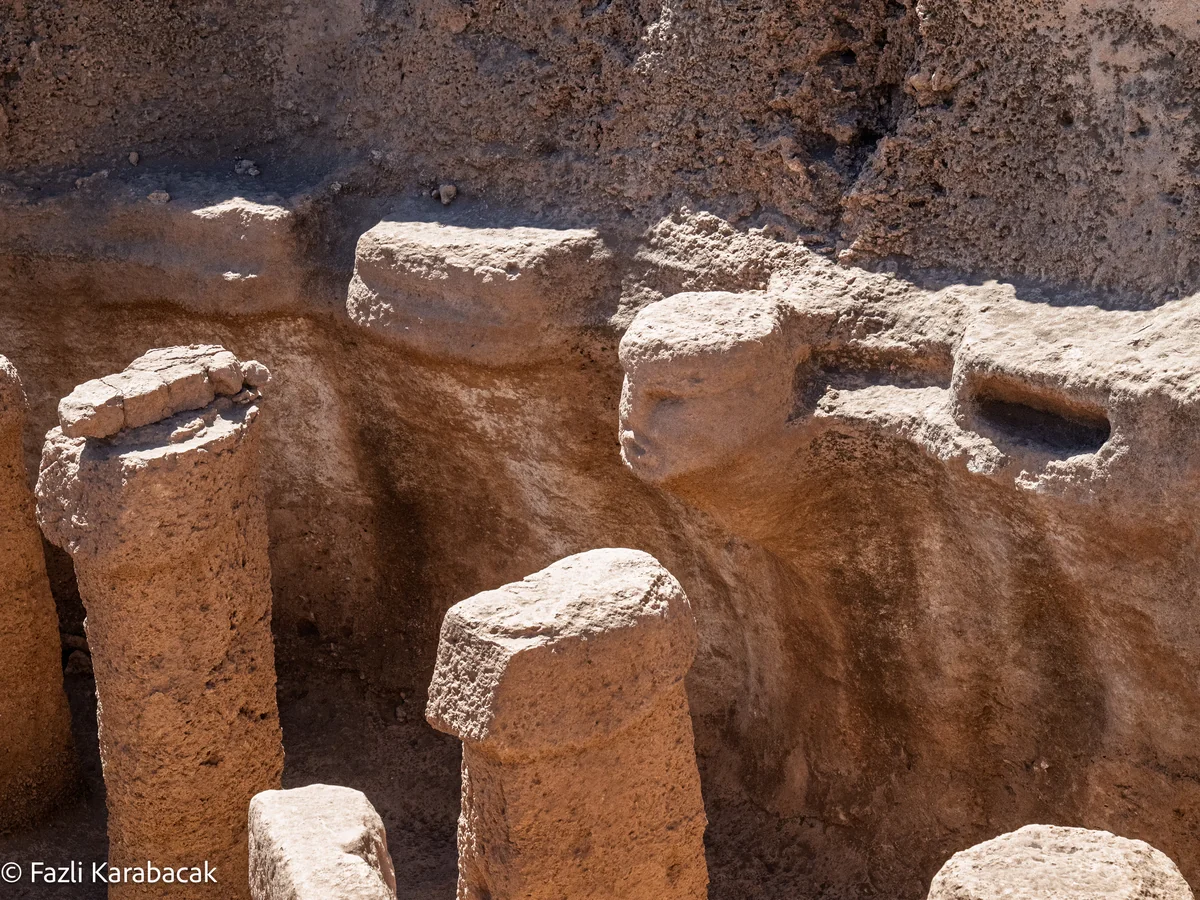
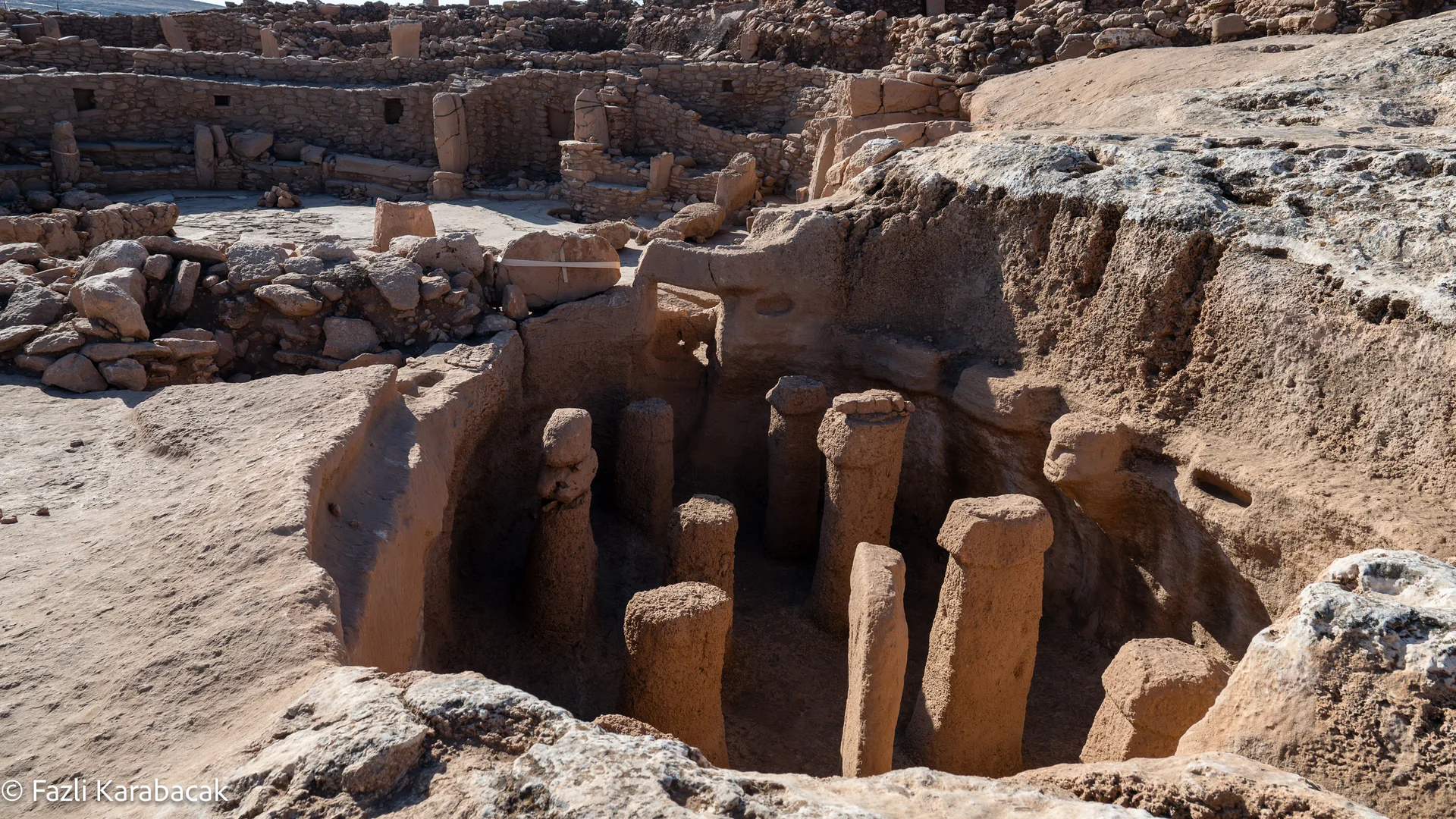
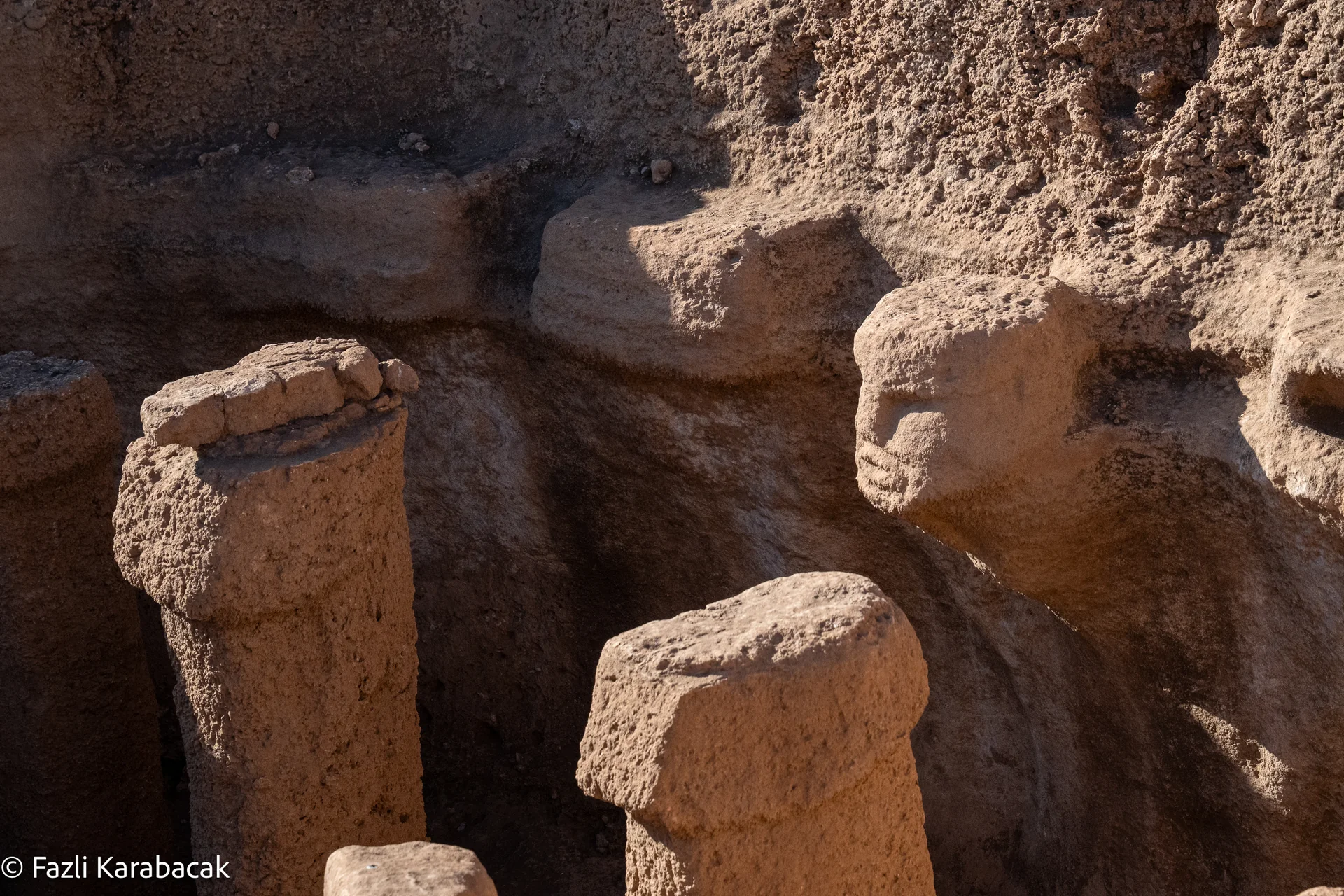
At Karahan Tepe, the opening between AD and AB is part of the documented access arrangement. Whether an opening had additional symbolism must be assessed from its own context, not inferred from distant examples called “soul holes.”
Serpent Symbolism: A Universal Language
Snake imagery recurs in discussion of Karahan Tepe and in many other cultural traditions. Serpent imagery appears in virtually every ancient civilization: the feathered serpent Quetzalcoatl of Mesoamerica, the Nagas of Hindu and Buddhist tradition, the ouroboros of Egyptian and Greek thought, the serpent of Eden in the Abrahamic traditions.
Among the comparative materials gathered by researchers studying Karahan Tepe, serpent-related parallels have been noted with the Nevali Çori serpent head (another Pre-Pottery Neolithic site in the Şanlıurfa region), Swedish “Snake Witch” stones, and various serpent-egg motifs from Egyptian iconography. These comparisons span thousands of years and thousands of kilometers.
The question is not whether serpent symbolism is global — it clearly is — but whether the specific way snakes are represented at Karahan Tepe connects to a particular symbolic tradition that can be traced across time and space. Structure AB’s head is described as human in Karul’s excavation report. A serpent or hybrid identity belongs to later interpretation and cannot serve as a proven link to other traditions.
T-Shaped Pillars and Anthropomorphic Standing Stones
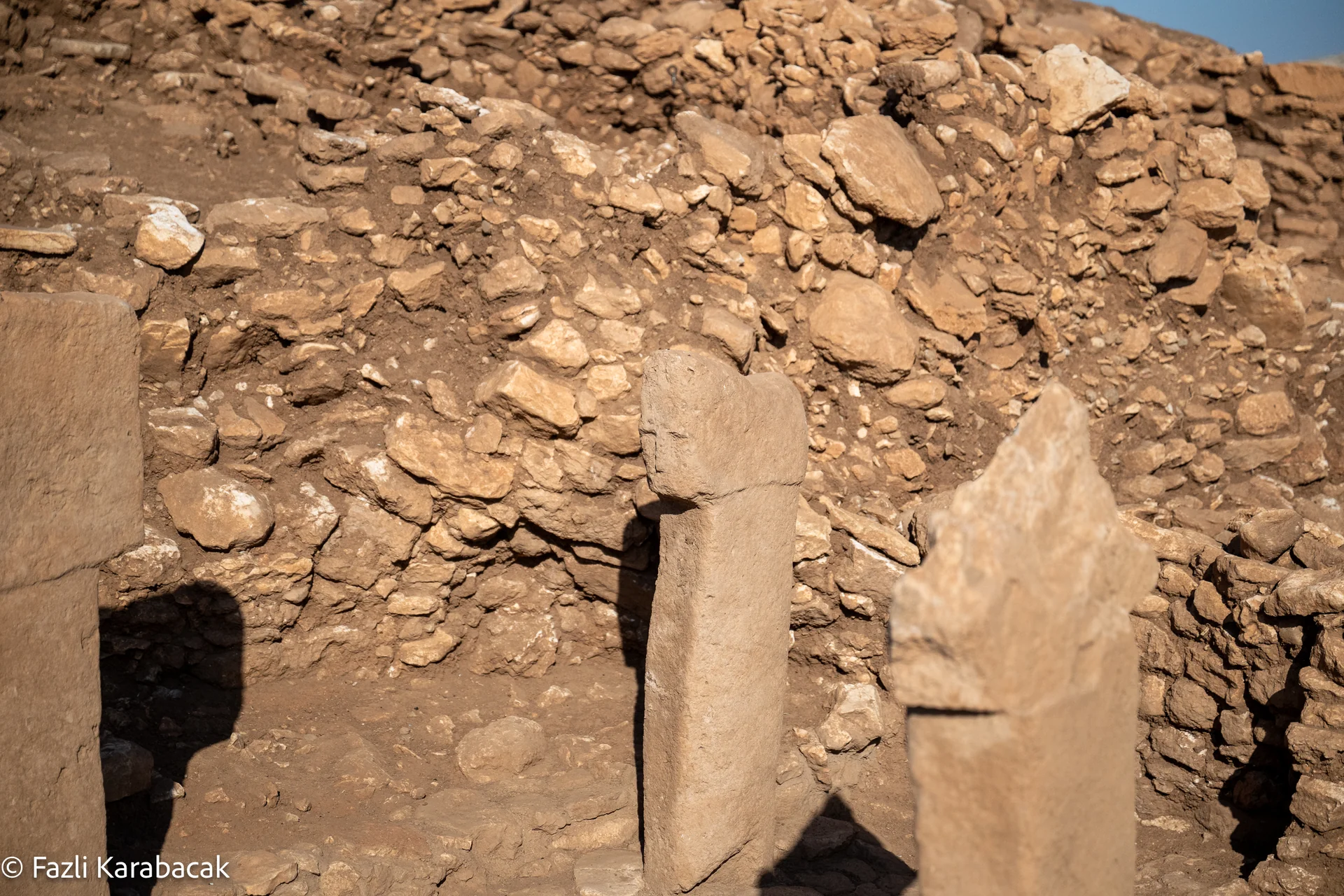
The T-shaped pillar — interpreted as a stylized human figure with the horizontal top as a head and the vertical shaft as a body — is characteristic of the Şanlıurfa Neolithic. But anthropomorphic standing stones appear globally: the moai of Easter Island, the menhirs of Brittany, the stelae of Ethiopia, and the stone figures of Indonesia all represent the human impulse to create monumental stone representations of people or supernatural beings.
A Sulawesi stone figure from Indonesia, included in the comparative research materials around Karahan Tepe, shows formal similarities to Neolithic stone figures from southeastern Turkey. These comparisons do not necessarily imply contact — they may reflect independent solutions to the same fundamental human desire: to make the invisible visible, to give stone the appearance of life, to create a permanent witness in an impermanent world.
What These Parallels Mean
I want to be responsible in presenting these comparisons. The objects are real, but a proposed resemblance is not automatically a peer-reviewed conclusion or an accepted historical relationship.
Historical contact would need evidence such as securely dated intermediary objects, exchange routes or shared techniques in context. Independent invention and coincidence also need consideration. These are possible explanations, not three equally supported conclusions.
For now, comparison is most useful as a way to ask better questions about particular objects. It does not justify assuming a lost global network.
Why This Matters for Visitors
Understanding the global context of Karahan Tepe transforms the visitor experience. You are not just looking at a local archaeological site — you are looking at something that connects to fundamental questions about human nature, symbolism, and the origins of culture. The carvings on these pillars participate in a conversation that spans continents and millennia.
When I stand with a group at Karahan Tepe, watching them look from the serpent carvings to the sky to the surrounding steppe, I see the same impulse that drove the builders: the need to make sense of the world, to find patterns, to create meaning from stone and light. That impulse is universal. And Karahan Tepe is one of its earliest known expressions.
Frequently Asked Questions
What is a Carcancha? A Carcancha is a figure from Pre-Columbian Peruvian cultures that combines death imagery (skeletal features) with fertility symbols — representing the cycle of life, death, and rebirth. The Karahan Tepe Sitting Man has been compared to this tradition.
Are the global parallels to Karahan Tepe proven connections? No. They are observed similarities documented by researchers. The examples discussed here do not establish direct cultural transmission; independent responses and selective resemblance must be considered.
What other sites around the world resemble Karahan Tepe? Comparisons have been drawn with Peruvian petroglyphs, Indonesian stone figures, Caucasian dolmens with soul holes, and various serpent-symbolism traditions from Egypt to Scandinavia.
Does Karahan Tepe prove ancient global contact? No. These visual analogies do not demonstrate ancient global contact. Regional exchange in Neolithic Anatolia is a separate question supported by different evidence.
Archaeological Anchors
- Karul’s 2021 Structure AB report (PDF): the head, pillars and building context.
- The Ministry’s 2023 statue announcement: the seated statue’s reported position and anatomy, not global cultural links.