Quick Answer
Public reporting quotes anthropologist Yılmaz Selim Erdal describing numerous cuts on skulls from Karahantepe, in a discussion of Neolithic mortuary practices across the region. Such modifications can inform hypotheses about treatment after death, but they do not identify a specific belief or prove purification by fire. The same report’s skull found in a wall cavity belongs to Sefertepe, not Karahantepe. Site, specimen and interpretation must stay separate.
I am a licensed professional tour guide specialising in archaeology and mythology, with 23 years of professional guiding. Southeastern Anatolia offers some of the most extraordinary archaeological landscapes on earth.
One of those places is Karahantepe.
If you stand on the hill where the site lies today and look across the surrounding landscape, it feels almost impossible to imagine what was happening here more than 11,000 years ago. Yet every excavation season reveals new clues about the people who once lived — and performed rituals — in this remarkable place.
An Anadolu-sourced report published by Hürriyet Daily News quotes Prof. Dr. Yılmaz Selim Erdal of Hacettepe University discussing skull treatment at Karahantepe alongside discoveries from Sefertepe and Göbekli Tepe.
His work is helping archaeologists understand something profound: the way early Neolithic communities may have treated the dead.
A Discovery Hidden in the Bones
When archaeologists excavate a site such as Karahantepe, the most dramatic discoveries often appear in the ground — monumental pillars, carved figures, and unusual architectural structures.
But sometimes the most important discoveries happen later, in the laboratory.
The cited account centres on a skull recovered from a cavity in a special building at Sefertepe. Erdal compares that context with cuts reported on skulls from Karahantepe and modifications known from Göbekli Tepe.
The distinction matters: a discovery at one site can illuminate another without becoming a find from that other site.
Separating and later redepositing parts of a body is discussed as part of secondary burial — treatment after an initial period of decomposition.
Cut marks may help reconstruct such treatment, but their location, morphology and archaeological context must be assessed specimen by specimen. The cited account does not provide a vertebra catalogue or a count of more than twenty cuts on a particular Karahantepe specimen.
Human modification is an archaeological assessment.
The motive behind it is a further interpretive question.
Cut Marks and Their Interpretation
The skulls themselves revealed even more remarkable evidence.
Erdal refers to skulls from Karahantepe with many cuts. That public report does not establish a precise total of hundreds or thousands, nor a complete sequence for every skull.
Different marks can reflect different actions, but identifying tools, repeated episodes or multiple participants requires a detailed osteological publication.
Mortuary ritual is one interpretation of deliberate treatment of remains. “Burial” and “ritual” are not mutually exclusive categories.
We should not reconstruct the number of participants or their actions more precisely than the available evidence allows.
What Can Fire Tell Us?
Another surprising discovery involves the use of fire.
The report discusses cutting and burning as possible treatments in regional secondary-burial practices.
It does not establish that every Karahantepe skull underwent the same treatment. Cremation can also leave surviving bone, so survival alone cannot distinguish it from other burning.
Colour change, heat alteration and surrounding deposits need laboratory and contextual assessment before the nature of a fire can be reconstructed.
Purification is therefore a hypothesis about meaning, not something that burning can demonstrate by itself.
Likewise, the Sefertepe wall-cavity find should not be transferred to Karahantepe as proof of an identical deposition sequence.
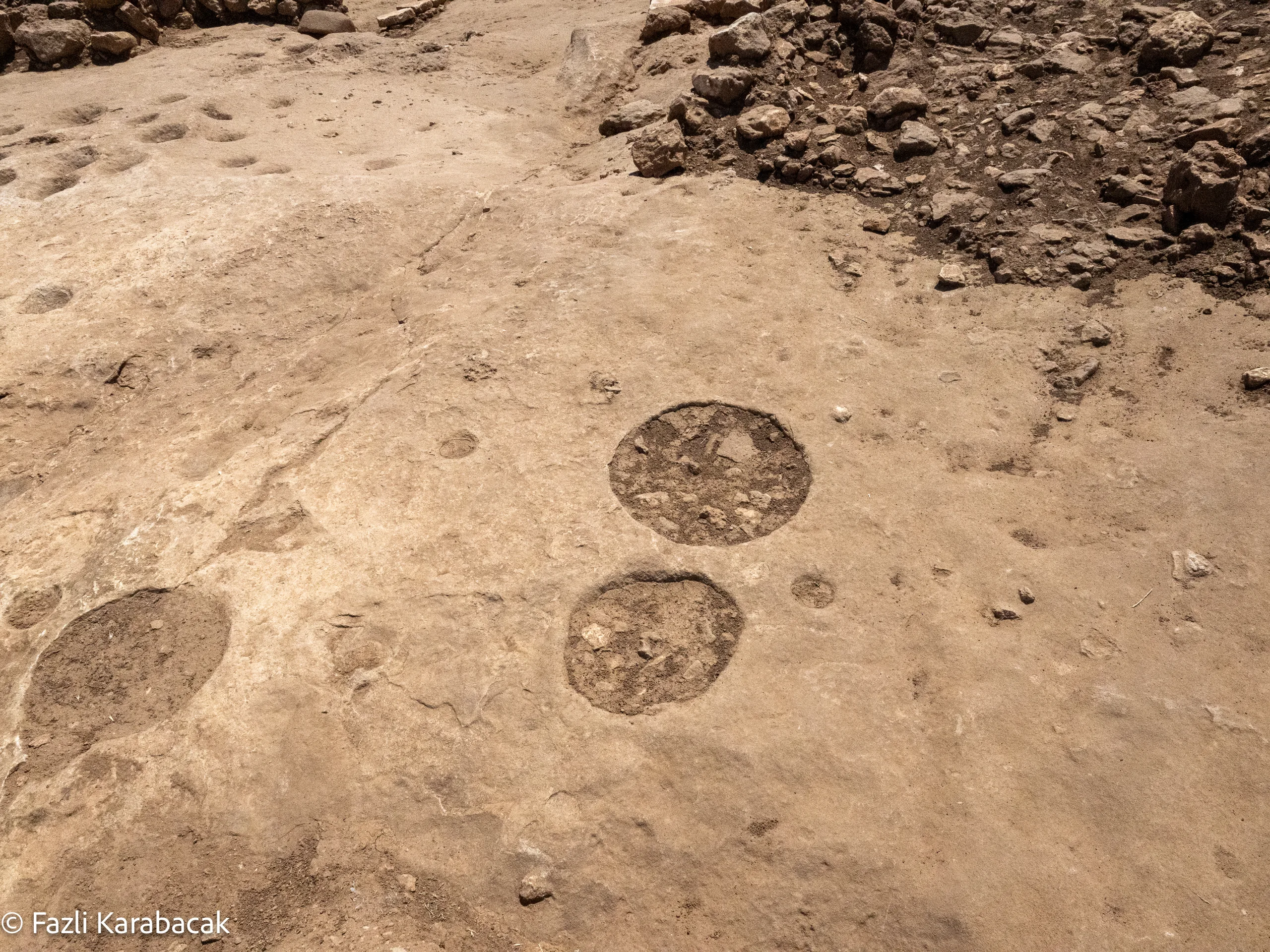
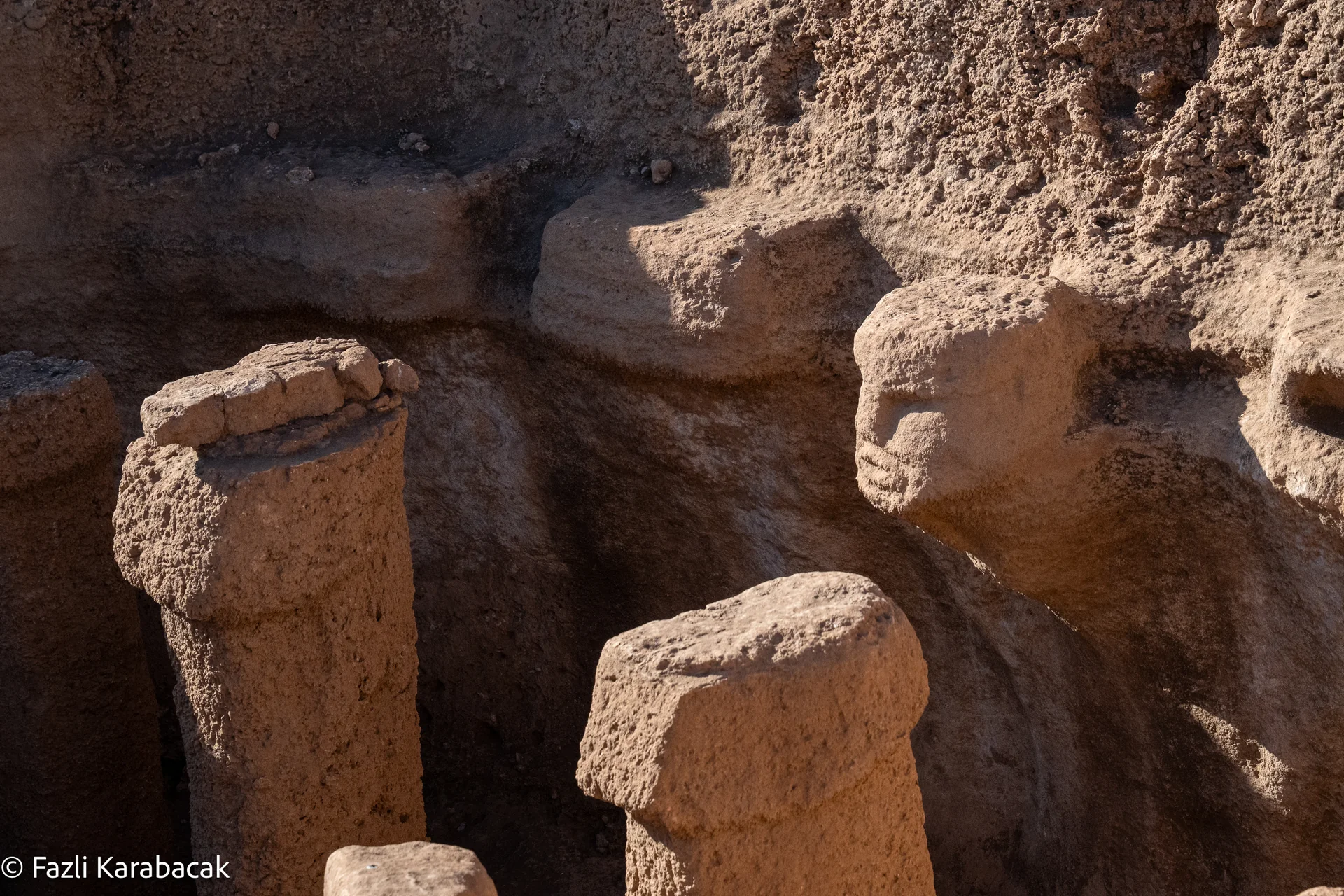
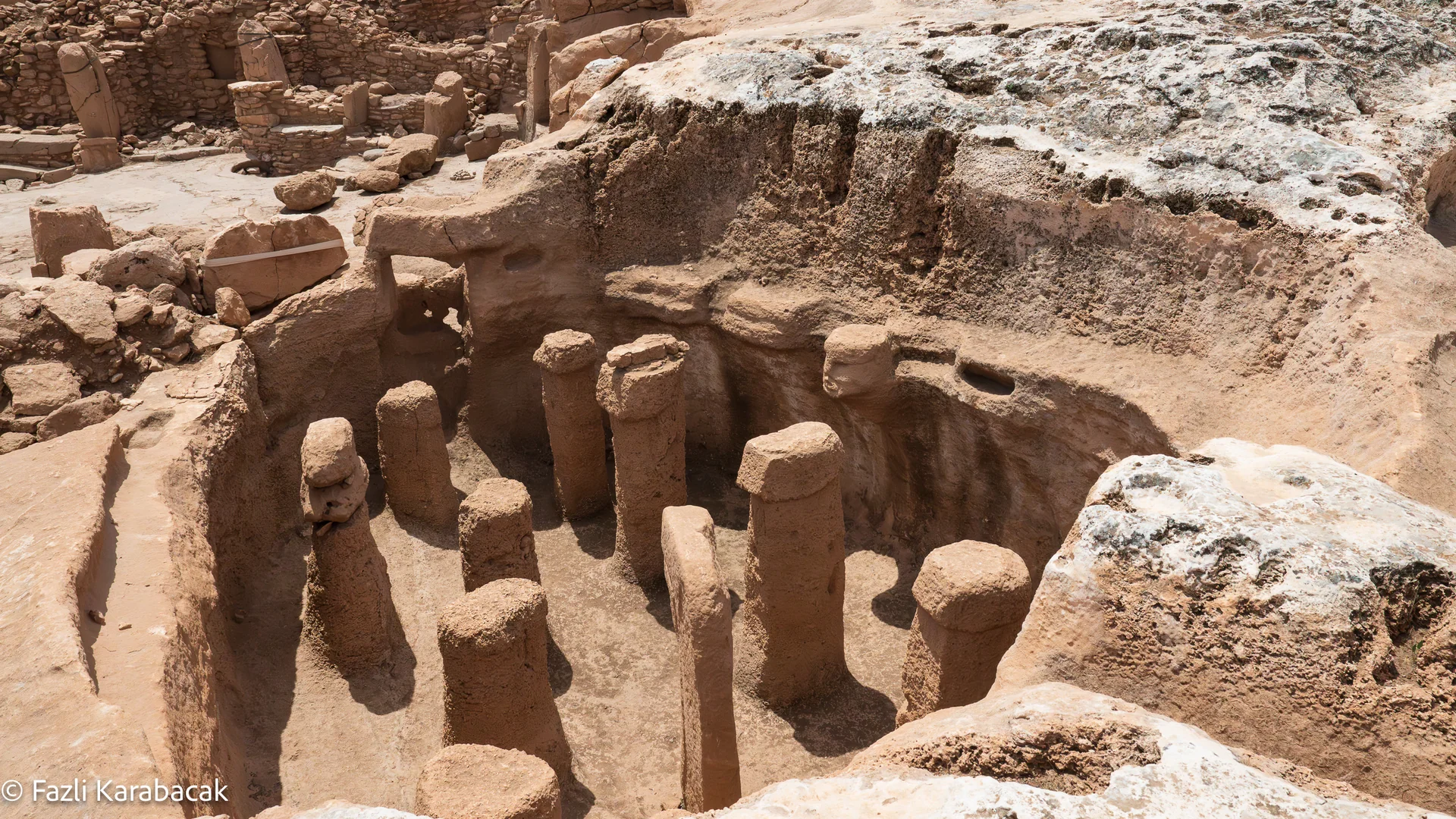
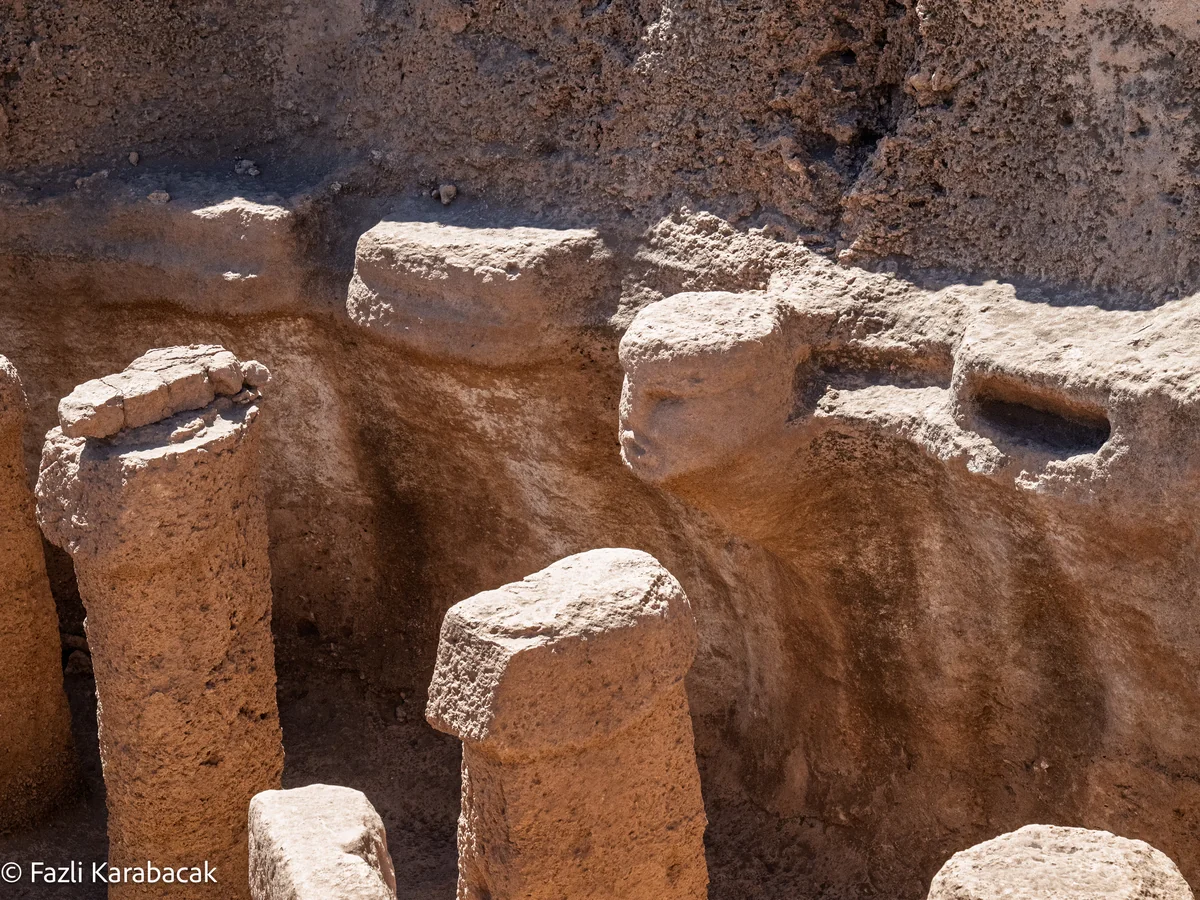
Rock-cut features at Karahantepe. A photograph alone cannot establish a pit’s function or the identity of its contents. © Fazli Karabacak
Why the Skull Was So Important
One of the most striking patterns in the archaeological record is the difference in treatment between the skull and the rest of the skeleton.
The selective retention, modification or deposition of heads in some Neolithic contexts raises questions about memory, identity and the treatment of the dead.
This pattern suggests that the human head carried special symbolic meaning.
Comparison with Göbekli Tepe and Sefertepe is useful, provided differences between the finds are retained. It does not establish one uniform “skull cult” throughout the region.
The head as a seat of identity or spirit is one interpretive possibility. Without written accounts, it cannot be presented as a known statement of what Karahantepe’s inhabitants believed.
Walking Through Karahantepe Today
For those of us who guide visitors through this landscape, these discoveries make the site even more extraordinary.
Every year I bring travellers to Karahantepe in small groups so we can explore the site slowly and talk about the newest discoveries emerging from the region.
Because archaeology here is not finished.
Each excavation season reveals something new.
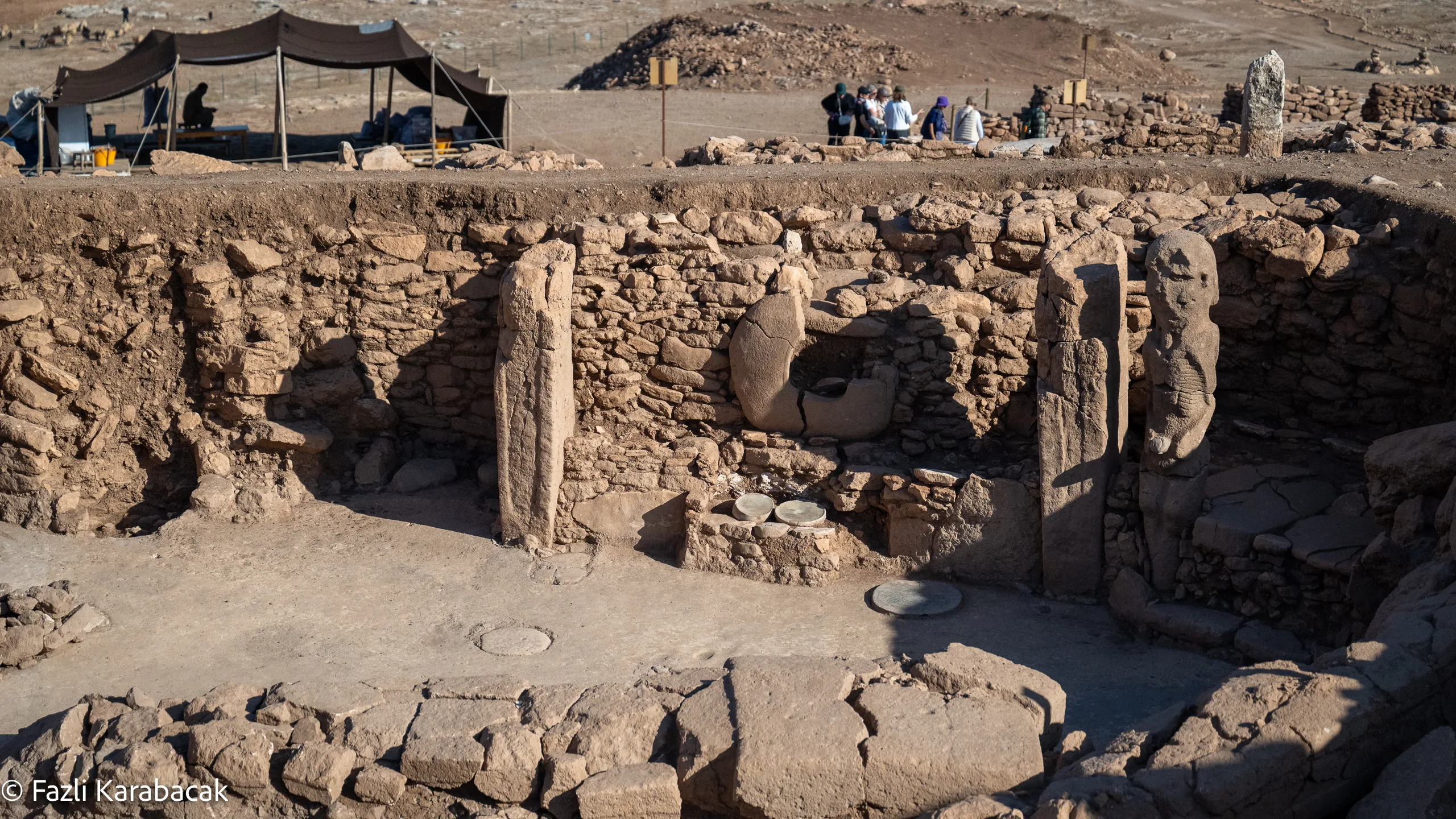
And standing among the stone structures of Karahantepe, you realise something remarkable:
We are only just beginning to understand what happened here.
If you would like to explore Göbekli Tepe, Karahantepe and the wider Taş Tepeler region, see guided Turkey itineraries with Serendipity Turkey and our visitor guide. For the architecture behind the imagery, start with Structure AB.
Because places like these deserve time, context, and the stories that bring them to life.
Frequently Asked Questions
What do the human skeletons found at Karahantepe reveal?
Reported cut marks on Karahantepe skulls inform discussion of treatment after death. They do not, by themselves, identify a particular ritual or prove purification by fire.
Why is Karahantepe important?
Karahantepe is a Neolithic settlement in the Şanlıurfa region of Turkey, dating back approximately 11,000 years. Part of the same Taş Tepeler cultural zone as Göbekli Tepe, it is one of the most significant archaeological sites showing that early human communities developed rituals, monumental architecture, and symbolic behaviour.
Who conducted the research on Karahantepe skeletons?
The cited public report quotes anthropologist Prof. Dr. Yılmaz Selim Erdal of Hacettepe University. It discusses Karahantepe cut marks while focusing on a skull discovered in a wall cavity at Sefertepe.
How old is Karahantepe?
Karahantepe dates back more than 11,000 years, placing it firmly in the Pre-Pottery Neolithic period. It was in active use at roughly the same time as Göbekli Tepe and other sites in the Taş Tepeler cultural cluster of southeastern Turkey.