Quick Answer
Karahan Tepe is a Pre-Pottery Neolithic settlement in the Tektek Mountains of southeastern Türkiye, broadly dated to approximately 9600–8000 BCE. It is known for T-shaped pillars, rock-cut and masonry architecture, and human and animal sculpture. Structure AB’s wall head and the 2.3-metre seated statue announced in 2023 are separate finds. The site helps explain the relationship between communal buildings, domestic life and changing subsistence practices; it does not prove that all monumental building preceded agriculture by thousands of years.
After 23 years of professional guiding in Turkey, I still find Karahan Tepe a place that rewards new questions. Its carved rooms and sculptural discoveries make it more than a footnote to Göbekli Tepe.
In this guide, I want to share what Karahan Tepe actually is, why it matters, and what you should know before you visit. Not just the textbook facts, but the kind of details you only pick up by standing on that windswept hill season after season.
Where Is Karahan Tepe?
Karahan Tepe lies in the Tektek Mountains near Keçili, southeast of Şanlıurfa. For directions and current access information, use the visitor guide rather than an unverified coordinate copied from an article.
The site occupies an extensive limestone ridge near Keçili. The drive crosses the rolling steppe landscape beyond Şanlıurfa; road distances depend on the starting point and route.
When Was Karahan Tepe Discovered?
The site was first identified in 1997 during surface surveys of the region. However, systematic excavations did not begin until much later, with major work accelerating around 2019 under the Şanlıurfa Archaeological Museum and the Turkish Ministry of Culture. The results have been nothing short of remarkable.
The settlement belongs broadly to approximately 9600–8000 BCE, making its earliest phases roughly 11,600 years old. This is a broad archaeological chronology, not an exact construction date for every room or sculpture.
What Makes Karahan Tepe Special?
The T-Shaped Pillars
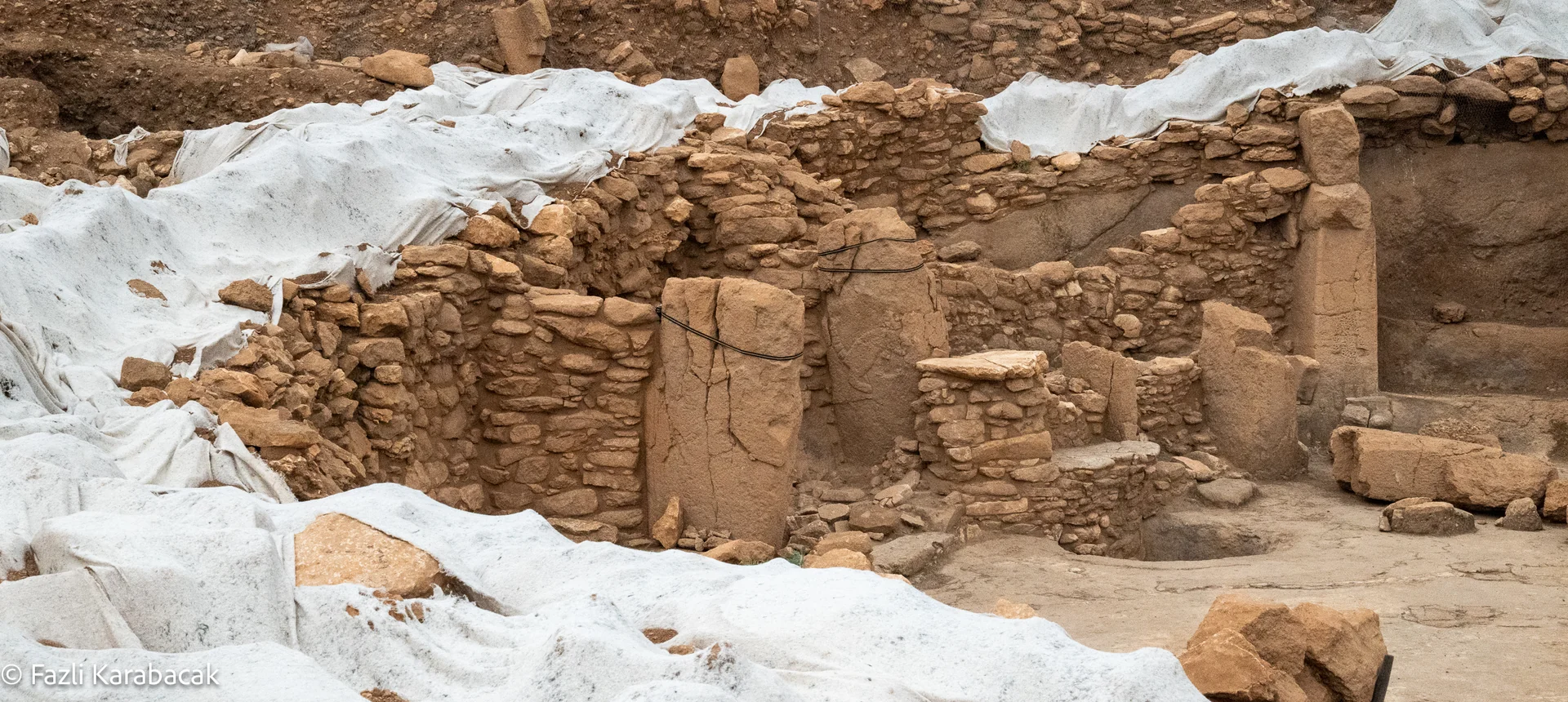
The most striking feature at Karahan Tepe is the abundance of T-shaped limestone pillars. Surface surveys have identified at least 266 in-situ T-shaped pillars across the site. These monolithic stones, arranged in rows spaced about 1.5 to 2 meters apart, stand up to 4.5 meters high, 1.5 meters wide, and 80 centimeters thick. One unfinished monolith discovered at the site measures 5.5 meters long and weighs an estimated 15 metric tonnes.
These are not just rough standing stones. They are deliberately shaped into a “T” form that many researchers interpret as stylized human figures — the horizontal top representing the head and the vertical shaft representing the body.
Carved Reliefs and Sculptures
The pillars and walls at Karahan Tepe carry an array of carved reliefs. Snake-shaped carvings appear most frequently, but the site has also yielded depictions of rabbits, gazelles, and a high-relief lion figure. There is an anthropomorphic statue with a phallus that bears a striking resemblance to sculptures found at other Neolithic sites in the Şanlıurfa region.
Rock-Cut Architecture
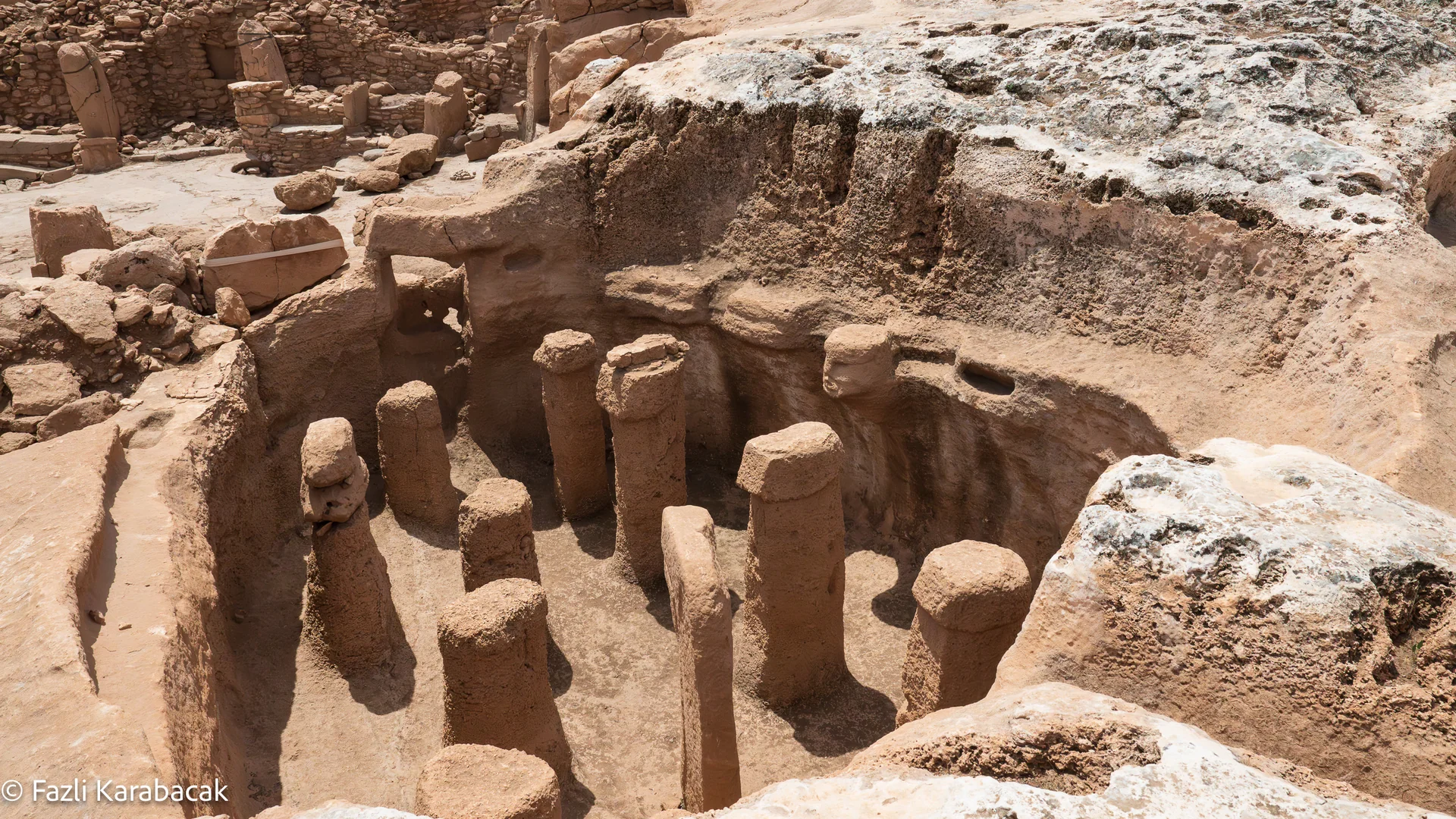
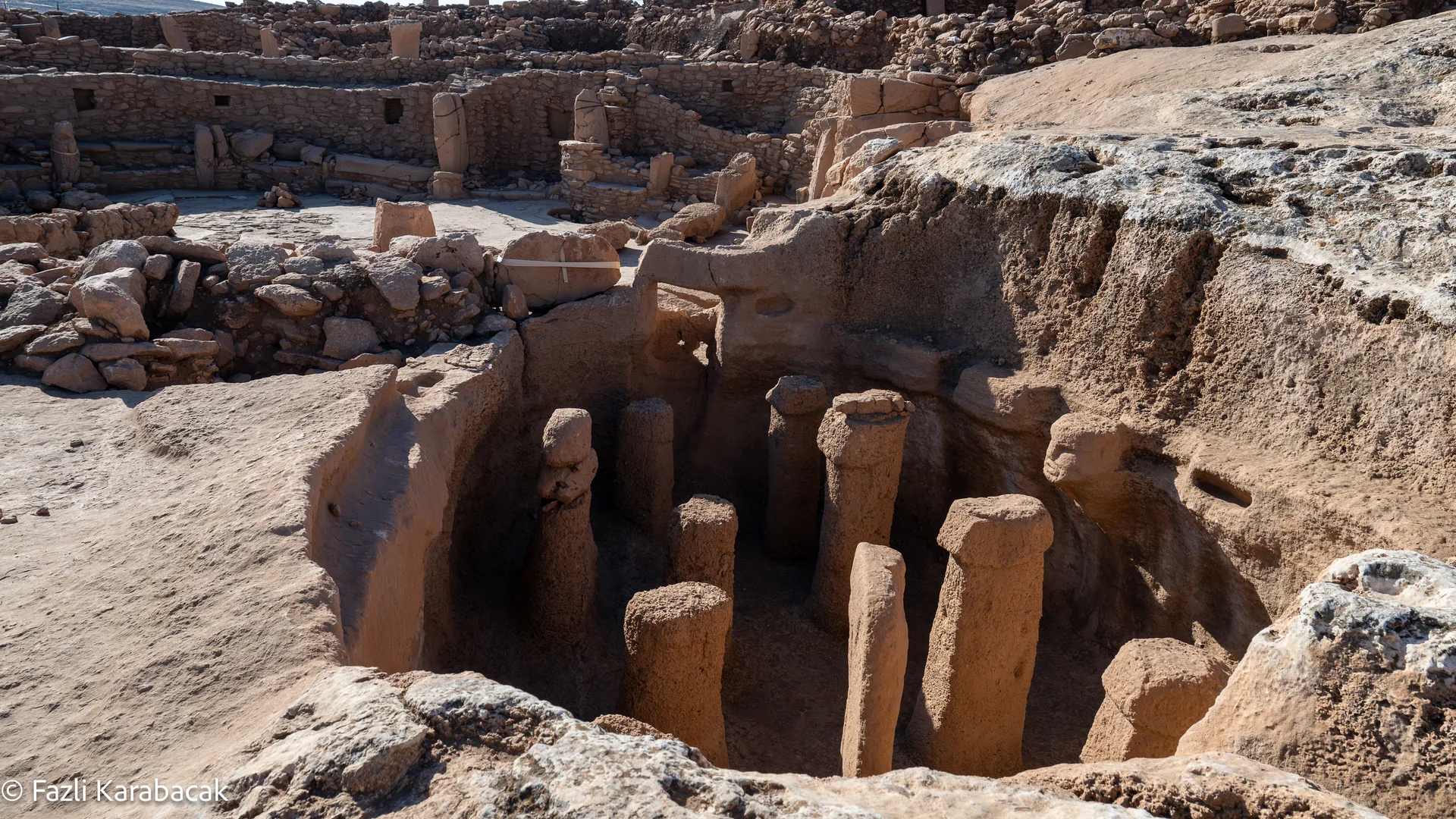
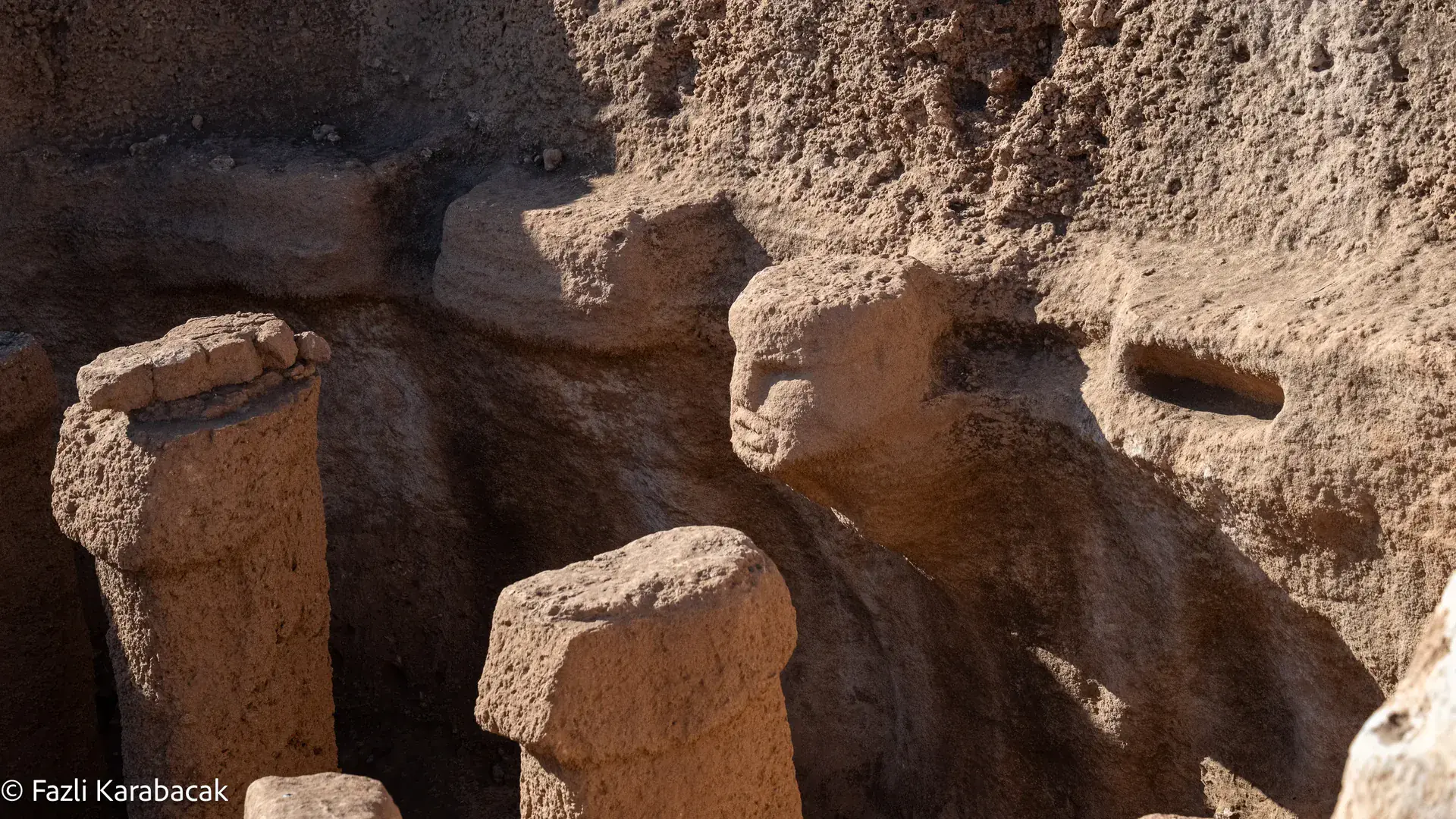
Both Karahan Tepe and Göbekli Tepe combine stone construction with bedrock features. Karahan Tepe’s connected AD, AB and AA structures make its rock-cut architecture especially striking. In Structure AB, ten phallic pillars remain attached to the bedrock, an eleventh element was inserted, and a human head projects from the western wall. These are not eleven T-pillars around a seated statue. See the three-room guide.
The Artifact Collection
Stone tools, vessels and sculptural finds contribute to the picture of an active community. Exact counts must be attached to the survey or excavation season that produced them, rather than presented as a timeless total for an ongoing excavation.
Why Does Karahan Tepe Matter?
For decades, Göbekli Tepe was treated as a unique anomaly — a one-off temple built by hunter-gatherers who supposedly lacked the social organization for such projects. Karahan Tepe dismantles that narrative entirely. It proves that monumental construction during the Pre-Pottery Neolithic was not an isolated event but part of a broader cultural phenomenon across southeastern Turkey.
The site also complicates a simple progression from farming to settlement to monuments. Hunting and gathering, early cultivation, permanent dwellings and communal construction need to be studied together. The absence of domestic elements reported within AB does not mean the whole site lacked habitation.
How to Read the Evidence
Start with Karul’s 2021 report on Structure AB (PDF), then compare the Ministry’s 2023 seated-statue announcement. The first records architecture and interprets a filling sequence; the second reports a separate sculptural discovery.
A few things stand out from years of regular visits. First, the site changes constantly. Every season reveals new features, new carvings, and new questions. Second, the landscape itself is part of the story. The isolation, the wind, the way light moves across the limestone — these are things you cannot appreciate from photographs. Third, Karahan Tepe rewards patience. The longer you spend there, the more you notice.
Planning Your Visit
Karahan Tepe is accessible from Şanlıurfa, which has a domestic airport with regular flights from Istanbul and Ankara. The drive from the city takes about an hour. I strongly recommend combining a visit with Göbekli Tepe, the Şanlıurfa Archaeological Museum, and the historic old town of Şanlıurfa itself.
Check current access before departure and remain on designated routes. Bring water, sun protection and comfortable walking shoes. Exposed areas can be very hot in summer; do not assume refreshments or shade will be available wherever you need them.
Frequently Asked Questions
How old is Karahan Tepe? The broad occupation range is often given as approximately 9600–8000 BCE. Its earliest phases are roughly 11,600 years old; individual structures and objects need their own contextual dating.
Is Karahan Tepe older than Göbekli Tepe? They belong to the same broad Neolithic world. Establishing which particular phase is earlier requires comparable stratigraphic and dating evidence, not a blanket “older site” claim.
Can you visit Karahan Tepe? Consult the visitor guide and confirm current access before travelling from Şanlıurfa. Excavated interiors may be restricted even when visitor paths are open.
What is the connection between Karahan Tepe and Göbekli Tepe? Both belong to the same broad Pre-Pottery Neolithic cultural setting and share T-shaped pillars, animal imagery and monumental architecture. “Sister sites” is a useful comparison, not proof that every feature or phase is identical.
How many pillars are at Karahan Tepe? At least 266 T-shaped pillars have been identified through surface surveys and excavations.