Quick Answer
Karahan Tepe and Göbekli Tepe belong to the same broad Pre-Pottery Neolithic world near Şanlıurfa. Both combine built and bedrock features and preserve human and animal imagery. Karahan Tepe’s connected rock-cut rooms, especially AB’s phallic pillars and western-wall head, provide a distinctive comparison with Göbekli Tepe’s large enclosures. Its separate 2.3-metre seated statue was announced in 2023. Neither site should be reduced to “temple without habitation,” and proposed astronomical alignments remain hypotheses rather than a basis for ranking the sites.
Every tour I lead to southeastern Turkey includes the same question, usually within the first hour: “So is Karahan Tepe basically the same as Göbekli Tepe?” The short answer is no. The longer answer is far more interesting.
I have been visiting both sites regularly since 2020, and the more time I spend at each one, the more distinct they become. They share a cultural DNA, certainly — but they are not twins. They are more like siblings with very different personalities.
The Geographic Connection
Göbekli Tepe lies northeast of Şanlıurfa, while Karahan Tepe lies to the southeast in the Tektek Mountains. Both occupy elevated limestone terrain. Travel distances depend on the chosen road route; use the visitor guide when planning rather than treating a straight-line estimate as driving distance.
Göbekli Tepe sits at 780 meters on the Germuş Plateau, while Karahan Tepe stands at about 690 meters on the Tektek Plateau. Both are built on limestone bedrock, but the geomorphological character of each site differs. The terrain around Karahan Tepe is more rugged and isolated.
Construction Techniques: Different Combinations of Built and Carved
Göbekli Tepe’s large enclosures prominently use quarried pillars and masonry walls, while bedrock floors and sockets are also part of their construction.
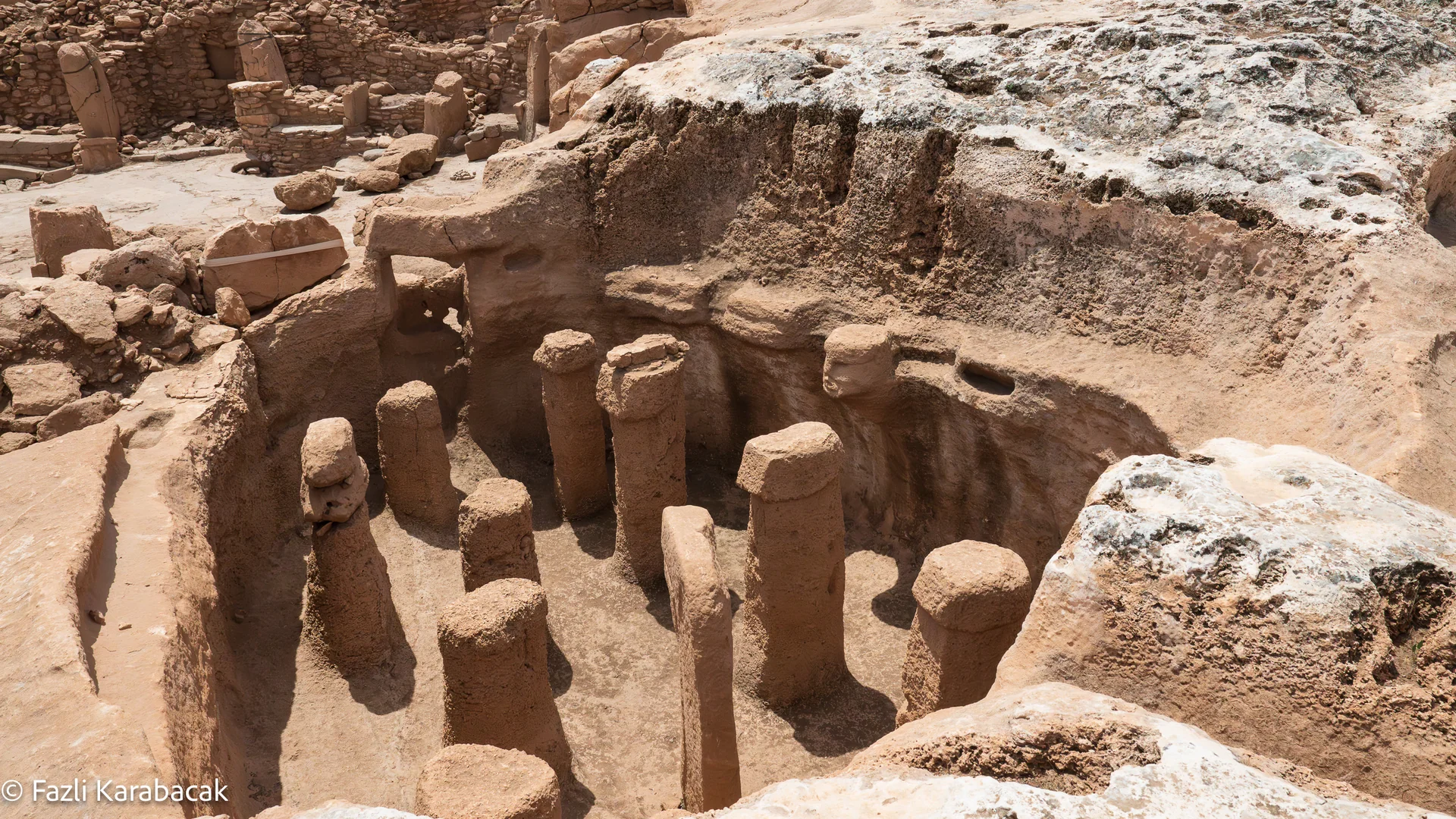
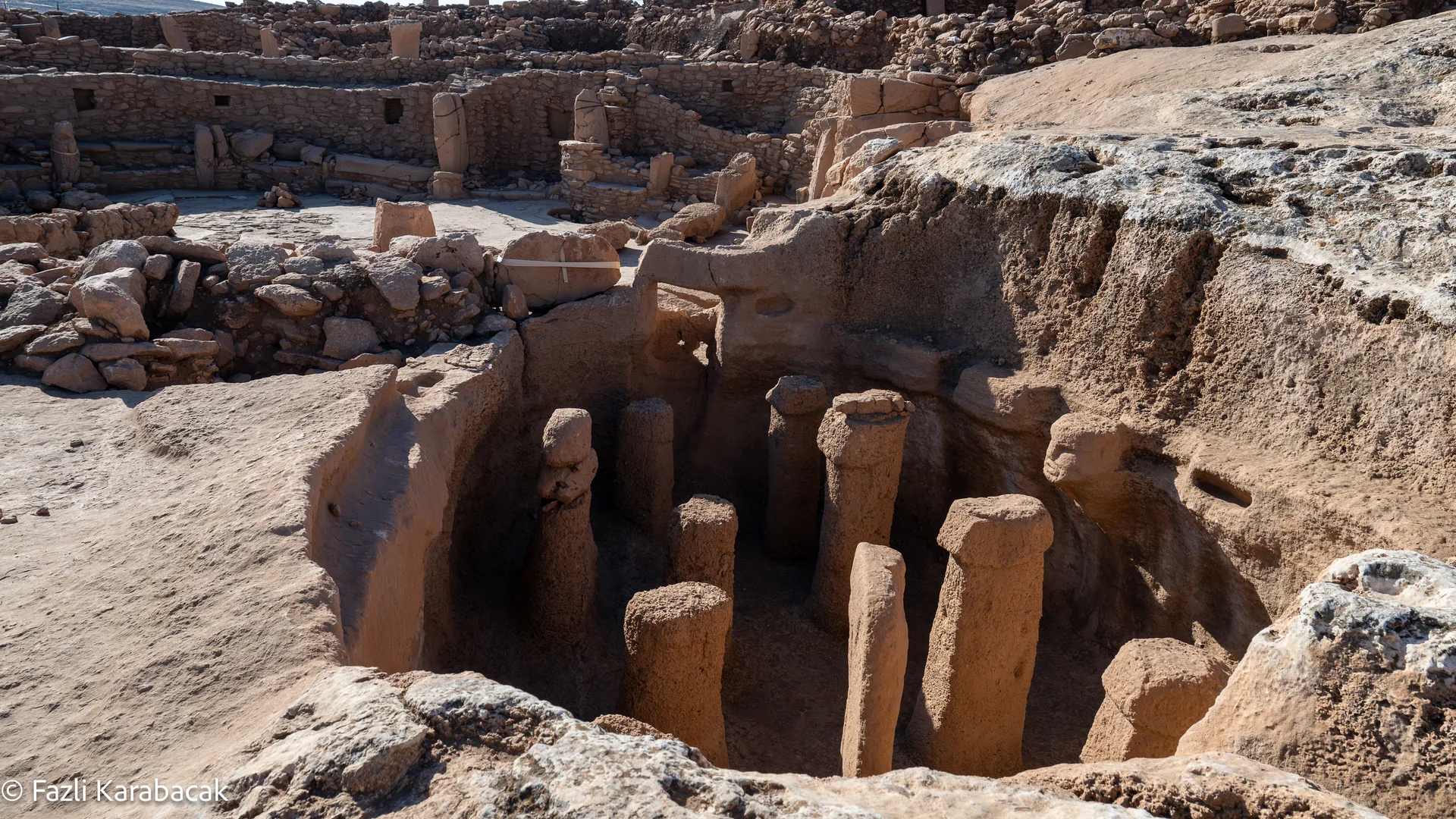
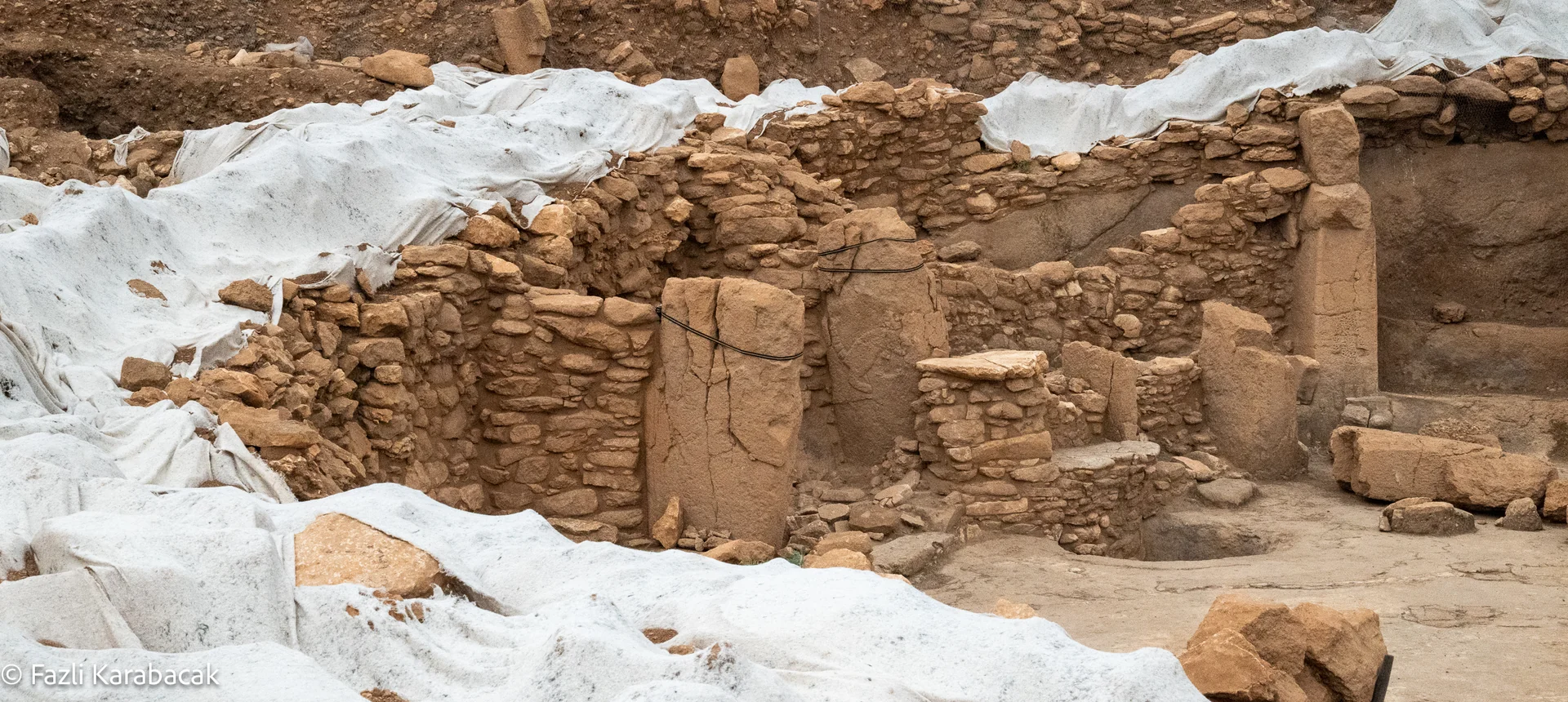
Karahan Tepe’s AD, AB and AA complex makes especially extensive use of rock-cut features. But AD also contains built masonry and installed pillars. The distinction is one of particular architectural choices, not a completely carved settlement versus a completely built one.
Pillar Counts and Scale
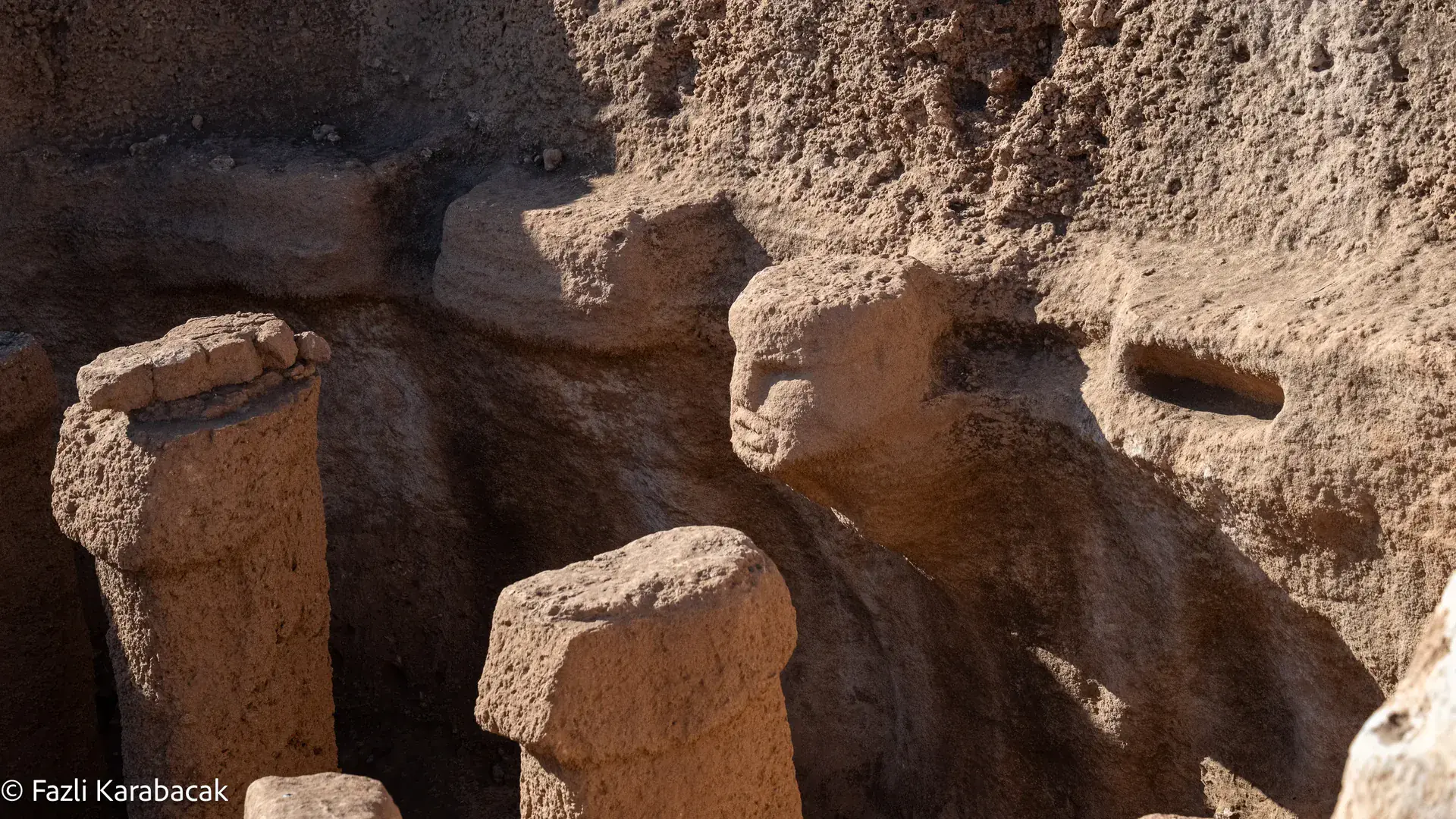
Both sites feature the T-shaped pillars characteristic of this regional tradition. Survey totals and excavated totals measure different things, so they should not be used as a simple competition. In Karahan Tepe’s AB, the ten bedrock pillars are phallus-shaped rather than T-shaped; a separately inserted element brings that chamber’s count to eleven.
Karahan Tepe’s Structure AD, the largest excavated enclosure, stretches 23 meters in length and 20 meters in width, with 18 anthropomorphic T-pillars around its perimeter. The scale is comparable to Göbekli Tepe’s largest enclosures, but the rock-cut construction gives it a very different visual impact.
Symbolic Art and Carvings
Both sites are rich in animal imagery. Göbekli Tepe has vultures, scorpions, boars, foxes, snakes and other creatures. Compositions may invite narrative readings, but their stories and mythological identities remain unknown.
Karahan Tepe’s most prominent motif is the snake. Serpent carvings dominate the pillar reliefs, though rabbits, gazelles, leopards, and a high-relief lion have also been found. Leopard reliefs appear in contexts that suggest guarding or protective functions. Where Göbekli Tepe leans heavily on animal imagery, Karahan Tepe proportionally emphasises serpents above all else — implying that each community selected from a shared symbolic reservoir but arranged the elements according to its own cosmology.
The Sitting Man is an important Karahan Tepe find: the 2023 Ministry announcement describes a 2.3-metre seated figure fixed into a bench, with prominent ribs, spine and shoulder bones. It is not AB’s wall head. Human sculpture was already known in the regional Neolithic, so Karahan Tepe should not be presented as the sole inventor of realistic human imagery.
The Astronomical Dimension
Göbekli Tepe has long been the subject of astronomical alignment theories, particularly the suggestion that Enclosure D’s central pillars face the rising of Sirius or align with the constellation Cygnus. These theories remain debated.
Karahan Tepe also has a winter solstice hypothesis, based on a reported modern illumination of AB’s wall head. The original roof, openings and surrounding structures need assessment before ancient intentionality can be established. Calling it the oldest verified alignment goes beyond the evidence. Even the rounded comparison 9000 BCE versus 3000 BCE gives 6,000 years, not 7,000.
Settlement and Daily Life
Göbekli Tepe was long presented as a “hilltop sanctuary,” but evidence for settlement and domestic activities complicates a purely ceremonial model. Large communal buildings do not rule out permanent habitation.
Karahan Tepe shows clearer evidence of domestic activity alongside its ritual architecture. Excavations led by Professor Necmi Karul of Istanbul University have uncovered living floors, storage pits, and tool-production areas in close proximity to the carved chambers. This blurring of the sacred and the domestic may tell us something important: that the sharp division between “temple” and “village” is a modern projection onto a society that made no such distinction.
The Taş Tepeler Network
The Taş Tepeler research programme — the Turkish government initiative studying a cluster of related Neolithic sites in the Şanlıurfa region — has increasingly shown that Göbekli Tepe was not unique but was part of a network. Karahan Tepe, Sayburç, Harbetsuvan, and other sites each express the T-pillar tradition in their own way, much as medieval European cities each built cathedrals in a recognisably Gothic style yet made them unmistakably local.
Understanding Karahan Tepe on its own terms, rather than as a satellite of Göbekli Tepe, is essential. Its intimate scale, its naturalistic sculpture, its snake-dominated imagery, and its integration of ritual and daily life all point to a community with its own identity — one that participated in a wider cultural conversation but spoke with a distinctive voice.
Visitor Experience: What Feels Different
Having guided groups to both sites dozens of times, I can tell you the experiences are quite distinct. Göbekli Tepe now has a permanent protective shelter over its main enclosures, elevated walkways, and a visitor center. It is well-organized and increasingly well-known.
Karahan Tepe’s rock-cut rooms give it a different atmosphere. Their relationship to the hillside is visible even when viewed from outside the excavated interiors. Stay on authorised routes; an evocative description of the room is not permission to enter it.
Which Site Should You Visit?
Both. That is the honest answer. They complement each other beautifully, and visiting one deepens your appreciation of the other. If you are pressed for time and can only visit one, Göbekli Tepe is more accessible and better set up for visitors. But if you want the site that will keep you thinking long after you leave — Karahan Tepe is the one.
I recommend spending at least a full day in the region: morning at Göbekli Tepe, afternoon at Karahan Tepe, with the Şanlıurfa Archaeological Museum either before or between the two. This gives you the context to appreciate both sites fully.
Quick Comparison Table
| Feature | Göbekli Tepe | Karahan Tepe |
|---|---|---|
| Age | ~9,600–8,000 BCE | ~9,600–8,000 BCE |
| Elevation | 780 m | 690 m |
| Direction from Şanlıurfa | Northeast | Southeast |
| Construction method | Masonry, quarried pillars and bedrock features | Rock-cut features, masonry and installed pillars |
| AB pillar distinction | Not applicable | Ten phallic bedrock pillars plus an inserted eleventh element |
| Key motif | Diverse animal reliefs | Serpent-dominant reliefs |
| Notable sculpture | Pillar reliefs, totem pole | Sitting Man statue (2.3 m) |
| Astronomical interpretation | Proposed alignments | Proposed solstice alignment |
| Visitor infrastructure | Shelter, walkways, center | Developing |
Frequently Asked Questions
Is Karahan Tepe older than Göbekli Tepe? They belong to the same broad Neolithic period. Relative dates should compare specific phases and reliable dating evidence rather than declare one whole site older.
How far apart are Göbekli Tepe and Karahan Tepe? Road distance varies by route. Both can be planned from Şanlıurfa; use current directions and allow travel time between them.
Are there other similar sites in the area? Yes. Several other Pre-Pottery Neolithic sites with T-shaped pillars have been identified in the Şanlıurfa region, including Harbetsuvan Tepesi and Sefer Tepe. This was clearly a wider cultural phenomenon.
Which site is easier to visit? Göbekli Tepe has more developed visitor infrastructure. Confirm current routes and access at Karahan Tepe before travelling.
Archaeological Source
Karul’s 2021 report on Structure AB (PDF) documents the phallic pillars, wall head and filling sequence. Its absence of domestic elements refers to AB, not the entire settlement.